
Episode #99: Zohar Bronfman – Co-founder and CEO of Pecan AI
Dr. Zohar Bronfman – The Limits of Knowing Dr. Zohar Bronfman is the... Read more


Episode #99: Zohar Bronfman – Co-founder and CEO of Pecan AI
00.00/57:41
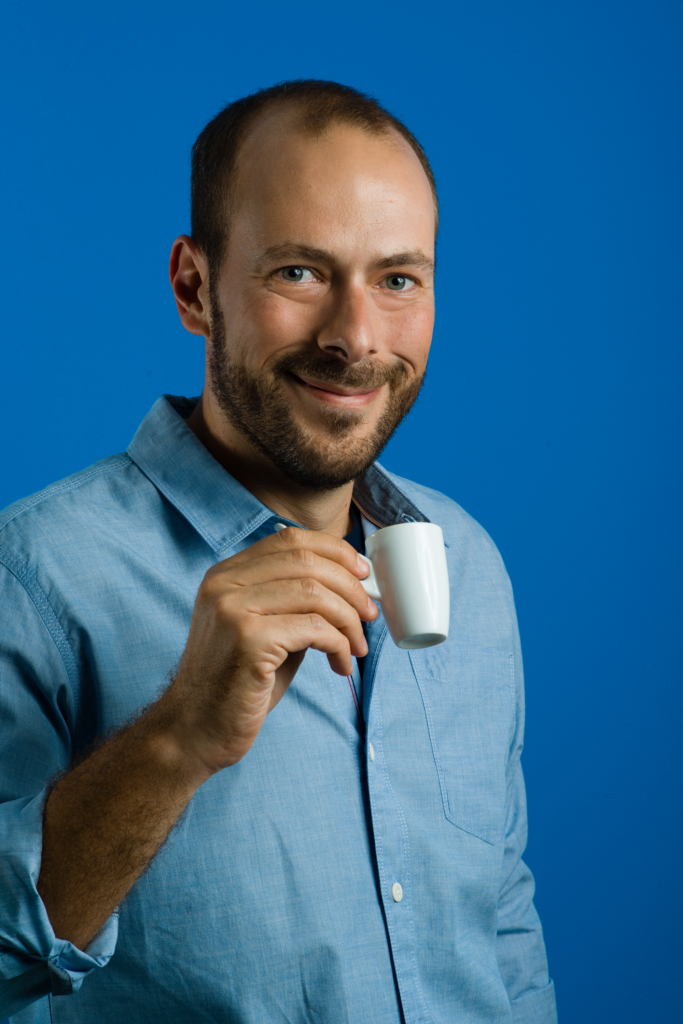
In this episode of the RealLifeSuperPowers podcast, we speak with Massimo Chieruzzi GM and co-founder at AdEspresso which is a tool for SMBs to manage, analyze and optimize Facebook Ads and which was acquired by Hootsuite in 2017.
He’s a multi-hyphen dude. He’s been a radio speaker, journalist, developer, marketer, entrepreneur and angel investor.
At 14 years old he was the youngest Italian guy indicted in cyber crime for running a pirate BBS and making countless intercontinental calls with his modem to avoid paying the bills through boxing.
He later founded Creative Web, the leading web development agency in Italy and biggest provider in Europe for eBay and other companies.
He founded AdEspresso after getting fed up with Facebook ad scaling and optimizing solutions. In the early days of AdEspresso Massimo helped scale the blog from 0 to 700,000 visits per month and build a profitable business with just inbound marketing and 0 people on sales, making AdEspresso the most used Facebook Ads product worldwide.
We discuss:
– Bending rules and the concept of “subjective justice” as a possible entrepreneurial necessity
– The importance of mitigating risk and never relying on one customer/traffic source/product/etc.
– Massimo’s two cents on how to handle the uncertainty created by Covid-19
– The power in being aware of your weaknesses
– Striking a balance between avoidance out of fear vs self-awareness about what you should and shouldn’t spend time doing
– And much more
We hope you enjoy your listen!
Zooming out, if you like listening to this podcast, make sure to subscribe so you don’t miss new conversations with peak performers, serving as a reminder we can all tap into the best versions of ourselves.
You’re also welcome to follow Ronen and Noa on Linkedin
And if we may ask for a favor – please leave us a review on your native podcast app.
Some further resources:

[This transcript was generated from YouTube’s auto-captions, not a verified human/AI-diarized transcript. Timestamps and wording may contain errors, and speaker labels below are Claude’s best-effort inference from context, not confirmed against audio. Please review before publishing.]
Real Life Superpowers.
Massimo: And they were 98% of our revenue, which was another interesting learning: don’t have a single customer doing 98% of your revenue. Learned that lesson the hard way. Somehow you always have a level of risk, whether it’s a single traffic source, it’s a single platform, a mobile platform that you are relying on, it’s a single customer. You always have to think: how do I de-risk this thing?
Host: Hello. In this episode we speak with Massimo Chieruzzi. He’s the GM and co-founder at AdEspresso, which is a tool for SMBs to manage, analyze and optimize Facebook ads, and which was acquired by Hootsuite in 2017. He’s a multi-hyphen dude. He’s been a radio speaker, journalist, developer, marketer, entrepreneur and angel investor. At 14 years old he was the youngest Italian guy indicted for cyber crime, for running a pirate BBS and making countless intercontinental calls with his modem, avoiding paying the bills through blue boxing. He later founded Creative Web, the leading web development agency in Italy and biggest provider in Europe for eBay and other companies. He founded AdEspresso after getting fed up with Facebook ad scaling and optimizing solutions. In the early days of AdEspresso, Massimo helped scale the blog from zero to seven hundred thousand visits per month and build a profitable business with just inbound marketing and zero people on sales, making AdEspresso the most used Facebook ads product worldwide.
[Music]
Host: Welcome to Real Life Superpowers.
Massimo: Thank you.
Host: Where are you these days?
Massimo: I’m in Milan, and actually, you know, with COVID, I’ve been here for the last four months, actually here in my home. But overall, yeah, I spent four years in San Francisco, but then I moved back to Milan. I enjoy living here the most.
Host: Yes, I agree, I love Milan as well.
Massimo: Where are you based?
Host: In Tel Aviv, Israel.
Massimo: I’ve never been there, but everyone tells me it’s an amazing place. I hear a lot of people that want to move there [inaudible].
Host: Yeah, well, these days they probably do more than any time.
Massimo: Yeah, but I’ve been hearing that for a very long time. Beautiful, better weather, very active startup ecosystem, probably way more active than Milan. I should come visit one day.
Host: Yeah, you’re welcome. We’ll have an interview in the studio.
Massimo: Nice.
Host: So yeah, you have a pretty wild story.
Massimo: Kinda. I know it’s a nice story, but overall I think it’s very similar to everyone that did this journey and was successful at it.
Host: Okay, I mean, that’s a modest way of putting it. But I feel like we should probably zoom out and sort of start from the beginning, because you started very young. You had an entrepreneurial spirit as a child, right? How does it start? Were your parents entrepreneurs?
Massimo: No, my parents were not entrepreneurs. Actually my father was a doctor and my mother was a teacher. But actually I was more of a nerd than an entrepreneur. So I started working with computers when I was 8 years old. By 14 years old I was like the youngest indicted in Italy for cyber crimes, so like a BBS with pirated software, AT&T calling cards to make intercontinental calls for free, and it all started from there.
Host: And we’re not going to skip over that story. So you were 14 and you were indicted for cyber crimes. How did that go down at home?
Massimo: It was kind of okay. I think my mother kind of wanted to kill me. My father has always had pretty British aplomb in these situations, luckily. But it turned out fine. I mean, I was underage, and it was like the first big case, like a big crackdown against hackers, so there was really no legislation, so they didn’t do anything. I just had all my computers seized for a bunch of years. I mean, it was okay, I was just using the school’s computer to do my stuff instead of at home. But it was fine in the end, it was just a slap on the hands.
Host: And were you sort of famous and notorious in Italy, like all across the newspapers, the 14 year old hacker?
Massimo: No, no, no. They didn’t release the name, so it was fine. I mean, there was a lot of publicity on this crackdown, but back then, it was like 1994, it was not even mainstream. People didn’t know what we were talking about, so it didn’t get a lot of publicity or public eye scrutiny. I was really rather lucky.
Host: And so this didn’t sort of set you back or scare you in any way? You just kept going?
Massimo: No, actually I kept going. Back when I was 14 it was really just pirate software. Then when I grew older I got involved in [inaudible], doing kind of more illegal stuff, but luckily I didn’t get caught the second time around. And when I was 18 I just moved to Milan to do the university. But you know, it was 2000, there was the dot-com bubble, it seemed like everyone was getting rich, and accidentally I started working as a journalist, as a tech journalist, which was a lot of fun, like a lot of free trips, free travel. Companies had a lot of money to waste back then. And I was following a bunch of big blogs, they were not called blogs back then, but like a couple of big portals of [nerd] news in the US, which I liked, and I wanted to build one in Italy, and that’s where it started. I mean, I started asking around, I just wanted some free hosting because I couldn’t afford one, and people back then were just crazy, like, “No, okay, let’s raise a million euro and make this the next big thing.” But I was 18, I didn’t feel like raising money or doing things with someone else’s money. So I just started my small web agency firm, which started to build this portal, which we built, but we quickly realized that it was a bubble. Everyone was exchanging services, advertising, but no one was pouring money in it. So to pay the bills we started working as a web agency, and I really had no idea what I was doing. I had no experience, no idea how to run the company. Probably for four years I was paying payroll out of a credit card because we didn’t have money in the bank. But then slowly it started picking up. We started working with a bank, which was a lot of money. Completely accidentally we started working with eBay, and we became the biggest service provider of eBay in Europe, basically.
Host: You were a student?
Massimo: No, I dropped out of university fairly quickly. When I was 20 I dropped out of university to pursue the agency.
Host: What did you go to study?
Massimo: Economy, which I was not really passionate about. But here in Italy, engineering had the first couple of years which were standard for everyone, so there was a lot of math, physics, chemistry and this kind of stuff, and I was never good at studying stuff that I didn’t care about. So I knew that I would have never made it in engineering, while in economy I could just talk, invent stuff, and get out of most of the exams. So it was a safer bet. But still, after a couple of years I got bored. I was working as a journalist, I had the agency, and I just dropped out at some point.
Host: I’m interested in something, because there’s two things. You’re also the journalist, but also you did something at the age of 14. And there’s something in entrepreneurship that’s spoken about, it’s called subjective justice, which means that to disrupt the market or to do something as an entrepreneur, you know, the economics is, if you’re making money, you’re actually taking it from someone else. Or if you’re doing something bad, you also know how to do something good. And it’s the way you put on the glasses, how you see what is right and wrong, and you actually choose for other people. Like the example of you as a 14 year old, which is inspirational in one sense, and in the other sense it’s a no. And now, if you ask me objectively as an entrepreneur, and this is what’s interesting, you have a dad that’s a doctor, he said, “Amazing, you hacked the system and disrupted it.” You have a mom that’s a teacher that says, “Okay, but you’re not allowed to do that,” right? Which I understand. But this is something an entrepreneur has to do every day, because if you want to win in the competition, you have to find different loopholes. We’ll call it hacks. So I’m interested in that kind of thought, because I’m sure as an adult today you can see things from different perspectives. But at the same time, I’m sure, and I’m saying this about myself as well, right, I regret the way I did it. So what do you think about the concept, as an entrepreneur?
Massimo: I think the concept makes a lot of sense. When I was 14 years old, probably I was not introspecting or thinking about it with that lens. It was just: I want free games and I don’t care. And on the software piracy side of things, I think very often it falls into this bucket. It’s not that people want to do illegal things. People just want to do some things, and if it’s not possible, they will just not care about it. And back then it was not even about not paying for the games, it was more about: these games are in the US and I don’t have access to them, so I’ll just download them. Or later on, I want access to the internet, but there is no internet in Italy, so I’ll just use an AT&T calling card. And this happens over and over again. I mean, even in more recent years, if you think about it, a lot of people were pirating movies. That was kind of a big thing, like Napster, etc. But it was just getting access to what you want. I mean, I didn’t care about paying five dollars, ten dollars for a movie, it was just not possible. But when Spotify, Apple Music, Netflix arrived, that’s it. I don’t know, because I’m no longer involved in it, but I think that the piracy market for movies and music really shrank, because it’s a pain in the ass to find the torrent and to download it, to move files, to catalog them, etc. If you can pay five dollars per month to just get access to all of it without the hassle of looking for them, that’s just fine.
Massimo: And I think that applies to everything. When you’re building a business, most of the time you are solving your own problem. So as you are building, at least for me, I was not even thinking about what the rules are, etc. I was just building a solution for myself, and from that perspective I was not caring that much about the rules, because I was not thinking about the business side of things. I was just thinking, okay, let’s do it, and no one will care if it’s just for me. And then at some point you say, okay, this could be a business, and you start thinking, okay, how do I scale it, can I do it, etc. But the good thing about startups is that when you are small, even if some problems are perceived as a huge problem, the reality is that if you are small, it’s a small problem most of the time, unless you’re doing something drastically illegal. Like a PR scandal, I mean, it’s a huge problem if you are Oracle, if you are Microsoft. But if you are a small startup and you made a mistake, usually you get a second try. It’s not like you are going to be dead because you mismanaged the records of your users when you only had 10 users. So now probably I’m looking at this thing with a different eye. I’m always trying to find a solution to a problem, and probably in the first iteration I care more about “can I solve the problem” rather than “what are the rules.” But now I’m much more aware of the issues that we will have as we scale, etc. So from the get-go I always try to involve legal and get a good understanding of what the limitations will be, what the problems would be as we scale. But yeah, I totally agree. I mean, also not from a legal standpoint, but what Steve Jobs was doing with Apple, he just wanted something, and he didn’t care about, probably not legal limitations, more like product and technology limitations, and he wanted to achieve it. And that’s probably what drives most entrepreneurs.
Host: Yeah. I’ll tell you differently. I think that that experience gave you the guts, in solving things that you want to solve. It gave you the guts because you understand that it’s a little more bendy. And we’re seeing this in a very good way. Again, I’m with you here, right, I can say that out transparently. I couldn’t see a way to succeed if you’re trying to solve problems, because all the rules are against those problems, and you need to be, I’ll say this, either a little bit stupid, okay, and not know everything, or innocent, which is great, and playful, okay, and less regulated. And if it’s totally regulated, you have no freedom, okay, and then it’s going to be hard to do that. So that’s why I’m saying, on the entrepreneur’s side, this is something that really interested me in you. So now, if you have kids, where on the scale is the justice? Because you want them to be playful, but you don’t want them to, you know, there’s a difference. One entrepreneur always told me this: “I do not lie, I exaggerate.” Okay, and that’s the difference. So he could say, listen, you said users, right, “I have hundreds of thousands of users,” but he had more like 202,000, and he made the feeling that he had 700. Of course. That’s why I’m saying, there’s no lie there, right, but there is that, and that’s exactly the bendy point. And now you want to inspire your kids as an entrepreneur, you want them to be really successful. What do you say?
Massimo: Sure, no, that makes total sense. I mean, I think the exaggeration is something that no one admits, but it’s part of every startup’s life. Because when you’re small, especially if you work in the enterprise space, you need some kind of validation, social proof, otherwise the big enterprises won’t [inaudible] you. And you bend a bit the perception of reality, whether it’s, yeah, “hundreds of thousands of users” while it’s one hundred thousand and one, or what’s the concept of a user: is it someone that is using the product, or is it everyone that ever left me an email and started a trial over the last 10 years? That’s something that everyone does. And I mean, you need to be smart about it, because sometimes you just look stupid. You can see these startups with like two weeks in the product, and they boast hundreds of thousands of users, which is not realistic. But otherwise I think everyone does it, and I think the users are also smart enough to know that all those big company logos on the page are probably people that tried the product for a week and dropped off, but still they are in the database, so you have Microsoft as a customer on your homepage.
Host: I think it’s also like a question of sort of legal philosophy and sort of personal boundaries that are pretty much subjective, and a company or a startup is probably a group of people that hopefully are aligned around the same values. So you sort of set your own boundaries and you see what makes sense to you. Like, from a different example, I would say, I studied law, and they talk about legal philosophy. So, you know, if you’re in the middle of nowhere and there’s a red light, do you cross it, or do you wait because that’s the law? And I think a hundred percent of entrepreneurs that you ask will answer the same, right?
Host: No, no. I’ll tell you why, because this is my feeling, okay. Most entrepreneurs that I meet, they are a lot more, we’ll call them geeky and safe. Most of the successful ones aren’t gamblers, okay. They’re not gambling, right. But what they do is, okay, they bend. And this is the problem with what I’m saying, because bending is subjective. In law it’s binary, right, it’s good or evil. So what I’m saying is it depends on the perspective, but they bend that. So I’m going to talk about the same thing you said, but it’s a yellow light. If it’s a yellow light, it can be perceived as red or green, okay. Now the optimists, which he is, an optimist, because he said, “I solve problems.” My problem is I’m in a rush, I have to get to a meeting, it’s yellow, I can do it. Okay. If it’s a full stop red… and that’s why he said, “When I was solving a problem,” in my opinion, he said, as a 14 year old, “I was just trying to play a game.” It’s a yellow light, right? If they would have said to you, “Listen, this is illegal, you’re going to jail,” it’s not like that was the incentive. It’s a yellow light.
Host: But that’s also philosophy, because that red light, what does it mean where nobody can see you passing and nobody can get hurt? [crosstalk] I mean, if you know that there’s a red light in the middle of nowhere, you know that you can totally pass, and I think 100% of entrepreneurs would. And I think people who are more conservative are just going to stand there, even if it’s going to be a day, and they’re just going to call somebody and say, “I think there could be a problem, I’m stuck here.”
Massimo: Not the drivers in Italy.
Host: Yes.
Massimo: It’s probably a cultural thing. I mean, in Italy everyone would pass. But also in Italy we don’t even have a word for jaywalking. I mean, if there are no cars and it’s red, I will just walk across the street. But when I tried to do it in Mountain View, where there were probably like five cars per hour on the street, when I jaywalked, even if it was completely safe, people were freaking out. Like, a car two kilometers away from me would just stop in the middle of the street, because, oh my god, someone is just walking over there, what’s happening, they are not following the process. It’s probably very tied to the culture of each country as well.
Host: Yeah. Okay, so circling back to that company, the website building company. So you’re a student, you dropped out, you identify a need to build websites, correct?
Massimo: Yeah.
Host: And then you go for it.
Massimo: Yeah, I go for it. Like three, four years pretty shitty, no idea what we were doing, barely breaking even. And then the bank arrived, which was a big booster in terms of revenue and as a learning experience, but still, you know, a quite boring, basically consultancy job, not scaling very well. Then eBay arrived, and that was a big change. We switched from like three people to 11 people.
Host: What do you mean? They didn’t just knock on your door one day.
Massimo: Kind of, yes. I had a blog about PHP, and they were looking for a PHP agency, so they just sent me an email. I thought it was a joke, actually, and I kind of replied like, “Yeah, we do PHP. Are you really eBay?” And they were. And we started with like a stupid project. People nowadays won’t remember it, but back then there was Digg, which was like Reddit today. It was the home page of the world, and people would just post every kind of article, and if you hit the home page you would get hundreds of thousands of visitors in a day. And with eBay we built basically a Digg clone to publish the craziest things that were sold on eBay, and it was a huge success, and we sold it to eBay Australia, US, etc.
Host: What did you sell?
Massimo: This Digg clone. So initially it was implemented just in eBay Italy, and then we sold it to eBay across the world. And from that perspective it was kind of eBay bending the rules, because they had this huge development team in the US, which was following all the best practices, but was also quite slow. And eBay had given local countries the permission to make small local projects. But we were way faster than their team in the United States, so they were bending the rule, and under this umbrella of “small local projects” we started building huge projects. So we built a full real estate vertical for eBay here in Italy, which was actually a section of eBay. They were really bending the rules. They had very smart people here in Italy. And then we sold the real estate one to eBay France. It was really a fun period, because you rarely get to work with such smart customers, that were really doing user testing, grabbing people on the street, bringing them upstairs just to test the product, split testing buttons, etc. We were developers, we were not business people, so we were having a lot of fun. And then suddenly they changed CEO, and the new CEO was really like, “What is Europe? Why do we have people working in Europe?”
Host: When was this? What year?
Massimo: I don’t remember exactly. It was when Meg Whitman left. I think we were around 2008, between 2008 and 2010. And they were 98% of our revenue, which was another interesting learning: don’t have a single customer doing 98% of your revenue. Learned that lesson the hard way. Somehow you always have a level of risk, whether it’s a single traffic source, it’s a single platform, a mobile platform that you are relying on, it’s a single customer. You always have to think: how do I de-risk this thing? Either way, when we started AdEspresso, everyone was telling us, “You have a huge risk liability on Facebook,” and we were like, yes, we do, like everyone else. Unless you are the platform yourself, one way or the other you are always relying on someone else’s platform to get traffic, to get customers. And you can find some balancing, but you always have someone that has a disproportionate power over you.
Host: Well, what’s interesting about it is, it’s either being with one client, but let’s talk about the digital reality, it’s also being with one supply chain. Most of the users, you’re going to bring them from Google or from Facebook, eighty percent of the users. So whether it’s your only clients or those platforms are your only supply, what did you learn, and what are you going to do about that?
Massimo: You always have some level of risk. I mean, one way or the other you can de-risk a bit, but you never get to the perfect point where you have 20 percent of traffic from Facebook, 20 from Google, 20 from affiliate marketing, 20 from branding. So you just need to live with it, be aware of it, and know what the pros and the risks are. I think overall it’s really a matter of alignment, understanding what the drivers are of the people you are relying on. If you have a very good understanding of what Google’s end goal is, what Facebook’s end goal is, etc., and you are very aware of it, you still have some level of risk, but you reduce that risk a lot. So if you know that the end goal of Google is to provide the best answer to a question, you can rely on Google as long as you align with them and you are producing content that is the best answer to a question. When you are doing black hat stuff, you are paying for links, you are creating a huge amount of shitty content, that’s where you really have a risk, because you have a single platform that drives you a lot of traffic and you know that your values are not aligned, so at some point they will come after you. That’s what happened to Zynga, for example. I mean, I remember the huge amount of FarmVille notifications that you were receiving, and I think Zynga knew that that was not aligned with Facebook’s goal, which was to have a great user experience and that people enjoy Facebook. So that was a huge risk, but a huge risk that you could see coming.
Host: Okay, yes, but again, it’s the interests. You’re saying great content that answers questions. So there’s something I saw not long ago, saying Google is going to change their whole dynamics, also becoming Google Home, and asking questions to a speaker, where there’s only one answer, okay? And then what you’re saying is not relevant, like black hat is not relevant, you know what I mean? It’s correct for now, okay, but tomorrow you’re going to have to change your whole strategy of content building, because we have to adapt to the new changes that they make. So it’s like, interests aligned, right?
Massimo: Yeah, but that’s the digital world. I mean, everything is changing constantly. Ten years ago it was MySpace, now MySpace doesn’t exist. Within the agency, at some point we started a side project for blogging, and back then Facebook was a huge driver of traffic, because you could pay for likes at one cent, and actually likes did matter, because you had 20% organic reach, so it was like having a newsletter. But if you understand what drives your partner and you align with it, you are buying time. I mean, you’re not buying not having the issue forever, but you are buying time. Because if you are producing great content, yes, you know that Google will change, you know that over time you’ll lose traffic because they’ll start providing answers embedded in the results without sending people to your site, etc. But you are not risking a crackdown where tomorrow, “Hey, you broke the rules, you are delisted,” and your traffic goes to zero immediately. If you align with them, you’ll see a decline and you’ll react to it, you’ll change strategy, you’ll change platform, but you are buying yourself a lot of time to fix things. While if you break the rules, if you always look for the shortcut, one, it’s terribly stressful, because the shortcuts change every day, and two, you run a risk which is too high. It’s not high if you are an affiliate marketer living day to day, but if you are building a company with a payroll, with investors, and responsibilities to your users, to your investors, to your employees, you cannot be in that risky situation and constantly go after the shortcuts. It’s a constant evolution.
Massimo: And then, again, as we were discussing before on the risk and breaking the rules: breaking the rules when you are getting started, not legal rules but generally accepted rules, it’s fine, because the risk for a small startup is acceptable overall. Even if things go badly, it is not the end of the world, you can still live with it and have a second chance. As your company gets more structured, gets bigger, the risk becomes higher and higher. Like Airbnb, when they started, they were leveraging Craigslist, doing scraping, creating fake listings, etc. Even if Craigslist [inaudible] and blocked them, that’s fine. Those are strategies that you know are short-lived, but when you’re getting started they can give you a terrific boost at the beginning. But then you have to build something that’s predictable, a growth engine that will scale, and that’s not a continuous source of stress because you know it could break at any point, and it’s built on a very fragile foundation.
Host: It seems to me like you sort of have a mindset where you’re paving a road, and you keep evaluating, testing, and then choosing the next steps. And it doesn’t seem to me like things are happening randomly. I think you’re making calculated decisions, but you’re just not taking them too seriously, knowing that you don’t know what the outcome will be.
Massimo: Correct, yes, of course. And then, I mean, the definition of risk and everything changes at every stage of the company. The nice thing about building a startup is that everything is continuously changing. When we started AdEspresso we were like, “Oh my god, our only problem is to raise money.” But then we raised money and we understood that we had just created a new set of problems: how do we keep growing to keep our investors happy? So, okay, let’s build a bigger product. Okay, now the problem is how do we hire people. So, okay, let’s give developers in Italy the same treatment we would offer developers in the US, which is what we did back then. It seemed crazy. People hated us in Italy, because basically we doubled the average payroll for developers here in Italy, and we gave them work from home whenever you want, we gave them bonuses for attending conferences and studying. And with this strategy, in two years we grew from five people to a 50-people engineering team. And then you’ve created a new set of problems, which is, okay, now we have 50 people reporting into the CTO, and the CTO wants to die. So, okay, then we have to build teams, we have to build Scrum. And then you create another set of problems: okay, now people are spending more time in meetings than they are spending building code. So it’s always evolving. And that’s the same with risk. I mean, if we have 100 customers, I don’t care about building a multivariate test to change pricing. It’s just small, I can take the risk, and I will just change pricing, see what happens, and roll back if it doesn’t work. But nowadays we have 10,000 customers, so I need to be more careful, because a small change could make a huge difference. So I need the multivariate testing, I need to make a safer bet.
Host: You are a problem solver. It sounds to me like this is an attribute that you have, and you also like it, and you like being the person who solves the problem because you’re good at it, which is fine, and people approach you and say, “What to do?” and you know how to do it. Now I’m going to give you a really good riddle right now, that’s interesting for everybody that’s doing business in the world, okay? And as a problem solver, this is something that’s really, really interesting. What should you do in the digital industry right now, with the biggest problem, or the weirdest problem, which is the reality right now with COVID? What would you do right now, strategically? Say risk management, low risk, forget about opportunities, which I can understand. How to lower the risk, what is smart to do? What are you doing now?
Massimo: That’s a very good question. I think no one really has the answer. So what you do is you build different scenarios. It’s just a reality where you have to accept you have no idea what’s going to happen, and you prepare for different scenarios. So what we did is just think, okay, what are the scenarios that could happen? One scenario is what I would say we’re kind of in right now, so it’s a three months, four months stop, and then things get better. Another scenario, which is what’s actually happening to a lot of startups, is that things are getting better. There was a very bad month, which was March, and then things actually accelerated in the digital world. And then there is a third scenario, which is what I find more realistic, which is that this is just the beginning, it is not the end, and actually no one has yet seen the economic crisis that this will generate, which will only appear in October, November if there is a second phase. But even if there is no second phase, right now governments are pouring a lot of money into the economy, but that will stop at some point, and there will be a crunch in private people’s spending, which will then create a ripple effect all across the board. So you just create scenarios and play with the numbers and say, okay, if this happens, this is how we react, we will need to shrink the team, for example. Or if this happens, it creates a huge opportunity.
Massimo: And actually I’m very bad at this, I’m completely dysfunctional. So I think the thing that made AdEspresso successful was me working together with Armando, my other co-founder, because we are completely complementary. I’m pessimistic, he’s more optimistic. I’m getting a lot of ideas but then hating the execution, the operational part. He’s more dissecting the bad idea from a good idea, and he’s totally into operations: okay, how do we make this happen? Which I suck at.
Host: How did you meet him?
Massimo: Randomly, in Dublin, at the Dublin Web Summit, now just Web Summit. I was doing AdEspresso, he was doing another startup. We met, and then he joined as an advisor, then as an investor, and then as a co-founder. But I think that’s really the most important thing to be successful in a startup, but in everything: to know what your weaknesses are and be extremely aware of it. I hate people that are black and white, like “this is the way to do it.” That’s probably my personal thing, I cannot stand the Basecamp Twitter feed. I mean, this guy Jason Fried and the other co-founder, they’re super smart, but they are black and white, like “this is the way you have to do it,” on remote working, or product, or venture capital. They’re super opinionated, which is good, and actually from a marketing standpoint it works very well in an environment which is all about, you know, extremizing, putting everything to the extreme, like Donald Trump. I mean, it’s like creating an enemy, really creating a tribe of people. It works. But the reality is that there is no single path to get to a destination. You can raise money and deal with investors, you can bootstrap your company, you can have a remote team, or you can have a super nice office and keep everyone together. There are hundreds of different ways and paths you can take to get to the same destination. There are also hundreds of different definitions of success, which is extremely personal. But I think the important thing is to understand what your weaknesses are.
Host: When do you feel that you sort of started to understand yours?
Massimo: You are constantly understanding yours. I think with the agency I started to understand my weaknesses, and it’s a continuous process where I’m always refining it. Once you understand them, you have three options. I mean, either you improve yourself, which is something that you should always do, but I don’t think you can fix your fundamental character. If you are an introvert, you can [fake] it, but you will still be an introvert. You can find someone else that complements you. Or you can just define your path based on your strengths, avoiding your weaknesses.
Host: You knew the weaknesses, but when was the point where you felt comfortable with the weaknesses? There’s probably a point where you felt comfortable telling people and communicating that that’s something that you don’t want to do, and you know that they have to understand it, or want to understand it, or can’t understand it.
Massimo: It takes time, and actually I don’t think there was a precise moment in time. I just think it’s something where, you know, like if you have a hearing or seeing dysfunction, the brain automatically adapts and makes the other senses stronger. Or like if you have an eye problem, over time the brain corrects how it processes images and you don’t realize you have it. I have no problem talking about my weaknesses, but it’s not even something I do very often, or that I have a process for. I think my brain just automatically corrects the route. Like, I am not good at selling products, or maybe I’m good at it, but I suck at searching for customers. So what I did was, okay, with the agency, I’m not able to pick up the phone and call random people and tell them, “Hey, do you need a website?” So automatically I steered course, and I just said, okay, there are two thousand agencies that are doing websites, what can we do? Let’s just become the best hardcore developers, but only focus on huge portals, huge problems that are very difficult to build and that are just for big companies. So if we become the best at that, customers will come our way. They will come looking for us, because they know that we have worked for banks, for eBay, for that kind of big projects. And the same happened with AdEspresso. Usually when a new industry arrives, like Facebook advertising, everyone goes after the enterprise, because it’s predictable. You hire people, you sell to the large enterprises. It’s usually the first entry when a market is created. But I knew that I hate building a sales team, I’m not capable of doing it. What I’m good at is writing content and ranking it on Google. So let’s do a self-service business, because that’s what we know how to do extremely well. And option two is of course finding someone which complements you, which is meeting Armando and realizing that even if sometimes we would fight, it was better to take the journey together.
Host: So there’s two lessons here, I think, or insights. One, when you say you self-correct as the brain, and you’re giving the example of, for example, if you’re not seeing well, I would say that there’s two ways to self-correct here, and they’re not internal. So one is to find somebody who completes you and self-correct through that, and two is to see how you can overcome something by sort of pivoting to a strength and seeing how you can double down on the strength. And I think that the third option, which you didn’t mention, is actually to freeze and not do it, and I think that’s something that a lot of people might do. So I think understanding that doubling down on a strength is actually fantastic, because you don’t have to be good at everything, and actually maybe doing that doubling down is going to take you very far, or finding somebody that completes you, or better yet, doing both, that could actually make you a superstar. And freezing is just so dangerous in those situations, because sometimes actually not being good enough is the exact motivation to become great, but in a different form.
Massimo: Absolutely. And I think that trying to be good at everything, I mean, not to underestimate the importance of continuously improving yourself. I read tons of books on how to be a better salesperson, how to become an extrovert. It’s nice, I can talk for hours about it, but it didn’t really work. But I think that trying to be good at everything is as risky as freezing. Very often I see a lot of startups that are just obsessed with, “Okay, I need to be good at paid, I need to be good at affiliate.” I’m like, yeah, but you are making a shitload of money with organic. Why don’t you double down on that and focus 80 percent of your energy there, while exploring other opportunities, of course? But you have one thing that’s working. First double down on that and grow your company while searching for other opportunities. But don’t say that Facebook is as important as Google in terms of resource allocation when Google is bringing you 80 percent of traffic and it has not plateaued yet. When it plateaus, when you cannot bring any more traffic, then of course you should allocate 80 percent of your resources to finding something else. That’s what happened with AdEspresso. With Facebook, everyone was telling us, “Hey, do Google, do Twitter advertising, do all of this stuff,” and we were like, we are doubling month over month with Facebook, and if we build Google right now it will slow down the growth on Facebook for something that’s totally uncertain. So we are not going to do it right now. We’ll do it, but we’ll do it at the right time.
Host: I mean, for sure, I agree. I think that you have to focus, and you have to understand where your strength is and see how you can leverage it. But I think, from a psychological perspective, there’s some danger in not doing things out of fear. So there’s the difference between saying, “I have a weakness and I have to see how I compensate for it,” versus having a fear and not doing something for the sheer reason of being fearful. So, you know, they say that the people who are most creative are the people who have stage fright, which so many people share. People who have stage fright will find the most amazing creative ways to avoid being on stage, to the extent that great ideas come out of it, because sort of creative alternatives result. But it’s dangerous, because maybe if that person just faced the fear, then something good would come out of it. So you have to be very self-critical and to know: is this fear that’s making me freeze, or am I really just facing a personal weakness that is what it is, and no matter how much I try, I’m not really going to be able to improve here? And when that’s the case, then I think I should compensate. Not even compensate, but I should solve it. [inaudible] Things are figureoutable. It’s just a matter of framing them and understanding what the real reason is for not doing them. And when the real reason is something that’s valid, that just sort of gives reason to solve, you can really, really get to the next level and stretch your ability and performance.
Massimo: Absolutely, yeah, I totally agree there. You should not avoid doing things out of fear. You should be open-minded and test, and then once you have tested them, realize, okay, this works for me, this doesn’t work, and if it doesn’t work, then you take one of the two or three paths that we have just discussed. For example, I had a terrible stage fear because of my bad Italian accent, and I was just scared to talk in front of people. But then I did it three times, four times, and I saw that actually people found the Italian accent funny. So I started making jokes about my Italian accent as soon as I’d jump on stage. And then I realized that that was a skill that I could learn, and that most of the time it was not about being a brilliant entertainer, which of course can make a huge gap, which I will never be, probably. But that’s fine, I don’t need to be a great entertainer. I realized that it’s just a matter of practice. If you go on stage and you have to think about what you have to say next, that sucks. If you have repeated your talk 100 times, you will just be great, because you automatically know what to do. With AdEspresso we were running the same onboarding webinar every Wednesday, and I was doing it because I wanted to listen to feedback from customers, and I think after three years I was really, like, sending emails, drinking coffee and smoking while doing the webinar, because I was just going on autopilot.
Host: Yeah, and imagine if you gave up on that, if you let the fear manage you. And it’s always a balance, because I imagine, while thinking about ways to avoid it, maybe one way that you would think of was, “Okay, I don’t want to step on a stage, so I’m going to write a lot of content,” and then you could build an empire of inbound marketing. But maybe it’s enough to say, “Okay, I’ve got to work on my stage fright, I’ve got to get up on that stage. But hey, I just thought of something creative that I should do regardless, I should also create content.” You know, I think it’s always a matter of having that compass and understanding where you’re at your best, and stretching it, and just not being in your comfort zone. But, as you said, also knowing: okay, here’s a hard stop, here’s where there’s a sheer weakness, there’s a person who can do this much better than me, and I can’t let ego be in the way, I’m going to let that person be there instead of me.
Massimo: Absolutely.
Host: And what would you say your superpower is?
Massimo: I don’t know for sure what my superpowers are. I think I’m good at finding creative solutions when I find a problem, like workarounds. I’m very good at it. Like when we started AdEspresso, I was like, okay, we need an English speaker, but how do we find an English speaker in Milan? Because they were not searching for a job. They were either students or people that moved for their own company. So what I did was, okay, students is the way to go, how do we get them? And I just published a real estate ad, like, “I want to improve my English skills, and I’m renting a room for 100 dollars, but just to an American student.” And I would get a lot of people that were interested in the room, and they were all American, and I was like, “I am sorry, I gave up the room just yesterday. But by the way, I have a friend who’s looking for a content writer here in Milan, a native speaker. Would you be interested in it?” And that’s how we found our first content writers in Milan. So this kind of thing, I think I’m really good at. And I’m really good at building teams, in understanding which people are great and can really shine in the company and which people are not good, which is not an absolute “not good.” They might be not good for our company culture, or they might not be good yet but they might become good later.
Host: And kryptonite?
Massimo: Process. I suck at building processes. Because I’m still a developer, and like most developers, it’s the 80/20 rule. I like the first 80 percent of writing the code, which is the part where you’re really building something, but then I hate the last 20 percent, which takes 80 percent of the time, which is refining it, squashing bugs, writing the documentation, the final part. So the process part, I know I suck at it. You saw the time it took me to answer your email the first time around. I get lost in too many ideas, and then it’s always very tough. If it was for me, [without Armando] I would start implementing 20 different ideas and not bring home any of them, because I would just stop at 80 percent to pursue the next idea I had yesterday.
Host: I have to say something. I found your trick. I think you have, like, technology in your glasses.
Massimo: Explain why.
Host: I mean, I think that if I would have to say, just from this conversation, what your superpower is, there’s two things that you said that I heard. One was, you didn’t like people telling you that there’s only one way to do things, and the frustration is that you think that there’s many ways to solve a problem. And I think that those glasses that you’re wearing, you put them on, and what you’re filtering is, you’re trying to understand. Like, if you’re looking at a person, and the person’s in front of you, there’s two ways to look at him: what’s bad in him and what’s good in him, which is right for everybody. And two, you said, “I know how to build teams and I know how to create solutions.” It’s to take what’s good and to solve, for yourself, for other people and for the business. Where other people are looking at how to say what the problem is, you’re searching all the time for the solution. And I think that’s the same thing with processes. I don’t know, I’m guessing here, but the process is a big problem, right? So it’s always “and this, and then this, and this.” You have to take off the glasses, and then you don’t see as well. So I’m guessing that you’re that guy. So I don’t know what’s pessimistic about what your partner is saying about you, but that’s what you’re looking at.
Massimo: No, no, I’m absolutely the pessimistic one. I mean, when we do the scenarios, I’m always the one building the pessimistic scenario, he is the one building the opportunity, for sure. I mean, deep inside I’m an optimist, because no one that is a pessimist would probably start a company, because the risks are always, not higher, but for sure when you get started it’s easier to see the risks than the positive outcome.
[crosstalk]
Massimo: Since we are nearly at time, I think everyone that wants to start a company should read, I always recommend this book, Lost and Founder by Rand Fishkin. I think that’s the most realistic description of how it is to build a company. And one thing that I find very true there is that usually when you start a company, you start the company to solve a problem, but also with the dumb assumption, the false assumption, that you’re going to be the CEO and you are going to do what you love, which is something that Rand describes very well in the book. Like, “I want to launch this product because I want to build the code,” or “because I want to take care of marketing.” And then very soon you realize that you are just the enabler, and that your job is to find a way to solve problems and to enable other people to solve the problems for you. But 99% of the time you are not going to do what you love and what you started the company to do.
Host: Yeah, I agree, it’s a fantastic book, and we had a great conversation with Rand on our podcast, I think about a year and a half ago. Rand is, I think, one of the most amazing people in the marketing space, the most down to earth.
Massimo: Yeah, he’s really a good person all around. I really love him.
Host: There’s actually a friend in Milan, [name unclear], who is my friend, and he always says to me, “brutal simplicity,” right? So Rand is like brutal simplicity.
Massimo: Yeah.
Host: Yeah, that’s why we like him. All right, we want to be respectful of your time. We know we have to dash, so thank you so much for doing this. It was great having you on, and we hope to be in touch.
Massimo: Thank you so much. Bye-bye.
Host: Stay safe.
[Music]
We have the technology. Real Life Superpowers.
Dr. Zohar Bronfman – The Limits of Knowing Dr. Zohar Bronfman is the... Read more
Building a Company That Doesn’t Depend on You Naveh Ben Dror is the... Read more
Life Is a Game Lior Pozin built AutoDS into a company with more... Read more
What started as an idea between two Technion graduates became one of the... Read more
Going all in, whatever it takes In this episode, we speak with Lior... Read more
In this episode, we speak with Eli Goodman, co-founder and CEO of Datos,... Read more


