
Episode #99: Zohar Bronfman – Co-founder and CEO of Pecan AI
Dr. Zohar Bronfman – The Limits of Knowing Dr. Zohar Bronfman is the... Read more


Episode #99: Zohar Bronfman – Co-founder and CEO of Pecan AI
00.00/57:41
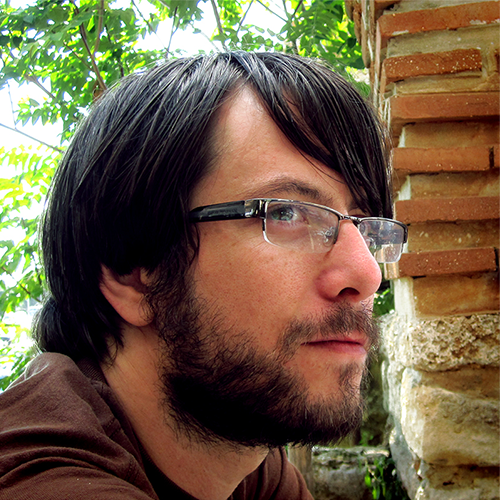
In this episode of the RealLifeSuperPowers podcast, we speak with Tal Zubalsky, Co-founder and CPO of Eko (previously Interlude) – the only streaming service in the world where stories are shaped by viewers as they unfold.
Eko is a mini-cosmos where any series of choices that people make affect the outcome of the plot. The story of how the company was founded and got to where it’s at today is no different.
Tal’s background is creative. He studied animation in Tel Aviv, and was part of a music band, together with the rest of his Co-founders. It all started when the band members wanted to create a music video for their audience that would be original and different. They created an interactive video, got great feedback and realized they may be onto something big.
From very early on Tal and his co-founders weren’t afraid to take risks. Before they had any technology they pitched to the Israeli version of American Idol and committed to creating an interactive video for the show. When getting a “yes” they then had a very short time frame to deliver. This risk paid off – they were able to create what they had promised and were then ready to turn this into a real business.
Talk about “overnight ten year success” – for a while, they worked on this as a side project and didn’t go all in. Tal had another startup and the rest of the team also had other projects they prioritized. Once they tested the waters enough they gained confidence and made the life changing choice of dropping everything else that they’re doing and focusing on this project solely. For Tal this meant having to leave another startup that he had founded. As in any good story, the startup he left become very successful. No regrets though, Tal didn’t make a bad choice in his storyline – to date Eko has raised over 70 million dollars and has super high level investors on board such as MGM Studios, Intel and Samsung.
The Eko team has been keeping a very agile approach along the way, pivoting and changing business models as they evolved into what they are today. There’s much to be learned from their agility and resilience. They’re driven by passion to bring a new medium to the world. Tal describes their journey as a roller coaster ride. “10 years in, it’s the craziest it’s ever been, being an entrepreneur is NOT easy”.
Now a company of 80 people, one of his main insights is that as a growing startup you don’t necessarily have to hang onto the culture that you had when you set off. The key is to evolve and to constantly learn and improve how you communicate and how you set processes.
When you surround yourself with people who share the same mindset, the “how” is adjustable. And how do you find the right people? In order to assess a good fit, a cool tip Tal shared is to start out with hiring people as contractors and test out how you work together. If things don’t work out it’s much less painful that way.
Another fascinating point in the interview is learning how the dots and previous experiences in life connect. Tal and his co-founder Yoni, struggled writing down the core values of the company. They resorted to asking themselves what the core values of their mutual band are. This was easier for them to answer and through that they created the values of Eko – in their special way they ended up writing this as a poem they called “We Are All Artists”.
There are many more gems in this interview such as Tal’s 3 golden rules for succeeding in making a product that works.
We hope you enjoy your listen. We really ARE all artists.
Zooming out, if you like listening to this podcast, make sure to subscribe so you don’t miss new conversations with peak performers, serving as a reminder we can all tap into the best versions of ourselves.
You’re also welcome to follow Ronen and Noa on Linkedin
And if we may ask for a favor – please leave us a review on your native podcast app.
Some further resources:

[This transcript was generated from YouTube’s auto-captions, not a verified human/AI-diarized transcript. Timestamps and wording may contain errors, and speaker labels below are Claude’s best-effort inference from context, not confirmed against audio. Please review before publishing.]
[Music]
Host: We’re here with Tal Zubalsky, co-founder and CPO of Eko, the world’s only streaming service where all the content is interactive. How are you? What are you up to these days?
Tal: Great — we actually released the first show in our summer lineup just two weeks ago.
Host: Cool, what show is that?
Tal: It’s a collaboration with BuzzFeed — specifically the Tasty brand. We took the tasty-food-video format BuzzFeed is known for, but we don’t reuse existing footage, we shoot everything ourselves so it’s built to be interactive from the ground up, with choice baked into the experience.
Host: A lot of people in the industry ask this — does Eko have anything to do with that interactive Black Mirror episode Netflix did?
Tal: No — Netflix came into a space we’ve been leading for years. They’ve clearly been watching what we do, and we’ve had some contact with them, but we had no involvement in that project.
Host: What’s the chance that in a few years we’ll see something like a movie where the audience votes in real time on what a character does next — does the president go to war or not — and the story actually changes on the spot?
Tal: We genuinely believe there’s a real chance of that, which is why we’ve been doing what we’ve been doing. Right now we’re focused less on film and more on mobile, on the everyday content people are already consuming daily — but I do think this eventually moves to bigger screens too, both in the living room and in theaters.
Host: You’ve been at this for close to ten years. Take us back to the beginning — how did it start?
Tal: We come from a creative background — I studied animation and played music in Tel Aviv. Before Eko, I had a startup with two high school friends. Eko’s CEO, Yoni, is a good friend of mine — I played in a band with him, actually still do. We were experimenting with new technology-powered ways to make an interactive music video, originally just for ourselves, for the band. One thing led to another, we got amazing feedback, and started to see there was potential for something much bigger than a single music video. This was around 2010, in Tel Aviv.
Host: What happened next?
Tal: Around that same time, Yoni was a judge on the Israeli version of American Idol, so he had a lot of industry connections. We had this idea — we were getting great feedback on our own project, so let’s test whether it actually works outside of it. At the time, every contestant auditioning sang the same song. We pitched the show: give us the footage of everyone singing that same audition song, and we’ll build an interactive experience where you can switch between different contestants singing the same part, and even see data on which ones people picked most. We didn’t have any technology yet — just a demo of our own — but they went for it. That was our first real project.
Host: So that was your first deal, without even having the technology built yet?
Tal: Right — we pitched the idea, understanding that if they said yes, we’d have to figure out how to actually build it. They agreed, and we had about two months to build it, which was intense, because it was a highly-rated show in Israel with a lot of traffic.
Host: Did you panic once they agreed?
Tal: We hadn’t fully figured out what we’d do if they said yes — but I think that uncertainty was part of the excitement. That was really the tipping point where we understood this could be an actual business, not just something fun we’d built for ourselves.
Host: What I’m curious about — you made a fun music video because it seemed cool, then pitched a proof of concept. But eventually you had major investors and a board. What got them so excited?
Tal: At the beginning we didn’t fully understand it ourselves — we saw the potential, but couldn’t always articulate exactly what we were building. As months passed, we bootstrapped, got our first investment, started scaling — and honestly, even close to ten years in, we’re still discovering how big the potential actually is. It’s not “potential” anymore at this point, it’s happening.
Host: What does a client relationship look like today, as an example?
Tal: That answer would look really different depending on which era of the company you’re asking about — the model has changed a lot over time.
Host: When did you decide to leave Israel and go all-in on this overseas?
Tal: That’s a good question, because at the beginning we actually didn’t go all-in. I was a full-time working musician in Israel, fairly successful, and I had my previous startup with my two high school friends. Eko — which was called Interlude at the time — wasn’t yet a full-time thing for any of us; we were testing whether it was heading in the right direction. At some point Yoni flew to New York for the first time after the Israeli Idol project, armed with a use case, early versions of our technology, and some presentations. He came back from that trip and basically said, guys, we need to go all-in and build a real company. That was a hard decision for me personally, since I had another company at the time — but I ended up joining forces with Yoni and our other co-founder to build what was then called Interlude.
Host: What did you tell your other startup’s team when you made that decision?
Tal: It’s an interesting path, if you think about life as a series of choices, and this was a meaningful one for me. My two partners from that earlier company — still close friends today — ended up deciding to stop doing client services work and focus on building their own product instead, which they eventually took through 500 Startups, and it actually did really well — one of them later became a 500 Startups investor in Israel. It worked out well for everyone in different ways.
Host: Once you had the product, it sounds like you tested it across a lot of different use cases before narrowing in — who ended up actually being your core client?
Tal: That’s a good question, and it leads into the next phase of the company. The first evolution was really a testing period — very horizontal, we were essentially inventing our own internal programming language for interactive video and using it to build one-off interactive projects. That led to the second phase, which lined up with raising a funding round and scaling the team to build an actual platform. We launched a product originally called “three” — today it’s called Eko Studio — where anyone can sign up and build their own interactive videos. We started experimenting with the business model too, licensing the platform out to premium partners to create branded, interactive advertising content — we worked with Coca-Cola, Pepsi, car brands, really names across the board who wanted access to this kind of interactive technology for their campaigns. A lot of our early revenue came from that — not advertising on our own platform exactly, but supplying the platform that let brands like Coca-Cola build better, interactive advertising themselves.
Host: Is that still the model today?
Tal: Not exactly — it’s evolved pretty dramatically. What I just described was roughly the model about four years ago. Around then we made a big strategic decision. We realized we were on track to become the leading platform for interactive video, without any real competitors — but most of our use cases were still brands licensing the platform to make their own ads, which paid the bills but wasn’t actually bringing this new medium to mainstream consumers, into people’s phones and living rooms. What drives us, even now, is the idea that we’re bringing a genuinely new medium into the world — the same way podcasts, which barely existed not long ago, exploded once the technology enabled them. We decided that betting purely on being “the platform” wasn’t going to get us to mainstream scale fast enough. So we made the call to build a media company ourselves — since up until then we’d essentially been handing our platform to other media companies to engage their own audiences, we asked, what if we used it to build our own audience instead? Part of that decision was going all-in on premium content rather than user-generated content, and a free model instead of subscription, since people won’t subscribe to a medium they don’t understand yet — so it would be free, monetized through branded integrations and interactive advertising, not just pre-roll ads bolted onto normal video.
Host: Let me make sure I understand — so today, essentially, you’re something like a media platform that only produces interactive content?
Tal: You could call it the Netflix model, but for interactive content — though there are real differences. Netflix is subscription-based and TV-focused; we’re mobile-first, free, and ad-supported, closer in spirit to something like YouTube or Facebook in terms of reach, but built entirely around premium interactive entertainment.
Host: How many of you actually packed up and moved overseas to go all-in on this?
Tal: We’re three co-founders — myself, Yoni, and our third co-founder. Yoni moved to New York first, probably around eight years ago, and the rest of us followed pretty quickly. I stayed in Israel a bit longer to help run and build out the Israeli office, and once we found our CTO, I eventually moved to New York too, along with the majority of our development team.
Host: What’s it been like collaborating on this together for years — there must be real ups and downs, disagreements?
Tal: All the clichés about startups are true, honestly — it’s a genuine rollercoaster. As the company scales, the opportunities and funding grow, but so do the highs and lows. If you go into building a company expecting it to get easier over time, you’re in for a surprise — ten years in, it’s the most intense it’s ever been. Exciting, but genuinely not easy.
Host: How does the content model actually work now — are you making the content, or buying it?
Tal: Think of it almost like a film fund — we raise funding from partners to finance content on our platform. We’ve partnered with companies like Sony, MGM, and most recently, our biggest deal, with Walmart last year. These partners fund the creation of shows on our platform, but we’re not a production studio ourselves — we’re still a platform. We find the right creative and production partners, train and educate them on how to think in an interactive format, which is very different from linear storytelling, fund them, and they go create the content. We distribute it, generate revenue through advertising, and share that revenue with the content partner.
Host: I also heard Snapchat’s director was involved with you at some point?
Tal: We’re in ongoing communication with Snapchat — we were actually planning a show with them last year, and we’re still in touch about future projects.
Host: You’ve said it’s not easy — every entrepreneur we talk to says the same. How do you personally handle the stress and resolve disagreements within the team?
Tal: That’s really a few different questions. On team dynamics, I think it comes down to finding the right people. We started with three people, and we’re close to eighty or ninety now — maintaining the same culture and dynamics at that scale is genuinely hard. Part of the trick is accepting you don’t need to preserve everything exactly as it was, you need to let the culture evolve, keep improving how you communicate, keep improving your processes. If you pair that mindset with genuinely like-minded people who approach things the same way, that’s really the whole secret — good people, a growth mindset, and testing and iterating not just on the product but on the team and processes themselves.
Host: How do you know you’ve found the right people, or the right co-founder?
Tal: Honestly, I’ve personally never had to go find a co-founder cold — I started my first company with two high school best friends, and Eko with Yoni, who I’ve played music with for years, and our other co-founder, also a close friend. It always happened organically for me, so it’s hard for me to picture what a deliberate search for a co-founder even looks like. In general, I think the best approach is just to test working together — even a rigorous interview process only gives you a few hours of real signal about someone. I’ve found it works well to start people as contractors or consultants with a clear path to a full-time role, so the first few months become a genuine mutual trial — you learn if it works for them, and they learn if it works for you, and if it doesn’t, it’s much less painful for everyone.
Host: Do you have some kind of formal way to work through disagreements, or veto rights, when you don’t see eye to eye?
Tal: We put together what we call our values booklet. It took time to get right — coming from Israel, and from a rock band background, it initially felt a little strange to try to put our actual values down on paper without it feeling forced. But we treated it as an opportunity: we asked ourselves, if the band had to write down its own values, what would they look like — the chaos and intensity that actually fueled our creativity and productivity as a band — and tried to translate the good parts of that into values for the company we were building. What we landed on was almost a short poem that captures our values.
Host: Is it actually a poem? Do you have it with you — would you read part of it?
Tal: Sure. It starts, “We are all artists” — which I think is the first and most important value at Eko. At the end of the day we’re a scalable, technological platform company, that’s what we raised funding to build, but the actual engine driving us is deeply creative. We didn’t start this to solve a narrow business problem — it’s almost art for its own sake, and ten years in, that’s still what gets everyone at Eko out of bed. Even the financials of the company don’t map cleanly onto any existing model — we’re not quite a TV show, not quite a game, somewhere in between — so you have to be creative across every part of the business, not just the creative team. That’s what “we are all artists” is meant to capture. It continues: “We are terrified of wasting time. We hit unrealistic goals, throw out art, and set some more. We act passionately, help each other flourish, and when we screw up, we learn quickly and move on. We use data, facts, logic, and intuition — when we don’t have the first three, we trust our guts. We press each other. We love a good fight, we love a good laugh, we speak our minds, listen closely, and never hold a grudge.”
Host: Was there a lot of debate around writing that?
Tal: There was — Israeli culture is direct and loud, and our biggest office, in New York, has close to sixty people now with relatively few Israelis on the team at this point. We really wanted everyone to understand that when we’re being loud, it’s not aggression, it’s passion.
Host: That’s genuinely lovely — you took something that’s become a fairly standard exercise, writing company values, and turned it into something creative, essentially a song.
Tal: It was a nice process, yeah.
Host: Have you ever thought about actually performing it, or turning it into a video on the platform itself, where people could interact with your own values the way they interact with your content?
Tal: [laughs] Maybe someday.
Host: One of the things I really admire about what you’re doing is that it opens people’s minds to a different kind of storytelling — like those old choose-your-own-adventure books, but as video. Is that intentional?
Tal: That’s exactly the intention. If you think about what technology has already done to our digital lives, everything is interactive — your Instagram feed is personalized and unique to you, your games are in your pocket, even the way we learn now, following hyperlinks on Wikipedia, is a personal path. Video is basically the one medium that’s stayed the same for decades — you press play and get one single, identical stream for everyone, no personalization, no agency. That made sense years ago because mobile computing power and bandwidth weren’t there yet. When we started, we were honestly a bit ahead of the available technology. Now, in 2019, devices are powerful enough, bandwidth is there, and thankfully we’ve been at the forefront the whole time. Video making that leap into the interactive, digital age has to happen eventually — and it’s actually validating that we’re not the only ones pursuing it anymore.
Host: If you had to give entrepreneurs a few golden rules for building a product that actually works, what would they be?
Tal: First, that same growth mindset — don’t get attached to any one idea, assume you know nothing and need to prove everything. Have strong hypotheses, be creative about direction, but do the minimum work needed to test and validate an assumption as fast as possible, because you genuinely don’t know what’s going to work — you’re going to be surprised, so try to get surprised as efficiently as you can. Second, what I call squeezing your brain — when you’re evaluating a feature, big or small, don’t settle for the first idea that comes to mind. Force yourself to generate ten different ways to solve the same problem before committing, even though your first instinct is sometimes actually the best one — you still need to go through that exercise to really know. And third, it comes back to team — find the right people to bounce ideas off and stress-test things with, even if it’s just you and one or two others starting from nothing. It’s very hard to push something forward entirely alone.
Host: Where do you see yourself in two years?
Tal: Two years is an interesting horizon, because we closed a very large deal with Walmart at the end of last year — close to a quarter of a billion dollars invested in content on our platform, with an initial two-year phase. So in two years we’ll have a substantial slate of interactive programming, hopefully breaking into the mainstream with organic hits, not just isolated novelty events the way interactive content has mostly existed until now. What we started two weeks ago with our first show launch is ongoing, continuous programming — we’re developing dozens of shows, releasing on a regular cadence, building real audiences and real data over time, which will help us both improve the programming and understand who’s most excited about this format. From there, the longer-term vision is to go back to being a platform underlying other big use cases beyond entertainment — user-generated interactive content, education, healthcare, real estate — there’s a lot we could eventually do, but right now we’re deliberately focused on entertainment to bring this to the mainstream first.
Host: We should regroup in two years and revisit this.
Tal: Agreed.
Host: To sum it up — what’s your superpower?
Tal: I think I learn very fast.
Host: That actually ties together everything you said earlier — being flexible, expecting surprises, having multiple solutions ready even when the first one feels good enough, and finding the right team. Those all sound like things that come from learning quickly.
Tal: Exactly.
Host: And the harder question — what’s your kryptonite? People usually find it easier to name a weakness than a strength.
Tal: Probably what people here call red tape. Once you reach a certain size and start working with big corporate partners, there’s a lot of process involved, and it gets in the way of moving and learning fast. That’s probably my biggest kryptonite — when the pace the world runs at starts slowing you down.
Host: A rockstar entrepreneur having to become more corporate — that sounds like a real challenge.
Tal: It’s a mixed feeling, honestly. To grow a company, you have to accept that it won’t stay the same as it grows — like a person, it changes shape as it matures. The comforting part is that you’re inside that growth and in a real position to steer it in a good direction rather than a bad one. As the team grows and you need more process and more layers, you just have to keep leaning into your values so that growth doesn’t slow you down more than necessary. Being slowed down by outside partners is one thing — being slowed down by yourself is a different thing entirely, and you have far more control over that.
Host: I’m genuinely excited to see where you’ll be next time we talk. Thank you so much for your time, best of luck — we love the idea, we’re definitely going to be watching whatever you put out. Keep doing what you’re doing — this is one of the most exciting things coming out of Israel right now, and keep making us proud.
Tal: Thank you so much, thanks for having me — this was awesome. Bye for now.
[Music]
We have the technology. Real Life Superpowers.
[Music]
Dr. Zohar Bronfman – The Limits of Knowing Dr. Zohar Bronfman is the... Read more
Building a Company That Doesn’t Depend on You Naveh Ben Dror is the... Read more
Life Is a Game Lior Pozin built AutoDS into a company with more... Read more
What started as an idea between two Technion graduates became one of the... Read more
Going all in, whatever it takes In this episode, we speak with Lior... Read more
In this episode, we speak with Eli Goodman, co-founder and CEO of Datos,... Read more


