
Episode #99: Zohar Bronfman – Co-founder and CEO of Pecan AI
Dr. Zohar Bronfman – The Limits of Knowing Dr. Zohar Bronfman is the... Read more


Episode #99: Zohar Bronfman – Co-founder and CEO of Pecan AI
00.00/57:41
Building a Company That Doesn’t Depend on You
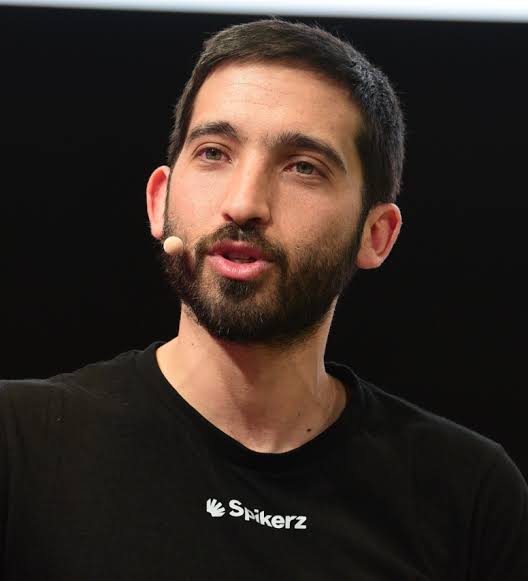
Naveh Ben Dror is the co-founder and CEO of Spikerz, a startup protecting the social media and digital accounts of brands and public figures from increasingly sophisticated attacks.
Spikerz works with more than 100 customers, including major global brands, athletes and celebrities, and has raised $7 million.
Naveh is 30.
But his education in entrepreneurship started long before Spikerz.
He was born into a company
Naveh grew up with two entrepreneurial parents who built a sports distribution business together.
Business wasn’t something that happened at an office.
It happened at home.
At six, he was helping unpack boxes in the warehouse.
Friday night conversations included exchange rates and deals.
His mother went back to work three days after giving birth because the business needed her.
“I grew up into a world where business is part of the family.”
And growing up inside a business meant seeing both sides of it.
The good years.
And the years when his parents didn’t take a salary.
The image he still remembers
When Naveh was seven or eight, he watched his father hand out trophies at a sporting competition his company sponsored.
His father hadn’t competed.
But there he was on stage.
Naveh remembers wondering why.
Only later did he understand what he was seeing.
His father had been a soccer player with no business background. He had taken a risk, built something from scratch and earned his place on that stage.
When Naveh looks back today, the quality he admires most isn’t the success.
It’s what it took to survive the difficult years.
“I think his superpower was to overcome difficulties.”
The sports ethic
Sport runs through the family.
Naveh’s father played soccer.
His grandfather was part of the Israeli soccer team and later headed Maccabi International.
Playing a sport was mandatory in the Ben Dror home.
Naveh played tennis for eight years and competed as an equestrian, making the Israeli team.
During the conversation, a connection starts to emerge that even Naveh says he hadn’t thought about before.
Sport teaches you early that being bad at something isn’t permanent.
You practice.
You lose.
You get better.
You pay a price.
And eventually your brain has evidence that difficulty can be overcome.
“I never thought about it like that, but it’s a good indication.”
It’s a lesson he plans to pass on.
When he has children, he says sport will definitely be part of their upbringing.
His mother gave him something different
Naveh’s mother was a drama teacher.
Her lesson was less about endurance and more about people.
“The world is a big stage and you need to act accordingly [in] specific scenarios.”
Different rooms require different ways of showing up.
Naveh describes her strength as communication and emotional connection.
Looking at his parents together, you can almost see two parts of his own leadership style taking shape.
From one side, endurance.
From the other, people.
The problem that found them
Spikerz didn’t begin with three founders sitting in a room trying to invent a startup idea.
Naveh was working in digital marketing when he got a call at 1:00 in the morning.
Someone had taken over the company’s account.
Everyone had been kicked out.
Nobody knew what to do.
The following weeks were, in his words, “terrible.”
They had to publicly tell people that the content appearing on their own accounts wasn’t actually theirs.
Naveh called a friend with an intelligence background and asked a simple question:
“How come nobody protects this?”
They assumed somebody did.
Nobody did.
“The ideation phase hit us like a lightning strike.”
They researched what had been tried before, why others had failed, who might buy the product and whether the problem was big enough.
Only when they had enough confidence did they leave their jobs.
As Naveh puts it:
“We jumped to the big boys pool only when we had enough confidence that this makes sense.”
They were wrong about the customer
Their first thesis was that security teams wouldn’t care.
The problem sat outside the traditional security perimeter.
Marketing teams, on the other hand, understood the risk immediately because these were the assets driving their KPIs.
So Spikerz initially focused on marketers.
They were wrong.
Today, the company’s buyers are Chief Security Officers.
Naveh seems genuinely happy about that.
“I’m very happy that we were wrong.”
It’s a small line, but it says something about the way he thinks.
A thesis is there to be tested.
Not defended.
AI changed the attack
Naveh shares the story of a social media manager at one of the world’s largest football clubs.
The attack began with a personalized LinkedIn message from what appeared to be a UEFA recruiter.
The recruiter’s profile looked real.
The job description matched the target’s experience.
The landing page was built specifically for him.
Even the fake Facebook login page already contained his profile picture and email address.
He entered his password.
The attackers reached accounts with more than 70 million followers and used them for a crypto scam.
And he wasn’t the only target.
Fifteen people were approached with individually tailored versions of the same attack.
The unsettling part isn’t that this kind of attack is possible.
It’s how cheap and scalable AI makes it.
“You can become a phishing attacker from your bedroom… for fun if you wanted to or just gain a few bucks.”
The other side of AI
Naveh is equally interested in what happens inside companies.
Marketing teams are beginning to give AI agents access to paid media and social accounts.
Those agents can act autonomously.
They can publish.
They can spend.
They can access accounts with enormous audiences.
His question is simple:
“What stops it from doing whatever it wants?”
The same technology increasing the attacker’s capabilities is also increasing the number of autonomous actors companies themselves are connecting to sensitive digital assets.
That’s the risk Spikerz is now building around.
What stays after this episode
Naveh grew up watching entrepreneurship up close.
Not the mythology of it.
The work.
The bad years.
The personal price.
He learned through sport that difficulty can be trained through, and through his parents that building something requires both endurance and an ability to work with people.
Now he’s building Spikerz in much the same way.
Not by needing to have every answer himself.
By learning quickly, bringing the right people together, and trusting the team to get to a better answer than any one person could alone.
Maybe that’s the thread running through the whole conversation.
Endurance gets you through the difficult parts.
But you don’t build something meaningful alone.
Dr. Zohar Bronfman – The Limits of Knowing Dr. Zohar Bronfman is the... Read more
Life Is a Game Lior Pozin built AutoDS into a company with more... Read more
What started as an idea between two Technion graduates became one of the... Read more
Going all in, whatever it takes In this episode, we speak with Lior... Read more
In this episode, we speak with Eli Goodman, co-founder and CEO of Datos,... Read more
In this episode, we speak with James Spiro, a journalist and editor who... Read more


