
Episode #99: Zohar Bronfman – Co-founder and CEO of Pecan AI
Dr. Zohar Bronfman – The Limits of Knowing Dr. Zohar Bronfman is the... Read more


Episode #99: Zohar Bronfman – Co-founder and CEO of Pecan AI
00.00/57:41
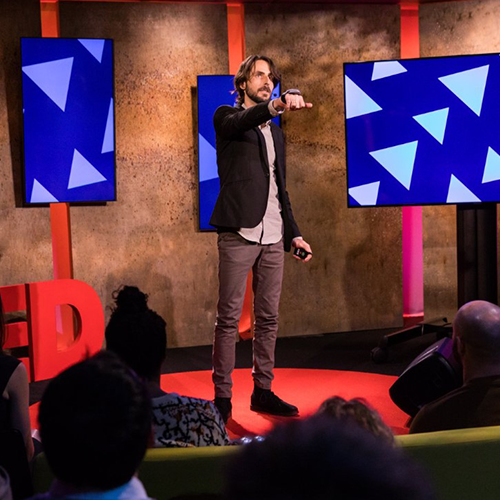
In this episode of the RealLifeSuperPowers podcast, we speak with Matan Berkowitz. Interdisciplinary artist, award winning inventor, entrepreneur, Forbes U30, TED speaker.
Matan is very self aware and is fueled by a passion to make a real sustainable difference in the world. It’s reflected in everything that he does. From founding a company called Shift, where he worked on creating impact-driven innovations, focusing on developing solutions for people with disabilities. To sharing his unique visions by giving talks and performing in front of large audiences, trying to leave people with a sense of ownership over their lives in stages that include TED, Google, Microsoft and Forbes. To his current project where he’s working to enable tongue driven operating solutions. Matan is determined to actively effect people positively and to do things that are larger than himself (or any one being for that matter).
Matan describes the mindset that lead to what he calls falling down the rabbit hole of doing his current project “I know everything is possible deep inside. We can make pretty much anything happen given enough x and y. I believe reality is this bendable, tweak-able matrix-like lucid dream. And I think once you take it out of the comfort zone of ‘can I be a musician/astronaut/something that I want to be. Can I tweak reality to get what I want? What does reality NEED that I can perceive or believe that I can help with?’. It’s not about thinking about the things that are impossible, you think ‘oh this is something that can potentially be done, that can help people, maybe I’ll checkout how to do it’”.
We talk about finding the sweet spot between your passion – what you would do without being paid, without being asked, and what you can SEE and FEEL that the world around you needs.
It’s evident that his superpower is turning ideas into reality quickly and effectively. Checkout the full interview to learn more about his perceptions and how you can also positively bend reality to align with your biggest dreams and aspirations.
Zooming out, if you like listening to this podcast, make sure to subscribe so you don’t miss new conversations with peak performers, serving as a reminder we can all tap into the best versions of ourselves.
You’re also welcome to follow Ronen and Noa on Linkedin
And if we may ask for a favor – please leave us a review on your native podcast app.
Some further resources:

[This transcript was generated from YouTube’s auto-captions, not a verified human/AI-diarized transcript. Timestamps and wording may contain errors, and speaker labels below are Claude’s best-effort inference from context, not confirmed against audio. Please review before publishing.]
[Music]
Host: We’re here with Matan Berkowitz, an award-winning inventor, interdisciplinary artist, entrepreneur, Forbes U30, TED speaker — and a lot more things than that. What’s up, how are you?
Matan: I’m pretty good, what’s up?
Host: I’m good, I’m good. So last time we actually gave this another attempt a few months ago, and it was so disappointing, because halfway through the interview we realized we actually weren’t recording — something went wrong technically. I’m very happy that we’re doing this again.
Matan: Me too. What are you up to these days?
Matan: I’m in a very interesting time, because I’m extremely focused — maybe for the first time ever — on one thing, and it’s transformed my life. From the previous time we were here, there’s kind of an apparent transformation for me, between who I was then and who I am now, mainly because of this grounding, centering focus. So yeah, interesting times.
Host: Wow — that’s like the peak, I think, of what probably every human being aspires to. And I wish you to keep that feeling, because a lot of the time we experience that and it sort of comes and goes. I’m really rooting for you to sustain that.
Matan: Thank you. Well, I kind of disagree with the idea that this is what everybody’s rooting for — actually, I was actively avoiding this my entire life. I was really on a mission to try to prove to myself, or to the world, that it’s not one way you have to follow — there’s a lot of myth, I think, surrounding this idea that multitasking is bad and that focusing on one thing is this fundamental truth you have to obey. I found this to be false for me, both intuitively and emotionally, and also professionally — I was able to do different things and feel like they’re fulfilling, and that they’re happening. So it wasn’t really what I was aspiring to — it was more something that’s been in process for a really long time, for me to really surrender to one thing that feels big enough for me to put all my other whims aside for a while and just give it everything.
Host: I concur, by the way — I think I’m scared shitless of that, just the idea of the one thing.
Matan: Yes, I’m always thinking of things that can be synergetic with other things — if I do this, I could also do that. This strategy of saying yes to a lot of things brings a lot of motion.
Host: Yes, I like motion.
Matan: Yeah, it’s because the thing is big enough. I think obviously these kinds of things, especially when they’re out of the ordinary, are substantial for us — they come together, everything comes together, in your personal life, in your professional life, in your current state of mind. So in my individual journey up until now, it moved more and more into this realm of trying to make things matter — in my mind, in my heart — to have them be real and substantial, and for them to matter potentially to other people. My biggest frustration in trying to do so was that it did help me in many ways, it did help others in some ways, but it was never really that scalable. The most scalable aspect of my work has always been giving talks, telling stories — when you come out with what you’re doing and people are inspired, that could be considered impact, and that for me was pretty scalable. But the things I was actually building and putting my energy into weren’t talks or storytelling — they were the actual things, and for a few years they remained kind of at the center of my life, but they stayed limited in scope by design, by who I was doing them. I was trying to reach that place where what I’m doing feels important enough to help a lot of people, and once I started feeling this way about something, it became more and more apparent that it’s growing, it’s happening — it’s kind of disciplining me, because all of a sudden my normal priorities changed to accommodate this growing thing. It feels more important than most of what I want.
Host: So it pulled you naturally.
Matan: It was a natural thing, over time. I found the right partner, we started building the right team, we got some specific funding — we gradually fell into this commitment. It was like when you fall in love, and it’s there from the beginning — you see it in this part of the person’s eyes, like “oh, I could see this thing for you.” It’s not out of the question, but obviously it’s very far from where we are right now — this is like the first day, so I can’t say that we’ve started a family yet with this project, because we only have a small family of people working on it. I think the real family starts not when the investors come in, but when the actual people using it start coming in — that’s when it becomes a family. Right now it’s only pilots and things like that, but I do feel like I am deeply in love with this thing — not in the sense of a crush, but in the sense that I’m willing to make sacrifices and change my life around for something that feels bigger than me.
Host: So who is this new relationship with?
Matan: It’s basically a device that I can’t say too much about yet, but I can say more than I could until very recently — it’s now starting to be something we’re talking about. It’s basically a tongue-based operating system — the idea is the ability to control the technology around you, digital devices like a phone, a computer, a wheelchair, a smart home, using your tongue, without relying on your hands.
Host: I want to talk about the actual technology as much as you’ll be able to discuss at the moment, but before that — what here in this project was so different for you?
Matan: Everything feels different. I feel like the only time I’ve ever approached this kind of position was when I built the Airstrument on Twitch — a gesture-controlled musical instrument. I spent a few years, with different people and different incarnations, working on this device with the mission of making it the most intuitive, most accessible musical instrument ever. This took me for a while into a more classical startup-type world — I was in an accelerator, a European Union one, and then MassChallenge, and I attempted to have different co-founders, and I even had investors interested. I got to play with this thing all over the world, live, and test it, and have people use it, and start experimenting with hospitals. So I was really moving in that direction —
Host: — this is also what people can see in your TED talk, where you’re gesturing and sound is happening at the same time — it’s translating your hand movements and spatial orientation into music, so as you’re moving your hands you can play, and the idea is for it to be very easy, simple, and intuitive, so you can start expressing yourself immediately.
Matan: Right, but my point is, when you ask me what’s different about what I’m doing now — this was the closest I’ve ever come to doing what I’m doing now, and the closer I got while working on it, the more I realized that my personality, touring, giving talks, my relationships, whatever was happening in my life, were just more aligned and more important to me than spending years getting this manufactured in China and sold to kids at Target. It just wasn’t inspiring enough. I felt like the mission behind it — making music accessible, which was something I’d been doing for years — this is the next level in every possible way, but the idea of turning it into a startup, raising money, building the team, doing all of these things — for me it wasn’t a magical, enticing idea. My life felt much cooler and more aligned before, the way it was. So I realized, gradually, when attempting to go there, that it didn’t feel right, even when I got good results — it didn’t feel like that’s what I should be doing. I also didn’t really have a partner, I was doing it alone, and I think one of the big differences here is that this time, the more I got into this project, the more it felt right, and I started with a partner immediately — an incredible, brilliant collaborator named Elad Oz, who actually came to me with the idea for a tongue-controlled musical instrument, and together we turned it into something much bigger. Having that partnership, having it become this powerful, harmonious collaboration, and having the thing we’re building feel more and more real and important — I never had that before. I had cool ideas that turned into cool things, but none of them sold me enough — it’s the difference between being a rock star and having something with social value and impact. Before, you’re performing, you’re a musician; afterwards, you’re a performer — a technology-startup performer, “rock star” as a persona.
Host: And now you’re talking about something that has an impact on a social level — that may not only give people the instrument, but also help them.
Matan: Yeah — this project isn’t me stumbling into this arena of impact, I’ve been trying to achieve that for years. I built a company called Shift, which was around doing different types of impact-driven projects, and it was so vague that it enabled me to work on a bunch of totally different things all over the world — from small, invisible side projects, like working with XPRIZE in the US, to building things in totally different industries and fields. It was, for me, a big learning experience, but my real aspiration throughout was to reach real, sustainable impact. I feel like it’s a very hyped-up, confusing word, “impact” — we’re almost desensitized to it, you can barely hear it anymore — but I feel what I mean when I say it; it’s not really a term for me, it’s more something I feel almost in my body. One of the best experiences I’ve ever had in this regard, which really set the tone for a lot of what I’ve been doing since, was in 2015 — together with this incredible NGO in Israel [name uncertain from the audio] and my company, we created this event: building technology for people with disabilities, enabling them to play music. We had a lab going for a few days, a weekend, and during that weekend we had maybe thirty or forty really brilliant people, all volunteering — designers, developers, mathematicians, musicians, therapists — and in the center of each group we had a different person with a different disability who was already a musician and wanted to play. I remember moving through that space while everybody was working, and it was this thing that had been a vision in my mind for a long time, and I’d put a lot of energy into figuring out who was doing what — and at that point it was completely out of my hands, it was all these people just doing their thing based on this abstract vision. In that moment, I didn’t just feel pride, or an ego-kind of fulfillment of “wow, we made it happen” — over that there was a very deep layer of people being affected positively in ways they couldn’t even understand yet in that room. It was a very deep vibe for me to feel — if I can get philosophical for a second, all this altruism talk of impact, today it’s also somewhat selfish — you want to feel something, you want to achieve something. Humans are kind of a paradox, this absurdity that you can’t escape yourself, even through the most spiritual, deep practices — you’re achieving something that has to do with you. So I feel like it wasn’t about the altruistic quality, it was more about the sense that this actually matters, and I don’t know how much it matters, and I’m not the one to judge, but I feel in my body that this is a real thing that’s happening. A lot of the things I was doing before felt good, or achieved something, but didn’t necessarily have this.
Host: And you don’t necessarily know what the full potential is — there’s a question mark about whether it’s going to affect or help things you don’t even know about right now.
Matan: Totally — I’ve never felt this more than with this project, because we’re so focused on assistive technology, on helping people who are disabled, but we also completely recognize the potential to affect other industries and use cases. Even the little we’ve done so far, the little we’ve talked about it and presented in certain places, has already generated follow-ups from completely different types of organizations, companies, and intentions. I really don’t know what’s going to happen — it’s kind of weird doing an interview like this, in a way you’re cementing this moment in time, before anything’s really happened — we’ve been working on it for a while, but it’s still very early. But at least the feeling of the potential can be recognized in real time. I don’t know what’s going to happen, but I’m excited by the mystery of it, in the sense that I have a vision, but this is bigger than me in every way, including the depth of that vision.
Host: Do you know what drives you? It seems like there’s a theme of trying to help the disabled.
Matan: Correct — I’ve done a few things in that space for sure, and right now it’s very much at the center. I guess there’s a more straightforward, superficial answer, and a deeper answer. People ask me this a lot, and I think about it — I see how things in this space aren’t really clear, why I guess. The more direct answer is that when I started doing things and attempting, with the company and these different projects, to reach that sense of impact, at the very beginning I worked with an organization that was just starting out [name uncertain from the audio]. We were part of their establishing team, figuring out how to make it happen, and it was basically a hackathon where we built solutions for people with disabilities. Experiencing that early on — not just helping produce the event, but also building — I built an EEG-based musical device with an Israeli startup, that was used by a brilliant maker who was in a wheelchair and couldn’t move anything but his head, but had been able to play guitar before his accident and wanted to play again. Using an EEG device that tracked brainwave activity and turned it into music enabled him to play on stage, and he won one of the awards there. And this was, for me — oh, I see, all this music-tech stuff I’m doing could be used for impact in these kinds of situations. That made me start doing all kinds of projects in that space, with people with disabilities, which eventually led me to do the event I mentioned. There was a vision, at first, only around tech, disability, and music, and it gradually ended up with me doing what I’m doing now, which has nothing to do with music, and everything to do with disability and tech. You can play with this device — we’re playing music with it already, but it’s just a demo, that’s not the point — you can type with it, you can drive a wheelchair, you can do all of these things. So that’s the direct answer. If you want a deeper answer — this is something I normally mention less — in my own life, I was born with a heart condition, and even though I was very young, big things happened when I was very young. I was supposed to die, they told my mom to consider having another baby, there was a whole drama around my birth and my first year or two. Over time, as I became more conscious as a human being, it became less and less dramatic — by the time I was in high school, it wasn’t really a felt part of my life, and by the time I became a functioning adult, I was already breaking all these barriers. I think the main thing that changed everything for me was when I did skydiving — I decided, I think around that time, that this idea of “I can’t do everything” — before that, I thought, okay, there’s a chance I could die.
Host: But I’m guessing, with your condition, that must have gone through your head.
Matan: No — but this is exactly it. I think life is a lot about the narrative we hold about ourselves, and that’s what it is, and I felt like this was my final act of ridding myself of a narrative that I was given — I didn’t choose it, and in a way I rejected it from the beginning. I think I grew up in a mindset that always kind of saw itself as, “well, this is just how it is.” Even when they offered me to have a device put into my body, to electrocute this extra thing I have — I was like, no, it’s fine, I’ll live with this, because this is who I am, unless there’s actual danger right now — and I can solve it, I’m okay, and I took this “I’m okay” belief all the way to the day I jumped 5,000 meters out of a plane, and realizing that it was really fun was just a way for me to start doing everything else. I started traveling the world after that.
Host: Why did that make that change? You’re just supposed to run in gym class, not jump off a plane.
Matan: Yeah, I’m over-analyzing it, but it’s sort of an adaptation to other people’s assumptions — like, if you’re disabled, you can’t play, or you can’t do something. It’s kind of giving other people the reason, like, “who said you can’t do something?”
Host: Exactly — it’s sort of giving other people, and yourself, permission.
Matan: Exactly, that’s what I’m saying — it’s a deeper feeling. Yes, we have limitations, yes, I was born with a condition — it might be invisible, but it’s a very physical condition, I have something in my heart, I was born with two of these things. But there’s a narrative, there’s a story, there’s even a physical condition — but can we take control of this, can we make it into what we want? If you were able to play music before, can you play again? If you were never able to play music, can we find out how you can? At this point I feel like helping people play music is very nice, but again, that feeling of impact and scalability — I need to up it, it needs to go up. This is the evolution of your own potential, in a way, and now I feel like: can you do all kinds of things you weren’t able to do before?
Host: Do you actually go through that methodically? Do you sit down and reflect on what’s considered impossible?
Matan: That’s a good exercise — I don’t know if I’ve ever done it methodically, it’s almost intuitive. I think you just think about things that are exciting and interesting to you, and you’re less limited by what’s feasible. Sometimes I have meetings, people coming to consult me, and it works both ways — you’re talking to someone and you’re putting on this cap of “is this feasible,” grounding them: “you have a dream, let me ground you — what are the numbers, this guy who failed at doing this thing” — constantly grounding the person, because you know this field, you know how difficult it is. And then there’s the “dreamer” cap, where you know everything is possible deep inside — we can make pretty much anything happen given enough X and Y. I believe reality is this bendable, tweakable, matrix-like lucid dream, and once you take it outside of the comfort zone of “can I be a musician, can I be an astronaut, can I be something I want to be,” into “can I tweak reality to get what I want, what does reality need that I can perceive or believe I can help with” — there’s a different energy to it, and you feel like it’s not about thinking about things that are impossible, it’s more like, “oh, this is something that could be done, and could help people, maybe I’ll check out how to do it.” With this project, it was the first time that just by checking out how to do it, we fell into a rabbit hole — this is what we want to do, and it’s exciting.
Host: And it definitely sounds in correlation to other stuff you’ve been doing over the past few years — trying to help people, and giving a lot of talks. Is that something you’re thinking of shelving for the time being?
Matan: I actually took a break — I’ve been on a break from talks for months now. I only gave two talks, and they were both in the context of events or forums where I was actually pitching my company, so it wasn’t really an official talk, it was more like a Trojan horse — I was invited to a very exclusive event in the accessibility industry to give a talk about music, tech, and disability, and I did, but of course about two minutes in it turned into “this is what I’m doing right now.” But that room understood.
Host: You gave birth to a lot of really good talks — I saw some of your presentations and they’re great. What tips do you have for anybody giving talks or presentations?
Matan: On a very crude level, there’s something to be said for what we could call “the gimmick,” but it’s not really the gimmick — I’d say it’s the experience. What happens with talks is you could watch a row of talks at an event, by different people, and some would be about something you’re interested in, some about something you’re not, some very charismatic, some you’d find annoying — that’s the source material, who the person is and what they do. But even for a talk you really liked, it’s the one that made you experience something, participate in something — you don’t really know exactly what it was, but it was exciting, and that’s the one you’re going to remember, the one you’re going to talk about. There are a lot of different ways to approach it, which is why I’m mockingly calling it a gimmick, because it could be anything. For me, it’s a clear answer — I started with talks: my TEDx talk was my first ever talk, and I don’t play anything during it, I just speak. But because that’s kind of how I think about things, I did find things I could do on stage — using sound design, things I triggered on stage within the TEDx format — that made it more of an experience, but very subtly; I used sound design of a train and drops of water to convey a story, small things like that made it more memorable. Going forward, I realized, even when I’m not giving a full show — because I have given shows, with dancers and sensors and stage design, bringing a whole vision to life, sometimes epically failing — but even in normal talks, you still want to present something people can feel, see, and experience. For me, these days, it’s usually bringing one of the devices, like the Airstrument, and playing it on stage — so now you’ve seen videos, seen pictures, heard stories, imagined things in your mind, and now you see the manifestation of everything you’ve just heard. That brings it to life, people go “oh, that was memorable,” and it’s easier to remember, easier to get booked again, easier to connect to. For people who don’t perform in that way — for example, someone showing tables and numbers behind them — you can use audience participation, having people throw out numbers and doing the math on stage, showing them a trick and how you did it with their suggestions, or going more creative, bringing in some kind of on-screen “slot machine” that chooses random numbers, or a whole game where you don’t even understand where it’s going, but at the end you have all this data sourced from the audience to work with. There are all kinds of things you can do to a talk so it’s not just a person speaking over slides for a long time — I think you can enchant an audience with just speaking and visuals too, but if you ask me for a tip, I’d say: having something truly memorable will pay off.
Host: There’s the guy who talked about evolution —
Matan: — or was that the guy with the beard?
Host: No, the guy who levitated.
Matan: Oh, the guy who levitated, right — it’s easier to have something that grounds it for the audience, and they remember it and understand what you just told them from an experiential place.
Host: So instead of preaching, it’s about trying to reflect to the audience why you’re passionate about this, what sparked your imagination, and what made you so excited, and seeing how they can tap into that. I think sometimes a talk becomes really boring when someone is very straightforward, just showing the table, showing the numbers.
Matan: Actually, you’re very right — beyond gimmicks or shows or tech, another big piece of public speaking, for me, is: why are you doing this, what’s really the point of your talk? I think at the end of the day, almost all talks have the same point — you want to share information, help people learn something or feel something, but what you really want is for people to feel inspired, to come out of it aiming a little higher, feeling more aligned with what they really want or believe. Of course you can also give a talk that’s very depressing, about how the world’s going to end, but if you don’t finish that talk with anything that could be done, anything people could participate in to make things better, it’s just going to be a depressing time. What you really want to do is leave people with a sense of ownership over their own lives. With what I do, I feel like, beyond shows or demos, I always end all my talks the same way — even when I’m asked to give talks that are very specific, not what I normally do, I still end this way. A very short version of it would be saying: I’ve just spent this time talking to you guys about very specific things, my story, my narrative — music, technology, disability, all these key words — and I don’t expect you to do any of this, most of it isn’t even relevant or that interesting to you beyond this talk, and I don’t expect you to expect that of yourself. But if you’re feeling that right now, feeling drawn to do something, or to align in some way, I feel like the real point is that there’s a sweet spot between two things: what you would do naturally, without being paid, without being asked — that’s your passion, your love, your nature, in a way — and what you can see and feel the world around you needs, your community, your view of the world. There’s a sweet spot between what you love doing and what you think the world needs.
Host: Do you think there is always one?
Matan: I think there’s always one, and I think the quest to get there isn’t like, “oh, I just thought about it and got the answer” — for me it’s been years, and I’m still figuring it out. This interview, right now, is a moment where I feel I’ve found something closer than ever, but let’s face it, it’s all like an accordion — it gets closer, then farther, in cycles — but the whole trick is just to aim there. It’s not really about arriving — at any point in my story, I could stop and say either “this is enough” or “this is nothing.”
Host: That’s interesting, because I have my own answer to this — do most people find it, and say “okay, I found it, that’s enough,” or is it really more that you find something unbelievable — say you have a partner and you want to get married, at one point you just decide “that’s it” — and you don’t worry about it anymore?
Matan: No — you keep working on your relationship, and the whole trip is that the person keeps changing, and you keep changing. But that balance — it’s sort of like that in business too. You can say, “that’s it, I’m focusing, no matter what, even if there’s not enough scale, even if I’m not happy every day, even if I’m working with people I don’t love” — you’re compromising enough to have that focus. Or you can work on something for a specific moment, but I don’t know if it’s going to be there for your whole life. In my experience, it’s all a temporary phenomenon, all of it, and I think this is why the whole thing isn’t about finding “the” thing, because that’s like trying to catch water in your hands — it’s not going to work. What you can do is choose to go to the water, choose to go to the sea — that’s all you can do. You can either stay on dry land, or you can go to the water, and it’s not about holding the water in your hand, it’s about being in the water. For me, the main point is that something very deep shifted, in my personal experience of life, when I went to the sea — this is a bit of a confused metaphor at this point in the conversation, but this is what I’d done up until then: I was working in film, in television and internet — screenwriting, directing, editing films, I had bands, I was making music and touring, producing events. I was active, doing things I believed in, but after a few years — my whole life up until that point had been defined by this — at a certain age, around 27, 28, which I think happens to a lot of people, I started asking: who cares, but me? Why does this even matter to anyone but me?
Matan: And I think starting to ask these questions, and having the privilege to — because let’s face it, most people in the world aren’t in a position to ask this question, much less to devote time, energy, and resources they might not have to answering it for themselves —
Host: — is it a privilege, having a lot of money —
Matan: — it’s more than money, though that’s part of it — it’s being in the position to even have these kinds of conversations, and this is something I honor and acknowledge, because it’s very humbling. You need to be physically healthy, emotionally and psychologically healthy, you need the right kind of education, you need to be born in the right place, often the right color, the right status — if you’re born in the wrong caste, in some places, that’s mostly it, though of course there are stories of people breaking all these barriers, and a lot of what I’m doing is about wanting to help break barriers. But at the end of the day, there’s a sense of responsibility that comes when you realize the level of privilege you have — if I’m in a place where I can do almost anything, what am I trying to do with this time, with this energy? I think most people spend years chasing after their own dreams and ambitions, and they’re often unhappy even when things go pretty well — even when my career was going great and I was happy, it was my dream, but no one else should really care whether I make a great feature film, or whether my band does really well.
Host: And probably the dream keeps growing — like most successful people, they hit a benchmark, and then there’s a bigger benchmark.
Matan: Right — you grow into it, and then you’re thinking, what now? This is what’s happening to me now, with entrepreneurship, impact, all these other conversations. But in art, I felt like I was still young, and I’d had early success as a teenager — my band kind of blew up in Israel, we were playing big clubs when I was fifteen, I grew up on stages, playing songs to 500, 600 people who knew the lyrics and cared. So I always had that feeling of the next benchmark, and how to do these extra, fulfilling, artistic endeavors — I don’t feel like I reached a point and was satisfied and couldn’t move on, it was more that trying to get there got me to the point where I was like, who really cares, why does this matter?
Host: I mean, the people — when you’re a fifteen-year-old playing to 500 people, and 500 people are singing along, they care.
Matan: I think the word “care” is maybe not quite the right word. I think at the end of the day, people care about all kinds of things, especially things like music and film — I care about music and film deeply, and if I wasn’t there, they wouldn’t know a song from there, but would it really matter? Whereas this entrepreneurship, when it succeeds, it’s really going to matter to someone — it’s a game-changer, as opposed to a song, which is a beautiful thing to understand, but sometimes — by the way, I don’t want this to sound too harsh, I am a person who’s really into art, I still make music, I wish I could still make film, I just don’t have time, and I’ve started doing interactive art installations, building things — I love all of this, and I think it has meaning, it has its place. What I was referring to was more the sense of privilege and responsibility, tying into the idea that people are suffering, or being held back, and things are happening all over the world — if you’re in a position to do something and you’re not putting any energy, resources, or intention into any of it, at some point it starts to feel like a missed opportunity. The idea is that you have the potential to do things, and there are things that could be done, or improved, or happen — they’re not your responsibility, nobody’s expecting anything of you, but in my mind you could almost call it — I’m using this carefully, not mockingly — a kind of spiritual instinct, asking “where does this matter?” Not in the sense that a song matters, which is also a very spiritual thing, but in the sense of: here’s a challenge, here are people affected by this challenge, here’s an opening, an opportunity, an angle, maybe I could help with this or be part of this.
Matan: And what’s on the other side of that is raising our vibration — so if you had that feeling of accomplishment, fulfillment, or alignment from creating a song, and you feel like someone’s life is changing because of the gift of music, and you feel elevated — then you go, okay, let’s go work with this organization on affordable housing, and you meet people who are deeply affected by the affordable-housing crisis, and you’re not even solving their problem, but you’re putting energy, time, and resources into figuring it out, helping a massive organization like XPRIZE try to solve it. I was part of the XPRIZE team, with a friend, working on the roadmap to affordable housing — we weren’t solving affordable housing, XPRIZE’s model is that they issue global competitions for other people to try to solve the world’s greatest challenges, and what we were doing was creating the roadmap: what’s the challenge, what are the possible solutions, how do you get there. It wasn’t a clear example of “here’s a child who wasn’t able to do something, and now I see her able to do it and I’m deeply moved” — it was more rigorous work, going to Washington, living in LA, doing interviews and research, doing things that weren’t “cool” on their own, but were in service of something that felt bigger than me, potentially important. I feel like tracing that frequency, finding that thing — it’s its own compass, taking you somewhere. That’s not to diminish creativity on its own, I still feel that’s part of who I am, I’m a disciple of it, but I think at the end of the day it’s about applying the same qualities. In my case, it’s probably that I’m not a technical wizard, not a business savant, but I think I bring creativity, a lot of the time — clarity of thought, maybe — certain qualities, and I can bring them into something, so why not bring them into something that I feel matters more and more? That’s an answer you can only give to yourself, but once it clicks, it changes your decisions.
Host: So what’s your superpower, then?
Matan: I think it’s going from a vision that’s born in my head, in increasingly higher resolution, into reality. There’s a real lesson, by the way, tied to what we were just talking about, a huge lesson in moving from art to tech — because in my fields, in art, I was very much in the belief that I could do everything alone. Of course, when you work as a director you usually have a crew, but the type of director or producer I was — I knew how to do the photography, I knew how to edit, I knew how to compose the music, do the sound, the color correction, the mix, the screenwriting, the production, in every direction — so even if I didn’t have a team, or had a very small team, it didn’t really matter, I was bulletproof. Same with music — I knew how to play different instruments, record and mix them, synthesize — I could have a band, but I could also not have one, I could still make music. When I came into entrepreneurship, it was a very intuitive calling from everything we’ve been discussing, and I had no idea what I was doing, I went in utterly clueless about anything — I went into technology thinking, alright, what do we need to learn to make these things in my mind into real things? And I looked around and I was like, I’m never going to be able to learn even a tenth of this, even if I gave it the rest of my life, even if I just wanted to become a decent developer in one language — because I already had some foundation in code from being a young geek — but now, looking at what I needed to learn just in this specific field, never mind anything else, everybody I know doing this is already better than me.
Matan: And I realized: okay, what was my real superpower this whole time? I wasn’t the world’s greatest guitar player, I wasn’t the world’s greatest cameraman — what I had, in all these cases, including event production, is that I had an idea, and I could assemble a team, and lead the team to achieve some kind of goal, or flesh out some kind of idea, and I would take the role I was best fitted for within that context. So if we have someone to do everything for a film except the soundtrack, I can write the soundtrack — but I’m not supposed to do all the roles, I’m supposed to do the role I’m best fitted for, and my main responsibility is to have an idea and make sure it happens. When I moved into tech and entrepreneurship, this really became my focus — don’t try to learn how to do all of these things, get better at them as you go, as you go deeper, get better at things you’ll need. I see that a lot of entrepreneurs have a lot of talents, but the key is whether they have a specific vision.
Host: Turning that vision into a reality for other people, not just for themselves — it could be a complex mission, because you have the idea, but how do you get that idea into something connected to reality?
Matan: Yeah, there’s kind of a trick, after doing this so many times. One thing that helps me a lot is that I think it’s really interesting to walk around inside your own vision — even if it’s not fully yours yet, even if you don’t fully understand what it is. There’s a David Lynch book about ideation that compares it to fishing — the idea isn’t really your own, you’re catching it, like a fish, out of a river of inspiration, and you’ve just caught a big fish. So the point is: you have something in your mind, and then you want to walk around in your idea, live inside it. I think being able to break something down, even if you don’t fully understand it, and then start living inside your idea, imagining it more and more, and start googling the questions it raises, because you don’t really know it that well yet — then you start asking questions, then you meet people who know better, either friends or people you reach out to, and you’re living in your idea. I think this is what translates most when we speak — when I want to get someone on board, when I want them to join, or even just understand what I want to do, if I’m living there, if I come from there, you’re going to get pulled in. If it’s just an idea — it doesn’t matter, it’s about passion, clarity, and this kind of invisible quality of magnetism that draws you into this environment, where you can also see it, even if you see something a bit different from what I do, but now I’ve opened this portal. What I’m saying is a bit poetic, but I feel like the more you actually live in your idea, in your own mind, in your own sphere, the more you’ll be able to get people excited about it, to understand what it is, to want to join it. I think it’s almost our responsibility, with the things we believe in and the things we’re building, to keep upping the resolution of our thoughts and imagination — getting it sharper, brighter, deeper, more mapped — and I think that’s what charisma is, in a way, the thing that keeps people attentive, that makes people want to join on a more personal level.
Host: I think on a communicative angle, it’s really about — you’re now in that place you’re describing, and this translates very well. A lot of creators experience — I heard this described once — what’s called the “creative gap”: when you’re starting off, you have this vision, whether it’s a picture you want to take, or something you want to write or play, and then you start working on it, and there’s a huge gap between what you actually thought of and what you actually create. I used to think it just takes time, you don’t just put your feet on the ground and hit the ground running, there’s some sort of curve — and I think maybe you’re now at a stage where you have a vision and you’re able to make it happen. Was it always this way? Didn’t you ever experience that gap between the idea, the fish you caught, and the actual reality?
Matan: I always experienced it, and it gets better — not really bigger, but you get better, and things keep getting bigger too. I think it’s an aspect of the judgmental mind — I can be very critical and analytical, and I can go there, and then all the ideas are very far from their execution, all the intentions very far from their manifestation. But I think there’s another type of mind, another type of consciousness, where you go: I had an idea, I had the vision, and now I have a reality — and the reality is stronger, more real and dense than the imagination. It’s perfect as it is — not perfect in the sense that I can’t improve it or take it somewhere else, but perfect in the sense that it shouldn’t be anything else right now. This was my intention, but my intention was imaginary — this is a real thing, and being able to bring that intention into reality in the first place is a kind of human miracle. This is what we do — we visualize or imagine something and then bring it to life, and you can’t expect it to be exactly the way you wanted it to be, because in a way you’re playing god, but in another way you’re not god — this thing that’s happening right now is the thing that’s happening right now. It’s almost like — say there’s a girl you want to go on a date with, and she agrees, and you go on the date — if anything about the date doesn’t go exactly how you imagined, is it a bad date? Every single thing this person says and does is probably not what you imagined — you never imagined getting stuck in traffic, you never imagined she lost her credit card and you had to go back, and then you ran into an old friend — you never imagined any of it.
Host: By the way, you’re a creepy kid. What would be your kryptonite?
Matan: I think my group’s nickname for me used to be my inability to focus on one thing, for better or worse — earlier I was defending that and saying I think it’s okay to do cool things, but now I don’t have an immediate answer. I could put on the critical, analytical cap and think about all these flaws, but I think the most humiliating one — I’m sure you’ll agree — is: I used to think I don’t have a lot of kryptonite, then I noticed that I actually have quite a lot, and if I don’t have the right people around me, there’s no guarantee of success for a business, so it’s not worth it. My personal kryptonite is usually someone else’s superpower.
Host: So what I’m asking is, when you bring in someone who’s supposed to fulfill something as a partnership, because — you can do anything, right, so a hundred percent of that company is your superpowers, but you have flaws that you need someone else for, you’ll need other people for most things — especially in tech, like I said earlier, I came from fields where I felt I’d mastered all the disciplines, and with what I’m doing now, I need someone for everything, I don’t feel like an expert in most things. It’s essentially the answer to: what would your job be if you weren’t the guy making it happen? I’d have potentially different jobs, but I’d come up with maybe four roles for myself out of a hundred things — for the other ninety-six, I’d need people. This is the beauty, the humility of doing this — for me it’s realizing it’s all about these people, about the team, about other people’s skills and talents, it’s not about being able to do everything yourself. I think this is a great question for me to think about right now, because I always had this kind of “for better or worse, I do a bunch of things at the same time” thing, and many people think that’s not a great trait, but now I feel like it might not be the answer right now, because it’s such a different time in my life — not only am I doing this one thing, everything in my life right now is different than it’s ever been. I have a day-to-day, I drink the same shake every morning, I watch the sunset at the beach at the same spot every evening, I have these routines, these ceremonies, and I know it’s not forever, because I’m going to go back on tour, go back to giving talks, I have all these things lined up.
Host: No, you’re going to go back into where you’ve always been. Do you think you can maintain this focus once you’re going on tour again?
Matan: We took a break for a long time, and we’ve thought about whether we’ll ever go back to it — of course my life is going to resume in whatever way it should, but I think being able to be this focused and disciplined right now has shown me — maybe this is an interesting answer — that even the thing you consider your kryptonite, even the thing you think you can’t do, maybe it’s something you can’t avoid and will come back to, but it’s also something you can do — it’s just one of your patterns, one of the things we consider fixed about ourselves that maybe isn’t.
Host: How do you feel about other people’s flaws, if they don’t do things the way you’d wish?
Matan: On a personal, friendship level, I think I see myself as compassionate, very tolerant of my loved ones’ flaws, and I try to practice compassion. On a more professional level, I can be intolerant — it really depends on the nature of the relationship. There’s a person I’m working with right now who’s very young, really brilliant, and would be willing to work for free — he just wants to do what we’re doing — but I pay him, because I want to, even though we can’t pay him a lot, because it’s early. I don’t want him working for free, and this is a relationship where I need to be very forgiving — even though he’d work for free, I think his time is worth much more than what we’re paying him, and he has other things happening in his life that I’m aware of, and he takes more time than planned, and it’s not great for us, but we set boundaries and I try to be tolerant. Other times, you have a much more professional relationship, where it costs a lot of money, or comes with high expectations, and everything is very structured — and when those things start going sideways, I feel like it’s a person not being professional.
Host: I’m getting a hunch — I’m not basing this on anything but this conversation — that people might fear that you’re not tolerant of their mistakes when working with your team, because it seems like you have very high standards.
Matan: The team we have now, we’re all discovering the world together, in a way — everybody’s doing something bigger than they’ve ever done, so I think there’s a lot of tolerance in that atmosphere. But sometimes you’re in a place where you’ve promised professionalism, you’re being paid for professionalism, you’re being paid for results — I think I’m very compassionate in personal relationships, but not all relationships are supposed to be personal and compassionate, sometimes they’re supposed to be results-oriented. You can be friendly, especially when you’re trying to do something that isn’t benchmarked, that has nothing to compare to — because you’re doing something unbelievably challenging, you actually need a level of professionalism, or even creativity, that exceeds normal companies, because the challenge itself — usually, when you have to compare yourself business-wise, it’s a lot easier when you have something to compare to. Maybe this is the most beautiful thing about working on this kind of project — almost everybody who comes into contact with it wants to be part of it, wants proximity to it, if you have passion for it. You can’t get that kind of help along the way, you get so many opportunities and so much help, because people feel this should happen — it’s not about you, it’s about them being in the game too, “oh, I heard about this thing, I want it to happen, I’ll connect you to him, I’ll bring you there, I’ll give you this opportunity, I’ll give you this advice.” I think this is really the basic element of alignment — if you’re trying to align yourself with something you think is important, I think the world, in a way, conspires to help you.
Host: Nice — do you look at it beyond the mystical?
Matan: Even beyond the mystical, in the sense that people can resonate with this, they can get behind it, and so it’s easier, even if it’s an impossible or challenging mission — I feel like what we’re doing now is very big, and I have no idea what’s going to happen with it, but when people see you honestly trying to do something they think is worthwhile, they just have an easier time helping. This is a word of encouragement for anybody who wants to do something like this — once you have your idea, and you believe in it, and you think it’s bigger than you and it needs to happen, other people will feel that too, if it’s a good idea, if you’re able to invoke that feeling in them. There’s this potential — the three words I said, I think, are passion, clarity, and magnetism.
Host: That’s also very “you,” Matan. I really hope we meet again soon, so you can tell us more about the things you’re working on — right now you can only share two basic ideas, and only one of them on this podcast.
Matan: So I think we can leave it there — we just put in the sensors, but that was awesome, and we’ll hear more about that adventure soon, and see how it changes, how the world feels — your IP.
Host: Fun! Thank you.
[Music]
We have the technology. Real Life Superpowers.
[Music]
Dr. Zohar Bronfman – The Limits of Knowing Dr. Zohar Bronfman is the... Read more
Building a Company That Doesn’t Depend on You Naveh Ben Dror is the... Read more
Life Is a Game Lior Pozin built AutoDS into a company with more... Read more
What started as an idea between two Technion graduates became one of the... Read more
Going all in, whatever it takes In this episode, we speak with Lior... Read more
In this episode, we speak with Eli Goodman, co-founder and CEO of Datos,... Read more


