
Episode #99: Zohar Bronfman – Co-founder and CEO of Pecan AI
Dr. Zohar Bronfman – The Limits of Knowing Dr. Zohar Bronfman is the... Read more


Episode #99: Zohar Bronfman – Co-founder and CEO of Pecan AI
00.00/57:41
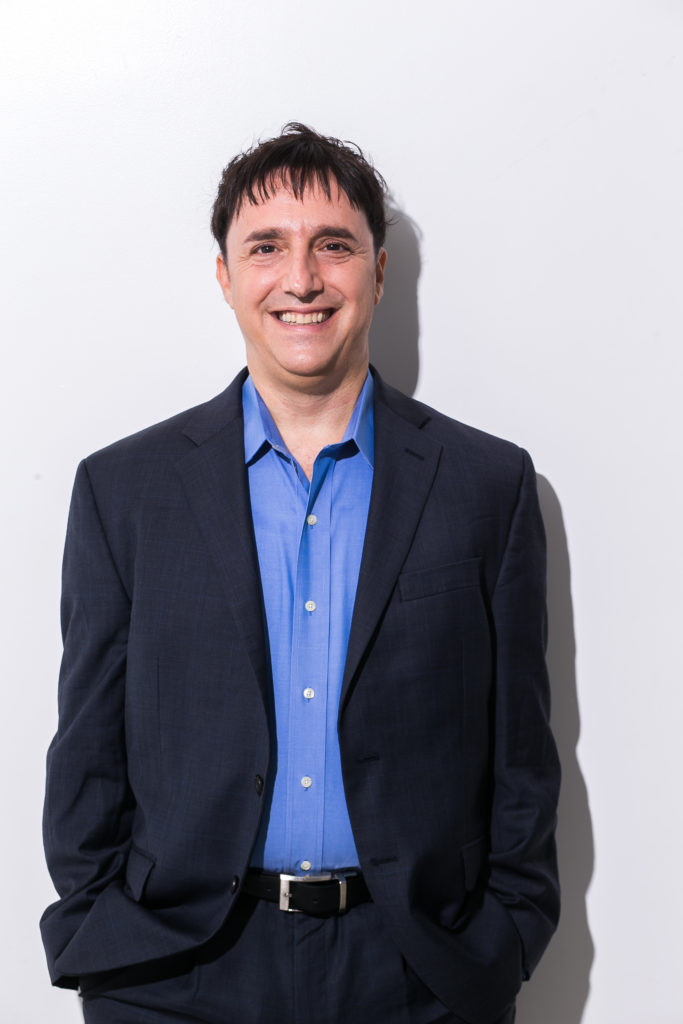
In this episode of the RealLifeSuperPowers podcast, we speak with Neal Schaffer, a recognized leader and university educator who helps businesses maximize their social media presence through his:
– Social media agency
– Strategy consulting
– Keynote speaking and
– Award-winning books
He’s been named a Forbes Top 50 Social Media Power Influencer two years in a row.
His portfolio includes:
– Fortune 50 enterprises
– Grammy award-winning musicians
– and leading brands
He’s a man of the world with a deep connection to his internal compass, pursuing his hobbies and professions with passion and vigour.
He studied Chinese in University. In his senior year he switched to Japanese and started working in a Japanese semiconductor manufacturer in Kyoto, marking the “official” kickstart of his exceptional career. He started out in accounting and finance but after two years, he found more interest in sales and marketing and transitioned into a role in the company’s overseas sales department.
He was certain there’s strong business potential for the company in China, so he paved his way into leading the launch of the company operations in China. He didn’t sit around and wait for anyone to choose him – he charged forward and made it happen.
The next step in his journey was joining a Canadian startup to launch their Asian operations, helping to grow their Asian market share dramatically.
After 9 years in Japan he returned to the US. Returning wasn’t an easy ride and he came to the realisation that he needed to reinvent himself and to build something of his own – something that nobody could take away from him.
And another thing clicked – since he had returned to the US he had been gaining a lot of experience and understanding of Linkedin and the business potential it bears.
These notions kickstarted his current solopreneur chapter – he wrote a book, which led to speaking deals, which led to him opening his current consulting business.
In many ways his experiences in the Far East equipped him with a special skill set that brings a deep and unique dimension to his doing.
We discuss:
– The Deming Cycle – PDCA (Plan–Do–Check–Action) and how it influenced the way he approaches processes and strategies
– Navigating cultural differences
– Sales – the power of patience, listening, adding value and turning down prospects that aren’t a good fit
– Influencer marketing – inciting word of mouth
– The challenges of being a solopreneur
– The significance of building personal brand
– The tremendous importance of personal relationships
– Pivoting as an ongoing reality
– And more!
This is a super-important listen to anyone looking to calibrate their doing and to be in sync with their gut, their interests and their abilities. We hope you enjoy it!
Zooming out, if you like listening to this podcast, make sure to subscribe so you don’t miss new conversations with peak performers, serving as a reminder we can all tap into the best versions of ourselves.
You’re also welcome to follow Ronen and Noa on Linkedin
And if we may ask for a favor – please leave us a review on your native podcast app.
Some further resources:

[This transcript was generated from YouTube’s auto-captions, not a verified human/AI-diarized transcript. Timestamps and wording may contain errors, and speaker labels below are Claude’s best-effort inference from context, not confirmed against audio. Please review before publishing.]
Real Life Superpowers.
Neal: In life you have to learn how to do this. If you’re a salaried employee, at any time it could go like that. If you work for a venture capital funded company, all of a sudden they’re going to bring in a new leadership team, goodbye. I mean, there’s no guarantees in life, there’s no guarantees in business. You always have to be operating that way. Yes, I’m an optimist, but like I said, there’s also this paranoid realist side that teaches me you always need to be out there pivoting, you always need to be thinking: where’s your next customer, where’s your next revenue, how is this going to look 12 months from now? You’ve got to be real.
Host: Hey everyone, welcome. Today we interview Neal Schaffer. He’s a recognized leader and university educator who helps businesses maximize their social media presence through his social media agency, strategy consulting, keynote speaking and award-winning books. He’s been named a Forbes Top 50 Social Media Power Influencer two years in a row. His portfolio includes Fortune 50 enterprises, Grammy award-winning musicians and leading brands.
[Music]
Host: So Neal, welcome to Real Life Superpowers.
Neal: Thank you very much, it’s an honor to be here.
Host: Where are you located these days?
Neal: Well, we’re all at home, so I am in Irvine, California, which is in Orange County, in between LA and San Diego.
Host: And how are you holding up with these crazy days?
Neal: Well, it’s already been three months in, so surviving. But you know what, it’s funny, because I’m a solopreneur who works from home, so in many ways, because I don’t have the travel that I used to have, it’s quite efficient. So no complaints.
Host: Nice. And are you dealing with any interesting projects these days?
Neal: Yeah, you know, it’s funny, because I’ve been picking up business even during the pandemic. I think a lot of us in digital marketing were finding that this whole digital transformation in terms of sales and marketing was delayed, and now companies are really trying to play catch-up, because it’s the only way that you can meet your customer. So it’s been a boon, and there’s always interesting things going on. I tend to work with a lot of startups, so I’m currently working with one startup, and we literally started from scratch, and over the past three, four months I’ve been helping them make traction, what have you. So it’s been good.
Host: Yeah, so these times are actually times that you can really shine and sort of show people where you’re already at and how to lead the way to that place.
Neal: Yeah, I mean, I look at it more not from my perspective but from a business perspective. There’s always opportunity. No one wants to take advantage of crises, but there are opportunities for businesses who really know how to serve their communities, who innovate, and who get out there and engage. So I’m just honored to be able to work with those companies.
Host: What do you think is going to be the biggest change now, on the business side, after the corona? Not on the health side but on the business side, what’s going to be the biggest change, in your sense?
Neal: I just think that the shift to digital will continue. It’s very interesting, I have a high school and a junior high school child, and the public school system here did a survey of the parents: how many of you want to keep your kids in traditional school, how many of you would like to do 100% online, how many of you would like to do blended. And while the number one was “we prefer traditional school,” that was only 42%. So a majority of parents, and this goes from elementary up to high school, wanted their kids to have more time at home, more time online, more of a blended experience. And I think that we’re going to see this with businesses. A lot more work from home. We’ve had it before, but I don’t think we’ve had it to the extent we have now. You’re not going to have to go into an office every day. It’s going to be very, very different. I think it’s going to help make businesses more efficient, but they’re also going to have to work hard on sort of virtual engagement, for lack of a better word, of keeping employees, keeping customers, keeping everyone around them engaged when you’re not going to be able to meet them. You probably won’t meet them as often in a physical space, because if you think about it, why does everyone need to be in the same physical space in order to work, right? It’s sort of a 20th century concept. I mean, I’m a people person, I would much rather have this interview in person than over video, but I do believe that, especially for smaller companies, there’s a cost that is associated with having everybody together in a room. And when you take out that cost, you look at the efficiency, you look at the benefits of people not having to drive to work an hour each way, or take the train, whatever it is, I think it’s going to be a very, very different tomorrow. I’m excited about it. I think it’s actually going to help our efficiency as a global economy, but it will have its unique challenges.
Host: But then what would be the incentive to be offline? What you’re saying is, if we’re shopping online and we’re working online, right, so think about all the real estate. What is that going to look like?
Neal: Exactly, it’s going to be very different. And I was speaking specifically of office buildings and office leases, the WeWorks of the world, or just corporations that want to have every employee at their office. I think it may lead to a lack in demand for those areas. As far as personal real estate, I think that’s a whole other issue, but with personal real estate it may be, well, if we don’t have to necessarily work in a certain location, then we can live anywhere we want. I actually started my career in Japan, and when I moved back to the United States, my boss said, basically, as long as you’re within an hour of LAX or San Francisco international airport, so I could fly easily back to Asia, you can live anywhere you want. Now, this was a startup from Ottawa, Canada, so I wasn’t going to be working in headquarters. But this is the type of thing where it might actually free up populations to move to more ideal locations, maybe to places where real estate is cheaper, or maybe to places more in the countryside instead of an urban area. So I do think over time, assuming that this pandemic has the impact that I believe it will, I do believe we’re going to see some of that. I don’t know to what extent, but I think over the next 12 to 24 months we’re going to see more of that in action.
Host: I wonder, because you’re talking about the parents who are a majority, but still, the rest didn’t say that it’s important to go back to school, and I’m sort of thinking, are we maybe fixed in our mindset, thinking that the children of today need to acquire social skills in a physical classroom? Because I’m thinking, for our generations, across the board, we’ve already been at the physical space. This is a new world to us, even those of us who have been working remotely for years. Like you, for example, you still meet people on several natural occasions. And children growing up who will not go to school at a physical space, and sort of go to school remotely, they’re not going to acquire those skills. And maybe they don’t need those skills, because maybe the world is going digital completely and this is what they need to know.
Neal: Yeah, that’s a really, really good point. I’m a big fan of, I think half the reason you go to school is for those social skills. Even within business, within a company, you need to have social skills, right? But it is interesting in that some people call Gen Z, the younger generation, sort of anti-social. They’re sort of in their own world. They’ll be together at a park, yet everyone will be on their phones, on Instagram or Snapchat or TikTok. So it is really interesting, how we define socializing. It is different, and maybe that is not as important as we move into a more AI-dominated society over the next decade or two. Maybe it’s not as important as we thought. I don’t know. I still believe it is, but just over the past three to six months we’ve seen some significant change in society in many different areas. All bets are off the table right now.
Host: Yeah. And so you were saying you started your career in Japan.
Neal: I did. I grew up in an area of the United States, a suburb of Los Angeles, where we had a lot of Asian Americans. So when I was in classes, a lot of math and science classes, most, if not pretty much all, of my classmates were Asian American in high school. So this led me into a journey as to why. I’d go to birthday parties where I was the only Caucasian, and this is way back when, in high school. I just wanted to find what that connection was with people that grew up with very, very different backgrounds than I did. What was that connection with me? So when I went into university I decided I was going to study one of those Asian languages. I ended up studying Chinese, I ended up doing my junior year abroad in Beijing, and this was at the time when the Japanese economy was booming, and my roommate in Beijing was Japanese, and I made a lot of Japanese friends there. So that’s where I sort of shifted gears. My senior year of university I started to learn Japanese, and then I found an opportunity to work at a Japanese company that was headquartered in Kyoto, of all places, the ancient capital of Japan, and the rest is history. I ended up starting at that company, then moving to a Canadian startup, then to an American company. I ended up learning how to play the drums there, drumming for a band, we recorded two CDs. I ended up learning how to ski, how to snowboard, how to scuba dive, all these fun things. Met my beautiful wife, we had a baby girl, and that was the time when it’s like, you know what, maybe it’s time to move to the United States and raise the kids in the US. So that’s why I was there for 15 years, but it was just an awesome experience.
Host: And the Canadian startup was in Japan?
Neal: Yeah. So the first nine years I worked for a Japanese semiconductor manufacturer. After the first two years, where I started out actually more in accounting and finance, I wanted to move more into sales and marketing, so they slowly shifted me into a position. I was in Singapore for six months on a stint, working in the overseas sales department, and after four years I really put my foot in the ground and said, look, China is starting to open up, and our company was not there yet, and I was a fluent speaker, I navigated myself very well in the society and working with people. I want to be the one to launch our operations in China. And I got the approval to do that. So for four or five years after that I was basically spending one week a month in China, hiring people, doing business there. But after that, it’s funny, because if I wanted to continue to move the business forward, at some point I would have had to have moved to China, and I wasn’t ready to do that, because I had lived in Japan for eight or nine years at that point, but I really didn’t have a track record in Japan, which I really wanted to build. So that’s where I pulled the plug on that company and ended up working with this Canadian startup out of Ottawa, and I basically launched their Asia. They had biz dev from Ottawa headquarters or from the US side, they had some deals in the pipeline in Asia, but they really weren’t attacking it strategically. So they hired me to represent them as regional VP of Asia sales and to really launch, and after two years we were generating 30% of our sales from Asia. So it was a very, very successful venture, and it was a great experience as well. With the semiconductor company my experience was mainly in China. With this company I was serving clients in Japan, China, Korea, Taiwan, Hong Kong. So it was a great experience professionally, because I ended up working with them for, I don’t know, six, seven years. It really had a deep impact on my career.
Host: Are you talking about, by the way, the age of TQM, when they were booming? Like the total quality management era and stuff like that?
Neal: So, have you heard of Professor Edwards Deming?
Host: Of course.
Host: I haven’t yet.
Neal: Most people in sales and marketing haven’t, but if you’re in manufacturing you have. And every employee at the semiconductor manufacturing plant went through training which included what’s called the Deming cycle, which is PDCA: plan, do, check, action, and how you apply that to everything you do. And that’s why the name of my digital agency is PDCA Social. Professor Deming is considered the godfather of quality control, so he’s actually better known in Japan than he is in the United States, because Toyota, Sony, they all owe their high-quality, low-cost manufacturing secrets to the teachings of Professor Deming. But when I was looking for a structure, a framework to teach companies how to build and manage social media marketing and digital marketing strategies, that’s where I realized that PDCA was the framework, and I use it religiously with my clients and with my own brand. And yes, it was the age where Japan was at the top. This was the 90s when I lived there. Now, they really peaked in the bubble, 1989, 1990, but obviously this is before the emergence of Samsung and LG, where we were still buying a lot more Japanese consumer electronic devices than we are today. We had i-mode in the mobile phone world before the iPhone, right, and NTT was going to take over the mobile phone space. They were already working on bringing i-mode to Europe and the United States. So it was a very, very interesting time. And on the flip side, I also saw why Japan started to decline, as they sort of ignored these global digital internet trends, and how Korean companies like Samsung and LG were so smart at really embracing it and really opening up, applying themselves to more global standards, whereas Japan really wanted to create their own global standard and have everybody buy into that. And I think that was one of the fatal mistakes they made.
Host: I agree. But in the other sense, the company that you were working for sent you to Japan, China, Singapore, I hear even a little bit of Korea there. And this is something that a lot of people are confused about. It’s not Canada and the US, where there are a lot of similarities. They are totally different. When you’re talking about Singapore, English speaking, maybe some similarities in the culture, but Japan and China is like a different game all over the place. So how do you adapt to that? How did you feel? It’s like anything you do there is 100% different.
Neal: Yeah, no, you’re absolutely right, and I did brush over it as if it was nothing. And it’s funny, because that’s the analogy I use when I talk about social media. Facebook, Twitter, LinkedIn, Instagram, they’re all their own country. They all have their own unique culture, their own currency, their own way of doing business. The value of a contract, in general, in Asia is just nothing like it is in the United States. As you can imagine, business is done by handshakes. A lot of business is done by a lot of late night alcohol drinking, in complete honesty. In China, during breaks in meetings, I don’t smoke cigarettes, but sometimes I would smoke that occasional cigarette doing business, when everybody I was negotiating with took a break, and that actually helped to break the ice and build up that relationship. So I do believe that business there, and probably in Europe as well, is more based on relationships, on common experiences, and also the fact that people really do not forget. They do not forget if you help them out, if you help their business out. I just found that that concept has really benefited me, because people don’t forget when you do something for them, and they remember a long time.
Neal: There are anecdotes. There was the time of the biggest deal in my company’s history. We didn’t get the business, and still I wanted to meet with the business leader and say I totally respected their decision, and that if anything ever went wrong, we’re not going to take this as a rejection, we’re still going to be here to support you. And that person didn’t even want to meet with me, because he felt so bad that they rejected my company. But six months later I got the phone call, we were back in the game, and we ended up closing. It was the biggest contract in our history in Asia at the time. Because people don’t forget, right?
Neal: Then there was the time in Shanghai, with one of my Chinese customers. We were obviously producing semiconductors, and the thing you want to avoid is when your customer’s factory lines go down because of your component, even if it was their fault for not purchasing it far in advance, or not keeping control of their inventory. So when the director of the plant calls me saying, “I know it was our fault, but we really need you to do this,” that day I went to our logistics center, I got on an airplane, and that afternoon I was in Shanghai at the airport, personally giving him that component. Well, you can imagine, over time we got more and more share, and finally, for a very, very strategic component, they ended up switching over to our company. And after that we had a dinner for 100 at a Shanghai crab restaurant. Obviously the price of that was very little, but it was just solidifying this relationship, that we’re in this together and we both help each other out. And this is something that’s just very, very different. I mean, obviously there are components of relationships in business everywhere, but not to the extent that you see in Asia. So much is still done person to person. That’s why, especially in B2B businesses, especially in Japan, digital is really late. They don’t really join webinars, they don’t really do a lot of virtual calls like this, so it’s been interesting to see them have to change over the last three months. It really is more personal based, and it is very, very different.
Neal: My brother once referred to me as a piece of tofu: stick Neal anywhere, he’ll absorb the local language, the local culture, and he’ll adapt and figure it out. And my background is more in sales and marketing, and in sales you listen. I know I’m doing a lot of talking right now, but in sales you listen, right? You listen, you adapt, you try to find the problems, you try to offer them solutions. And if you can stick with that attitude, and it’s also the thought process that maybe I’m not the right fit for your company, maybe my company’s products aren’t the right fit for your company, and if we’re not, that’s great, I’ll introduce you to someone that is a perfect fit, because I know that having a referral network is a great thing as well. It’s really keeping that mindset. And especially with coronavirus, I remind companies: business is here to serve society, right? I’m here to serve you, and if I can’t, then I’ll find someone who can, but if I can, I really want to help you, I want to understand your problems. And that is universal, regardless of language. Obviously in some countries, some cultures, it takes a little bit longer. I found that Japan and China were a lot easier to crack. I found that Korea was actually the most challenging, probably structurally, because there seems to be more of a tendency there to stick with these large, they call them the chaebol, these large networks of companies all owned under the same umbrella, where you can get anything and everything from the same company, like Samsung and Hyundai and LG. So that was definitely a challenge from a structural perspective. But I think the general concept of doing business, and of relationships, and of serving people, and of serving society, is something that’s universal.
Host: Yeah, that makes perfect sense. And I’d also add to that, I think the biggest mistake that junior salespeople make is to try and speak more than the person they’re listening to, to try to control the conversation, and also to try and sell no matter what. And I think the more experienced the salesperson is, the more they understand that their job is to be a trusted advisor, and to listen, and also to say when it’s not a good fit. And especially when you’re playing the long run game, then, as you said, you don’t know who they know, so there’s the entire referral system, and you’re sticking to your values, you’re delivering only what you’re able to. And even if it takes longer, I think closing rates are much higher in the long term when people conduct themselves that way. So it’s interesting that you’re saying that it’s sort of across the board, that you’re seeing it in a multicultural way.
Neal: Yeah, I mean, without a doubt. When we talk about China, Japan, Korea especially, obviously both China and Korea have a history with Japan, where Japan invaded both countries. So even though this is like 100 years ago, there’s still an amazing amount of distrust. So when the Japanese company hires an American to go to China, it was really, really interesting, and I had Chinese employees actually tell me, “I may not have worked for a Japanese company, but because you’re an American boss, I really wanted to work with you.” So I think that in some ways, being an American navigating through those cultures helped me. I think also, in a sea of 100 Japanese salespeople, and I’m the lone Caucasian, it definitely helped me be memorable, and that’s sort of half the battle in sales, right? So without a doubt. But it also worked against me, with companies that said, “We do not want to work with foreign companies, we only want to work with other Japanese companies,” or other Korean companies. So it can work for or against you. But in general I think I was fortunate, because my experience in sales was in industries with very, very long sales cycles. The semiconductor sales cycle was shorter, but in terms of enterprise software, this was working with telcos, this is a very, very long, like 12 to 24 month sales cycle. So it teaches you patience, and this is what a lot of salespeople lack. It’s what some sales managers lack, it’s what some executives lack. Because sometimes it genuinely takes time to develop business, because it takes time to develop relationships, right? It’s the same thing I preach with digital marketing. You can’t just push a Facebook ad to someone today and expect them to buy from you tomorrow. It takes time to get people to like, know and trust you as a business, as it does in person. In fact, it takes even more time to trust a business than it does to trust a person.
Host: Yeah, and what are the odds of somebody seeing an ad and then, through that, buying something that requires a relationship and trust?
Host: But also, this is interesting for me, because we all are of the generation that had both sides. You were doing those things, and then there was this big change, and we are adapting. So, tofu for you, but the adaptation is very interesting, because no matter what the sales cycle, you worked in a personal retention strategy, meaning where you’re building trust and relationship and referrals, and then he’ll call me back because he moves jobs or whatever. That was the style. And today it’s a lot about data. You’re testing things and you’re doing the journeys and stuff like that, and, I can say, more relationship with the brand, less personal relationship. And I’m wondering, how did you adapt to that, and how do you find having a personal relationship as an advantage?
Neal: Well, what’s really interesting is, you’re right, now it’s so data-centric, and there’s so much information available that instead of having to rely on a salesperson for information, and this is a B2B paradigm that I’m talking about, obviously, you go to the internet, you find information, right? So it is very different in that aspect. However, where I’m feeling that what I learned about relationships is so invaluable is, obviously, if you’re closing a big deal and you need to pitch to other executives, just being able to engage and build relationships with people you’ve never met. Even if people find that information and contact you, there might be other people that you need to interact with, and that’s where doing your best to develop those relationships, more and more digitally, helps.
Neal: Where I find it really helps is the work I’ve done more recently in influencer marketing, where if you want to leverage influencers, and really every company in every industry should, and you really want to get the word out there and incite word of mouth in social media organically, this does come down to relationships. And these are relationships that are very much in that traditional paradigm that I just talked about in doing business, that do have to be individualized, one-to-one. You may not be able to meet people, but even virtually, how can you develop that, how can you help people, how can you serve them? And that’s something that I think, maybe because we have been transformed into an era where, instead of outward sales, you have inside sales teams, and they’re not building these deeper relationships as the traditional enterprise salesperson was, those companies now miss out on the fact that, at the heart of it, if you want to get people to talk about your brand, you need to develop a relationship with them. And that’s a very, very interesting paradigm in marketing that I think a lot of marketers never really thought about. It was always the one-to-many message. So it still is applicable today, in a different way, a different medium, and to a different extent. But getting back to the original conversation about schools and socializing our kids, I still think it is important for that reason, that there is still going to be a need for those relationships. And even if they’re not externally with customers, you’re definitely going to need them internally with other people in your organization.
Host: But how do you scale that? On the influencer marketing, you’re saying, okay, the personal relationship is what makes it move, but how do you scale that? That means you’re the business, right? So how do you scale yourself?
Neal: So are you talking about brands pitching influencer marketing, or are you talking about yourself as an influencer?
Host: You said that in influencer marketing you still have to have the direct relationships for it to work, right? So how do you scale a business where influencer marketing is a key strategy in marketing?
Neal: Right. So this is the number one question I get asked by marketers: how do I scale one-to-one relationships in influencer marketing? And the fact of the matter is, you can’t. You scale by working with people who deliver results over time. And the other way you scale is you bring people together. After you develop the one-to-one relationships, you create a program where you can speak to more and more people at once. So there are [ways] to scale in that scenario. But the more you invest in the one-to-one relationship, the more you’re going to get out of it, the higher the chance you convert them into becoming a brand advocate, the more you know about them, the more you know how you can help them so that they can help you more, and what have you. So you can’t scale human relationships, and this is where, even though we live in a very, very digital world, that analog relationship building is something that is still necessary. I mean, for some things more than others, but we still need to understand, even as a marketer, or anyone, we need to understand how people think, and if we don’t socialize with them, how do we know how people think, right? So this is still a core skill that’s needed. And yeah, in marketing with influencers, companies try to scale it. One way to scale is they just work with an agency and let them do all the work. The other one is they’ll just go to a marketplace: okay, I’ll find 10 people, boom, campaign’s launched. And they may be leaving a lot of money on the table, or wasting a lot of money, when they do that. So to get the best results it does require the ability to develop those relationships. But if you do it intelligently, after a while, and you have influencers in a program, you can scale that to a certain extent.
Host: And you said before that you’re a solo entrepreneur right now, right?
Neal: I’m a solopreneur, correct. I mean, I do have staff, but I still consider myself a solopreneur.
Host: What’s the biggest challenge of being that type of entrepreneur?
Neal: I think the biggest challenge is knowing how and when to pivot. Because as an entrepreneur you’re probably wearing a lot of hats, doing a lot of things, and every client’s needs might be slightly different. So it’s knowing what to go after and when to go after it, because you’re always being bombarded with, or hopefully finding, different business opportunities to apply your product, service, or experience and intellectual property to. So it’s a constant gamble. I guess whenever you launch a business it’s a gamble as well, right? But the challenge is also the learning experience, because the more times you fail, the better you get at it. You’re not going to succeed unless you fail, so actually getting through those iterations is a positive thing. But it can be scary, and it still is the challenge, and it is the difference in how fast and how much your business grows, depending on those opportunities you choose to take or decide not to take.
Host: And why do you call yourself a solo entrepreneur if you do have a team?
Neal: That’s a great question. I don’t have full-time employees, that’s why. And the team is very flexible. When I have clients where I can plug them in, I plug them in, but at a minimum they’re working on my brand. So yeah, I think that every solopreneur today is hiring people in a similar way. They’re not hiring full-time employees, they’re hiring people virtually, remotely, for various tasks. So I don’t even know if a solopreneur exists. Every business works with a CPA for their taxes, right, or uses different services. So I think that’s just a natural part of doing business right now, in all honesty.
Host: But does your remote team work with the clients?
Neal: They do not work directly with the clients, and maybe that’s why I still call myself a solopreneur. And here’s the thing, maybe it’s because of the way that I’ve done business, but when businesses reach out to me, they will write in the contract, I have a company name, but they’ll write in the contract, “This work is to be done by Neal Schaffer.” And when I realized that, it’s like, why am I trying to escape from my personal brand? I should be leveraging it as a way to humanize my brand and as a way to get into more relationships. Obviously, within a contract, depending on the task, I will negotiate: hey, these are tasks that I have a team that helps me do. And companies will agree to that. But there’s a lot of companies, especially when it comes to consulting, what have you, where they want me to be the person that delivers it. So I’m very careful as to what clients I work with, I’m very careful about pricing and about time requirements, so that I myself can continue to scale my business.
Host: So that’s actually really interesting. A lot of entrepreneurs are service providers, and one of the biggest challenges that I get from a lot of companies that want me to invest or help out, one of the biggest problems, is actually planning how many clients they can take and still do a good job, and still make enough money, or maximize the amount of ROI that they get. And the equation is pretty tough, because you never know when problems arise, you never know when they’ll need more. So what’s your way of thinking to be efficient?
Neal: The best way is to have long-term contracts. I started out providing basically a three-month type of service, a social media strategy consulting service, and there were so many companies out there that needed it that, even three months later, there were always other clients. Well, as the industry matures, that changes, right? You can’t create a business off of a three-month product. You need to have longer-term relationships. And it was later, when I launched my agency, where it’s like, okay, if I build in a 12-month contract, I know that money is in the pipeline, and that allows me to hire more people, to build up a bigger team and to service more customers in the future. So I think the secret is in providing something where there is some type of a retainer, a long term. If it’s a one-time product, that becomes very, very difficult to do. I think any manufacturing company has the same issue. If it’s a service, then you definitely have to be able to reinvent, or to add a component where you do have that recurring revenue over time. And that’s why most software companies have a SaaS business model, for that reason, right? You end up making more, it’s predictable, what have you. So you need to be able to create more predictable revenue, and that has been the way that I’ve been able to do that.
Host: That’s very patient of you. As an entrepreneur, patience is usually, you know, that’s something that you have. That means you’re very patient.
Neal: You know, living in Japan for 15 years, in that society and culture, patience is such a virtue there. It’s taught me a lot, to have a very, very long-term view. And sometimes I’ve had too long-term a view of things, and maybe it should have been a little bit shorter. But yes, I tend to have a long-term view, and I tend to see that things evolve over time. I was in Beijing, China during the Tiananmen demonstrations, in my junior year, and in my senior year I wanted to write my university thesis on those demonstrations. And I’ll never forget my father, may he rest in peace, saying, “Neal, do you really want to write about something that just happened? Because you don’t have the historical perspective to see where it fits in, what its significance or impact was.” And I really apply that to business in general, right? Because sometimes you do need to take time. I usually don’t like to predict, like, hey, three months from now no one’s going to go back in the office and companies are going to go 100% remote. I don’t like to be a fortune teller, because there’s zero historical perspective, right? And I think that’s often what’s necessary. I think by looking back at how things progress in your business, how companies engage with you, engage with your products and services, there’s an incredible amount of insight that you can find that can really help point the way forward to your future. But you don’t find it until some time has passed. It’s just human nature, and I’ve always had that perspective.
Host: And what was it like to return to the United States after all those years?
Neal: It was culture shock. When I lived in Japan I was so immersed, and I only spoke Japanese. With the exception of phone calls back to the United States, it was all in Japanese, everything I did. And I was so immersed there that all of a sudden I’m just plunged back into the United States, and it was very, very different. Now, obviously, because I had come back once or twice a year, it wasn’t as hard. But yeah, it was different, setting up a support system that I didn’t have, because things in the United States had changed over 15 years as well. But it wasn’t as bad as you would think, because I still was working at the same company with the same employees. Now I was remotely managing them from the United States and visiting Asia on a business trip basis. But once again, I’m sort of the king of adaptation, I guess, so my tofu went back to its original flavor and I did okay.
Host: So how did you end up leaving that company and sort of venturing out on your own?
Neal: It was actually more driven by family. My wife was not, and is not, fluent in English. We got married, and we speak Japanese as our primary language, and when we got married and came over here to the United States, we had a baby, and a year down the road number two was coming along, and I was doing a lot of travel for this company, and my wife was like, “I just can’t do this,” right? Her mom wasn’t with us, and that’s very traditional in Japan, where the mother helps out with child rearing in the early ages. They were physically distant, there was a language barrier. The United States is not as easy for immigrants to live in as you might think from popular culture. And I realized at that point that I really had to pull the plug temporarily on my career in order to support my wife and my family. So that’s where I went back to my boss and I said, look, I need to switch to more of a part-time consultant role in order to help my family, and a year from now we’ll see where we go. So they agreed. I was a part-time consultant for a year, and a year later I realized that, I was in a very, very niche B2B tech industry, I wanted something a little bit broader, where I thought there were more opportunities. And that’s the first time I ended up looking for a job in the United States, and that’s where I found out about something called LinkedIn, and that’s really what began my social media journey.
Neal: I ended up finding a job as director of business development for APAC for a technology company, and then three and a half months after they hire me, they pull the plug. Because of the Lehman Brothers crisis and their restructuring, they’re pulling the plug on international business. And that was the ultimate slap in the face, and I realized that I was so passionate, so into what I was doing, and a company at any time, like that, can take it all away from you. And so I realized I had to build something that no one could take away from me, and that was my personal brand. So I’d already started a blog that year, and my wife is like, “Look, if you don’t find a job, why don’t you write a book?” And I sort of laughed at her, but it was real. 2009 was a really, really hard year, and I think a lot of college graduates this year are facing the same thing. It was really, really hard, not just to find a job, but I was an American living in the United States trying to represent companies in Asia, where they’re saying, “Well, we can just hire someone locally in Asia, we don’t need an American living in the United States to do this.” So at some point I had to reinvent myself, and I think that timing, and the knowledge I started to build with social media, and looking at it as a business tool, just really helped me develop unique expertise. So when I ended up publishing that book in 2009, which led to speaking deals, which led to me launching my consulting business in January 2010, it helped complete this reinvention of Neal Schaffer, from the corporate B2B sales, marketing, biz dev in Asia guy to the person I am today, to the solopreneur that is everything digital and social media marketing. So I’m quite thankful. Once again, with historical perspective, all those things that went against me were actually going in favor of me, and they allowed me the opportunity, and I took advantage of that opportunity, and here I am today.
Host: And were you sort of scared to publish a book, or did you feel confident?
Neal: Oh, I was really scared. I was really scared because at the time, LinkedIn, traditionally, they closed their APIs, they’re not a friendly partner with a lot of software companies, and there’s been lawsuits. I know at the time they were going after someone that had “LinkedIn” in the URL, with a [cease-and-desist] letter. So when I was writing this book I was really scared, for whatever reason, because I was really into open networking at the time, that they were going to come after me. So I hired a lawyer, and he’s like, “As long as you don’t put things as factual, where they can go against you and say those weren’t facts, you’re okay.” So there was a lot of “in my opinion” or “based on my experience,” just as a CYA, as we call it here in the United States, just to make sure that I’m not giving them any legal reason to go after me. And since then, obviously, we have a really good relationship today. But in those early days I was really scared of that.
Host: It sounds to me like, and we have this characteristic that comes back a lot when we do these podcasts, it sounds like you found opportunities when other people had disasters, and not in a bad way, because it sounds like you’re an optimist as a character. I’m asking, not saying, because usually the optimists say, okay, not “how bad is it” but “what good can I take from this bad situation,” right? So I feel like in any situation, the challenges, because you have an interesting story, right, Japan and China and Korea and Canada and the US, and writing the book at a bad timing. So that’s really interesting for me, that you actually saw what there is to take out of this. And you even do it when you’re meeting clients, because you’re actually saying, “Hey, I’m not going to sell you, but I’m going to refer you.” That means I’m optimistic that what I’m doing objectively right now will pay out some time, which is not something everybody can do. Is that a feature that you know about yourself?
Neal: Yeah, well, I’m a big fan of karma, and I’m the total optimist, without a doubt. And it’s funny, because I published my latest book on influencer marketing, The Age of Influence. It came out in March, it came out two days before California went on a lockdown. And I wrote this Facebook post just like two weeks ago, that everyone was feeling sorry for me, what a bad time to put out a book. But I realized that, because I didn’t have to travel as much, because I do a lot of speaking, I didn’t have to travel at all, it gave me the opportunity to do things I never had the time to do in terms of launching my book. It gave me the ability to really come on to more podcasts like this, virtually, to develop a lot more relationships than I ever did before, because now everyone is in front of a computer and they’ll respond back to you. And it gave me a chance to create more, to really double down on content as well. So by doubling down on content and relationships, it’s helped me a great deal. And I never feel sorry for myself. The timing is what it is, but you need to find a way to use these things to work as an advantage. And I embrace the challenge, and I love challenges. I don’t know if you’re a fan of How I Met Your Mother, but the character Barney Stinson, “challenge accepted,” no matter what challenge he had. And that’s the same with me. I think that’s the fun of life, in taking on challenges, and like I said, if you fail, it’s not a failure, you learn something. If you succeed, you feel great. So yes, in that way I am an optimist. And when you need to be paranoid, I can be paranoid, but there’s still this belief in the good of people and belief in karma that definitely helps keep me going.
Host: And how did you get your first customers? Was it through the reputation that you’d built through publishing a book?
Neal: Yeah, it’s funny, it was the book, and then the speaking, and then it just happened. I still remember very, very clearly, in two weeks in January of 2010 I had four different companies reach out to me, all from different industries. One had actually read my book, one reached out to me from a local networking group, one reached out to me because they saw me speak, and the other one reached out to me from a referral from someone I met at a networking event. And it’s really funny, because what I’ve learned, getting back to relationships, even digitally, is that my most valuable, my longest-term customers have all come not from digital and social media but from personal relationships. I want you to think about that. And this is someone that has a verified Twitter profile, that has a blog that gets a lot of traffic, I have hundreds of blog posts, I’m verified on Facebook, I have like 15,000 Instagram followers. The best business, the highest quality, longest lasting business. And even more recently, even last week, I have another big opportunity. Yes, the CEO bought my book, and as he was in a board of directors meeting he happened to mention that he wants to do what this book says to do in terms of influencer marketing. And there’s a guy in the meeting who I know from social media, from Orange County, we go back a decade. He goes, “Hey, I know the author, why don’t we have an interview with him, see how he can help us?” And that’s how I got in to interview with the CEO of this company. So the book and everything else helps, but the personal relationships really help solidify it. It really puts you above your competition significantly, and it does lead to business, and it leads to long-lasting business, because at the end of the day we want to do business with people we know, like and trust.
Host: But that makes sense, though, because I don’t think that contradicts in any form, because I think that basically what you’re saying is that social media is a leverage for generating real-life relationships.
Neal: Yes, if you look at it that way, yes, absolutely. Social media is another extension. It’s a way to get people to know you, and they get to know you a little bit, but at the end of the day, yes, it does come down to the relationship. Social media is just another tool, just like an offline networking meeting, and those are more online these days, but they’re just different tools to create the opportunity for you to meet people. What you do with it from there is really up to you.
Host: But your forte is basically to make those opportunities happen through that tool, right?
Neal: Yes, I guess you could say that, yes. To find opportunity, to build thought leadership, and at the end of the day to develop business from those tools. Some is more short-term, some is more long-term, some less value, some more value, but it’s all about creating opportunities and generating revenue from those.
Host: And you’ve been doing this for now over 10 years.
Neal: Yeah, second decade.
Host: And how much have you seen social media evolve with respect to your strategies?
Neal: Yeah, it’s evolved tremendously, and that’s where, when you asked me about being a successful solopreneur, entrepreneur, it comes down to the pivoting, right? Of knowing when to pivot, where to pivot, how to pivot. Because there are people that invested in creating software tools to help you manage your Google Plus. Okay, think about that. Where are those people now, right? Or speakers or agencies that just specialized in Snapchat, and then Instagram comes along. So you can’t have emotional relationships with any of these social networks, and you need to know when it’s time to move on. The industry matures, fewer companies need a social media strategy. In fact, the companies that most need social media strategies are startups and small businesses that don’t necessarily have a big budget, and the enterprises want to work with other large companies. They don’t want to work with the Neal Schaffers, they want to work with the Edelmans and the big PR agencies. So you always have to be pivoting and finding those opportunities, and that has been the single truth in 10 years of doing business: you always have to be pivoting.
Neal: I’ll never forget, when this pandemic started, one of the last conferences I spoke at was a conference called Social Media Marketing World in San Diego, and there was another speaker talking to me, and she knew that I do a lot of business overseas, especially Japan. She goes, “What are you going to do now?” And it’s like, well, I’ll figure it out, because my business isn’t 100% dependent on speaking, and maybe there’ll be more virtual opportunities that come up. And this person was saying they feel confident because all their business is in the United States. Well, guess what, a month later all of her domestic speaking opportunities were canceled, right? So if you are always pivoting, you know what to do. It’s like when I posted on my Facebook, “Stay at home, stay safe,” and then one of my friends, perhaps from the opposite side of the political spectrum, said, “Small businesses are dying and you want us to stay at home?” And I said, you know, I’m a small business, I’m not dying. You need to pivot, and if small businesses aren’t pivoting, yes, they’re going to die. They need to figure this out, right? And the smart ones will. And this is not the first crisis. We were in a crisis 11, 12 years ago. That’s what started my career in social media.
Neal: So in life you have to learn how to do this. If you’re a salaried employee, at any time it could go like that. If you work for a venture capital funded company, all of a sudden they’re going to bring in a new leadership team, goodbye. I mean, there’s no guarantees in life, there’s no guarantees in business. You always have to be operating that way. Yes, I’m an optimist, but like I said, there’s also this paranoid realist side that teaches me you always need to be out there pivoting, you always need to be thinking: where’s your next customer, where’s your next revenue, how is this going to look 12 months from now? You’ve got to be real. But you always have to have that somewhat flexible mindset, because things are changing. I remember when I was in high school we read a book called, was it Future Shock, about how things change really, really quickly. And you hear of Moore’s law, the power of semiconductors doubles every two years. The frequency of change only seems to be increasing. So it becomes more and more important over time to figure out how to pivot your business to find opportunity, but also to safeguard yourself when crises happen, because they will happen.
Host: That’s a very good insight, because what we have been learning a lot is that your pivot strategy is very, very important. By the way, not only on social networks. I think the internet is like one big pivot opportunity, because, you were talking about China and TQM and total quality, and when you’re building a desk or a speaker or anything, it’s that product, and that’s the end game. But today, when you’re getting out an application or anything, the feedback is part of it. So you have 2.0, 2.4, 2.8, it’s always pivoting, always changing and evolving, and that’s the internet. So that’s like the biggest thing in a career. When people don’t understand why they’re moving careers, it’s because if you don’t know how to move and catch up, [inaudible]. So my question with this is: how do you build an end game for yourself when you know that there’s going to be so many changes on the way?
Neal: Well, I want to get back to your point there. Wasn’t Gmail in beta for like 10 years, right? Case in point. But how do you build an end game? It comes down to what do you want to do, in all honesty. What are you passionate about? What is the work you like to do? So if you’re an entrepreneur, you’re passionate about something, but after a while you figure, you know what, this isn’t really something I want to do, that’s when you really need to shift gears. So the end game always has to be, and it’s like Steve Jobs looking at himself in the mirror, apparently that’s what he did every day: do I enjoy doing what I’m doing, right? And you need to ask yourself that question. I don’t necessarily mean on a daily basis, but if you don’t enjoy what you’re doing, then there’s something wrong, you need to pivot. I think that’s the most natural pivot, because if you enjoy doing what you’re doing, chances are the product or the service you offer is going to be all the better for it.
Neal: So the end game is: I need to make this much money over the next 12 months. How am I going to make that money? What are the different products and services I have now? Where are the opportunities? I think there should always be sort of an R&D perspective. My R&D perspective is, Fridays I spend trying to do my own internal R&D, whether it’s content creation or podcast interviews or what have you. But it’s funny, today, one of the reasons why I called in a few minutes late, I’ll be totally transparent, is I got this podcast interview mixed up with another one that I’m doing tomorrow, and I was preparing for the one tomorrow, totally forgetting it was about today, and it was all about innovation, right? Like, how does innovation emerge? So to apply what I was preparing for that interview to this interview: the way that I’ve been able to pivot most successfully is simply listening to my customers. Because if you listen carefully, you find problems, challenges they have, whether it’s working with competitors, or they have problems and there’s not a product or service that meets those needs. So it’s up to you to actually make that product or service. And I think that if you really engage with your customers, no matter how few or how many you have, you understand how they use your product, what are the challenges they have with your product and outside of your product or service. I think that’s where you find a lot of opportunities at the end of the day.
Neal: Semiconductors is a great analogy. Back then, the Shanghai company was producing fax machines, so for every fax machine they would use like 10 of our components. How do we get them to use 15 of our components, or 20 of our components? We can’t control how much they’re going to grow as a company, but we can control our footprint within that company. So how can you control the footprint within each of your customers? It’s trying to find how you generate more revenue from those relationships. And I think that’s another end game, if you have a client base, is how to do that. And inevitably, if you just stick to what you’re doing now, you’re not going to increase your sales to them unless somehow they grow. You need to figure out more ways to get embedded inside their company and find more ways to deliver more products and services to them.
Host: Which again ties down to listening.
Neal: Which comes down to listening, yes. And the relationship, right, where they would actually tell you these things. So it’s really interesting, I’ve been getting asked a lot about customer experience and customer experience marketing. And, I mean, are you having conversations with your customers? This B2B startup I’m working with, the marketing is doing awesome, but they’re not able to convert leads. I’m like, do you have a customer success person that’s actually helping people when they sign up for the demo? Do you have someone following up with them? Do you have customer education? And this is one thing I’ve told a lot of companies with the pandemic: it’s a great time, if you haven’t created customer education content and a customer education community, and you’re not engaging with your customers to answer their questions, because chances are they’re not going to contact you and engage with you unless they have a problem, right? You want to be proactive, and there’s so many benefits in doing so. One of the biggest ones is exactly this, getting that information that’s going to help you with your next product or service.
Host: Amen. And Neal, what would you say your superpower is?
Neal: Great question. I think, probably because my background is more from the sales and the marketing side, and I tend to play more marketing than sales, it’s just a very, very rational, dumbed-down, meat-and-potatoes look at something called marketing, which, to a lot of people that don’t work in marketing, they see as being very esoterical. They see it as being very much driven by esoterical branding, something that just eats up a lot of money, where they don’t understand what they’re getting for the spend. So I take the opposite approach when I work with companies. What does your funnel look like? We’re going to appropriate money, but every dollar that we spend has to fit somewhere in the funnel. We’re going to measure, we’re going to test, we’re going to do PDCA, and it’s going to become a well-optimized machine over time, where we’re going to predict: for this spend, we’re going to get this revenue. And to a lot of companies that’s very, very refreshing. And I tell companies, I don’t own you. I was the anti-agency consultant. I only launched an agency when my consulting clients said, “We just don’t have the resources to do this,” and I helped them. But at the heart of it, I’m all about best practices.
Neal: And it’s like when I worked in Japan, I’ll never forget, the semiconductor company I was working with, we were in a joint venture negotiation, and one of the biggest Japanese trading houses was part of that negotiation, and one of the senior people really took a liking to me, and over lunch in Shanghai was like, “Neal, are you one of the board of investors for the semiconductor company? Because the way you present yourself, you go above and beyond just a salesperson.” And I told him, and I tell all the clients I work with: I am working on behalf of your investment team, I am working on behalf of your CEO, and even if they’re not in the room, that’s who I report to, even if I report to you and you’re lower than that. Because I know if I do work at that level, and if I can speak to and explain my work to that person for whatever I do, I know that I’m always going to be doing the best I can be doing, and I know that I’m going to be a success. And that is something that freaks out a lot of people when I say that, but that’s the mentality. And once again, living in Japan for 15 years really embedded in me a very, very different professional mentality than if I’d been doing this in the United States. But that sort of mentality, I think, has really, really helped me.
Neal: And it’s not about emotion. I’ll never forget, I’m just going back in my history here, there was a time when I quit the semiconductor company, and in between that and the Canadian company there was an American company I worked for for two years. But I was really, really interested in marketing, and I actually got an offer from Procter & Gamble to work at their Asian headquarters, which was in Kobe, Japan. And I’ll never forget, they had a group interview, and it was, “Here’s a new product, what’s your marketing plan?” And there were six of us, and the most vocal person was saying, “Well, I like this product, so I don’t see why everybody else wouldn’t like this product.” And the chief person that was looking at the interview was sitting at the table at the time. And I said, “It’s not about what I like, it’s about what our customer market might like or might not like, and we can’t base these decisions on emotions, we have to base them on data,” right? So this is something else that’s always stuck with me, this data-driven approach, that we need to take emotion 100% out of the game. So I know I’ve done a lot of talking. Everybody has a story to tell, everybody’s a combination of these unique threads in our life, right, a unique mix of chemistry, but that’s sort of another part that I think has really helped me.
Host: But wait, did you get offered that job?
Neal: I did.
Host: Cool.
Neal: And I turned them down, because this American startup was offering way more money. So I went from a 2.5 billion dollar annual company, I turned down Procter & Gamble, I was also talking to, like, Dell and FedEx, and ended up working with an American startup that was a 200 million dollar company, and then I ended up working with a Canadian startup that was like seven million in annual revenue, and here I am today. So I actually prefer the startup, the smaller business, because I think I get more exposure into everything in business when you work at that scale.
Host: Yeah, that’s definitely a mic drop right now. Turned them down, rockstar, you know, startup. And on the other side, what would you say your kryptonite is?
Neal: My kryptonite?
Host: So the special energy, the source of energy, or the opposite of a superpower. What would be your weakness?
Neal: Oh, okay. Yeah, I wasn’t a big comic person growing up.
Host: We’re such geeks that it doesn’t even occur to us.
Host: Yeah, we weren’t either.
Neal: Yeah, right. Anyway, my weakness is, and I think it’s a weakness for almost everybody, we can always be better at time management. And I really shouldn’t be saying that, because as I learn more and more, and read more and more, and listen to more and more podcasts, and hear more and more people, the problem isn’t in your time management, the problem is in what you place priorities on. So if you have a time management issue, you’re probably doing too much. And that’s definitely my kryptonite, because being a solopreneur, I don’t have full-time staff all around me that I can delegate to. So that’s the challenge there, that time management piece, the prioritizing piece, making sure there’s enough of me to go around.
Host: Cool. And the next time we speak, in about, let’s say, a year and two months, what would be the thing that you wish yourself?
Neal: Well, one of the things that I’ve been working on for some time is a digital product, so I’m hoping by then that that digital product is out there. I’ve really been late to the game on this, but as I tell my clients, you’re never too late for digital and social, so I won’t give myself any excuses. But that is obviously the number one thing. The number two thing is, this was my fourth book that I wrote, The Age of Influence. It had been seven years since my last book, so I really enjoyed not just the book writing process but the ability that the book as a business card gives me to build relationships. It’s a really powerful thing in the business world. So I’m actually already thinking about my next book, which would be awesome a year and two months from now, and it’s going to be influenced by what we’re going through with coronavirus and everything, so I think it’s going to be very, very relevant for the times. And really, just as I said we’re a mixture of chemistry, I found that, working with clients, we have all these different elements that we need to work together to really do our best in digital. We have content, we have social media, we have influence, there’s technology. So the more and more I think about it, the more excited I am. So I’m looking to build a digital product, and the experience from building that is actually going to help me write this book better, by providing more case studies. So that’s sort of my next thing for the next 14 months. I hope that I will be able to evolve to the point where this program is a successful launch, I have happy customers, and I am actually able to publish this book about it, and the book makes waves.
Host: Wow. So we wish that you actually achieve that. And where can people find you online if they want to hire you, or see if they’re a fit for your consulting services or for your agency?
Neal: Sure. So my name is Neal Schaffer. There’s a lot of Schaffers out there and there’s a lot of Neals out there, so it’s N-E-A-L S-C-H-A-F-F-E-R. I’m sure we have a link in the notes, but regardless, I’m nealschaffer.com, I’m Neal Schaffer on any social network. Yes, my daughter in high school last night was asking if she could have a Snapchat account, and I showed her my account, so yes, I am on Snapchat and TikTok, although I don’t really frequent them that often. And I also have my own podcast called Maximize Your Social Influence. If you’re interested in this concept of digital influence and how it relates to sales and marketing, check that out. And my book, The Age of Influence, is available online and at bookstores everywhere.
Host: Amazing. All right, so thank you so much for your time, and we’ll speak again on the 21st of September 2021.
Neal: I am looking forward to that, my friend. It’s been fun. I hope that your audience finds this to be of value.
Host: I’m sure they will. Thank you so much. I hope we’ll be in touch.
Neal: Hey, thank you. Take care. Appreciate the opportunity.
Host: Bye-bye.
Neal: Bye-bye.
[Music]
We have the technology. Real Life Superpowers.
Dr. Zohar Bronfman – The Limits of Knowing Dr. Zohar Bronfman is the... Read more
Building a Company That Doesn’t Depend on You Naveh Ben Dror is the... Read more
Life Is a Game Lior Pozin built AutoDS into a company with more... Read more
What started as an idea between two Technion graduates became one of the... Read more
Going all in, whatever it takes In this episode, we speak with Lior... Read more
In this episode, we speak with Eli Goodman, co-founder and CEO of Datos,... Read more


