
Episode #99: Zohar Bronfman – Co-founder and CEO of Pecan AI
Dr. Zohar Bronfman – The Limits of Knowing Dr. Zohar Bronfman is the... Read more


Episode #99: Zohar Bronfman – Co-founder and CEO of Pecan AI
00.00/57:41
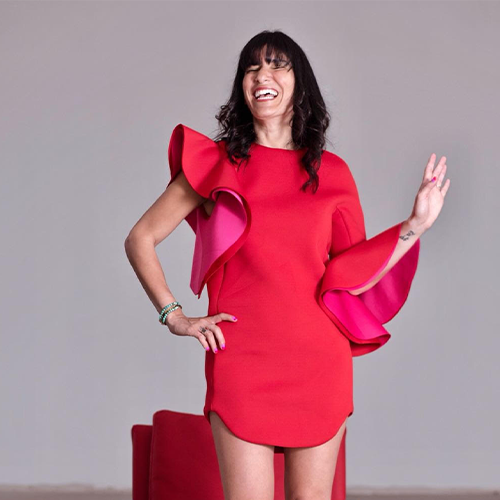
In this episode of the RealLifeSuperPowers podcast, we speak with Jordana Guimaraes, co-Founder and PR director of FASHINNOVATION, a startup that is the fashion world’s version of TED. An intersection between the fashion industry and the technology industry.
Jordana is fearless, she calls herself a “wild-spirit”. After high-school she decided not to take the college path and started experimenting with different jobs. For each job she figured out what the rules of the game are and then reached a level of performance that got her praises. But she was bored quickly.
At the age of 23 she wanted to find a job that would “stick” and she’d be passionate about. She went to Barnes & Noble, found an encyclopedia of “all jobs” and stumbled upon PR. It resonated and so she bought and read “PR for dummies”. She tells us how from that starting point she landed a dream PR internship working with tier-1 brands, and how as soon as she understood the PR world’s basic she proceeded to opening her own PR firm. In addition, she’s a philanthropist. She’s publishing her first book this month. It’s called “It can be you” and the goal of it is to give a face to homelessness. All profits from the book will go to charity.
Jordana is a real inspiration. She provides TONs of self fulfillment tips and tips on how to turn dreams into a reality.
She says that getting the right person on the phone and then creating rapport with them is like a game. She says you can’t speak to everybody in the same way. You have to adapt their energy into yours and you have to do the research before, in order to be able to conduct an informed conversation. Then, once you get the job (or close the sale for that matter), even if you don’t know exactly how to deliver, you can learn along the way as all knowledge is out there for you to google.
It’s all about humanizing situations.
We discuss the power of persistence, the importance of not being afraid of getting turned down, how failure is inevitable, the importance of having “life cheerleaders” and much much more.
Be sure to checkout the full interview. For more inspiration follow Jordana on Instagram @aclbyjojo
Zooming out, if you like listening to this podcast, make sure to subscribe so you don’t miss new conversations with peak performers, serving as a reminder we can all tap into the best versions of ourselves.
You’re also welcome to follow Ronen and Noa on Linkedin
And if we may ask for a favor – please leave us a review on your native podcast app.
Some further resources:

[This transcript was generated from YouTube’s auto-captions, not a verified human/AI-diarized transcript. Timestamps and wording may contain errors, and speaker labels below are Claude’s best-effort inference from context, not confirmed against audio. Please review before publishing.]
[Music]
Host: We’re here with Jordana Guimaraes, co-founder and PR director of FASHINNOVATION. Jordana, what’s up, how are you? Thank you for having me.
Jordana: Thank you for joining us.
Host: Are you in Brazil these days, or in New York? I know you’re on the move all the time.
Jordana: I’m actually in New York right now.
Host: Awesome. So what is FASHINNOVATION?
Jordana: FASHINNOVATION is an event and multimedia platform where we bridge the conversation between the fashion industry and the technology industry, and bring an entrepreneurial mindset to everyone involved. We usually have VPs, CEOs, or founders of companies that have been around for decades, alongside startups that are innovating, together on panels discussing topics that intersect both industries — sustainability, women’s empowerment, entrepreneurship, e-commerce, manufacturing, production, and more.
Host: So it’s a bit like TED, but for fashion?
Jordana: If you take a TED Talk, TechCrunch, and Business of Fashion, mix them up, and sprinkle in a bit of millennial energy, that’s pretty much FASHINNOVATION.
Host: What’s hip these days?
Jordana: There are a couple of things. One is NASA — a lot of the textiles designers use nowadays are NASA-inspired, like wrinkle-free fabrics, materials NASA has been using for decades that are now showing up in everyday wear. Another is brands collaborating with tech companies — Levi’s and Google just partnered on something called the Jacquard jacket, a denim jacket that connects to your phone. Everything that happens on your phone translates to the jacket — if you get a call, text, or email, it vibrates and lights up in different areas depending on how you’ve programmed it through the companion app. It’s not just hip, it’s genuinely useful for how connected we all have to be now.
Host: Let’s go back to NASA for a second — I have a theory that Velcro was invented by NASA.
Jordana: Yep, that’s true.
Host: So why would fashion need inspiration from NASA — I’m not going to Mars anytime soon.
Jordana: Think about it this way — everyone’s always on the go, trying to do a million things, and nobody has time to wash, dry, and iron every piece of clothing. There’s a designer, Ministry of Supply, who uses NASA-inspired textiles to make a full men’s suit you can throw straight into the washing machine and dryer — it comes out wrinkle-free, as if you never touched it.
Host: Does it look good?
Jordana: It looks amazing, and it’s inexpensive compared to other suits — you can get several colors and never have to dry-clean it. Of course there will always be higher-end brands using finer fabric, but for an everyday suit, it looks great. I always say, if you wear something well, it looks good regardless of the brand — it’s not about spending thousands of dollars, it’s about how you wear it.
Host: So how is anyone solving the wrinkle problem in general — even umbrellas haven’t progressed.
Jordana: That’s exactly what NASA’s textiles solve — the fabrics used in astronaut suits are wrinkle-free by design, since a suit obviously can’t wrinkle in space, and now more brands are adapting those textiles for everyday wear.
Host: People associate fashion tech with phones and apps — is there anything that isn’t tied to a mobile phone?
Jordana: For sure. People hear “fashion tech” and assume it has to be mobile, email, or software, but a lot of the innovation is physical technology. For example, there’s a brand — I believe based in Spain, don’t quote me on the country, but I know the brand — that makes clothing with LED lighting woven into the fabric. You could have a white dress with a silver stripe down the middle, and when you walk into a club or lounge and the lights go down, that stripe changes color through the LEDs built into the fabric. Sounds a little wild, but it’s beautiful. Augmented reality and AI are also huge in fashion tech right now — companies like Perfect Corp, and others that are brand new and will be showcasing at our event in February, let you go to any e-commerce site, click on an item, generate a virtual version of yourself using your exact measurements, and try clothes on virtually before they ever arrive at your house.
Host: That’s very Minority Report.
Jordana: I’ve heard that comparison for a while now, and it really is that kind of leap. We’re seeing it across beauty and fashion. On the sustainability side, there are brands now where when you buy something on their site, it doesn’t just arrive with the item — it comes with a letter about the actual person who made it, their story, where they’re from, so you know it wasn’t made in a factory that mistreats its workers. I think two things are really common in fashion right now — the technology side, and people wanting a personal connection to what they buy. You see that with brands like Krochet Kids and Known Supply.
Host: So FASHINNOVATION sits at the intersection of the idea people and the people who execute. What’s the actual business model — what’s your role in these ideas?
Jordana: We do a lot of research — we have a team constantly tracking who’s doing what in the space. Then we reach out to those people directly and think about who they should be talking to. Say a legacy brand has been doing something a certain way for years — we think about who they should be speaking with that could improve their business, and we put them together on a panel, often for the first time, with a clear sense of what could come out of that conversation. In a way we act like consultants without being hired as consultants — we create the relationships and let the innovation happen organically through conversation. We’re really trying to build a community of people who want to learn about everything happening in fashion tech. A lot of people know fashion tech exists but don’t really know what it is, and I think that’s the niche we filled. The response has been so positive — just from cold emails and the idea itself — that my husband and I realized we had something bigger than just an event on our hands.
Host: And the actual revenue model?
Jordana: We bring on sponsors, but we try to make sponsorship genuinely valuable to them, not just a logo placement — since our sponsors tend to be exactly the kind of innovative, fashion-tech-oriented companies people don’t know about yet, we’re putting them in front of an audience of around 500 people and connecting them with people they wouldn’t normally meet. We also sell tickets, though a lot of that goes right back into the cost of the event. Eventually, once the multimedia platform is live, we’ll add a subscription model, similar to what Business of Fashion or WWD do, but focused entirely on fashion tech. The goal is to be the number one fashion tech reference worldwide, both as a platform and as a global event series.
Host: So you’re very much driven by impact.
Jordana: A hundred percent. I’ve been in public relations for about 15 years, mostly freelance, working with new designers and brands, a lot of marketing and idea generation, mostly in fashion. My husband has been in the entrepreneurial ecosystem his whole life, through a company called Endeavor, a well-known nonprofit that helps businesses scale, mostly around entrepreneurship and innovation. We met three and a half years ago in Brazil, fell in love, had two kids, moved to New York. He wanted to build a TED-style event in New York focused purely on entrepreneurship, but realized there were already so many of those, and he wanted to do something that stood out. So he came to me and asked if it made sense to bring fashion into it, since I’d been in the industry my whole career — and then asked if it made sense to bring in innovation and technology too. We sat down at the end of July 2018 with a pen and paper, played with names — fashion, innovation, technology — and landed on FASHINNOVATION. From August to mid-September, in about a month and a half, we put together our entire first event — speakers, venue, everyone in attendance. It was intense, but it was a genuinely successful first event, and that’s when we realized we had a real business, not just a one-off event.
Host: Is this something you’re doing part-time, or did you dive in fully?
Jordana: I closed out everything I had going in PR and marketing and dove in 100%. I believe that if you don’t fully commit to something, you can do a lot of things at once, but none of them will reach their full potential — magic happens once you give something everything you have. I still do philanthropy work on the side, but that’s more of a passion project than a job. I actually just published my first book, which I’m launching at our event in February.
Host: Tell us about the book.
Jordana: It’s called “It Can Be You,” and the idea is to humanize homelessness by giving it a face. I gathered fifty influencers from around the world who shared stories of struggle in their own lives, and separately raised about ten thousand dollars on GoFundMe to hand out to homeless individuals in Manhattan, collecting their stories as I gave them meals. The book pairs each influencer’s story with the story of someone experiencing homelessness today, to show that circumstance is often the only real difference between the two.
Host: How did that project come together — you mentioned reaching out to well-known names.
Jordana: I started thinking about this project a couple of years ago. When I launched it, I was lucky enough to get people like Christina Milian and JWoww from Jersey Shore involved, along with a really diverse group of other names, which helped generate a lot of press around giving back to people experiencing homelessness. Reaching out to influencers and just asking if they wanted to be part of it worked in a very similar way to how FASHINNOVATION came together — it felt like this was meant to happen. All the proceeds from the book, once it launches, go back to five homeless organizations in LA, Miami, New York, and Brazil.
Host: Are you still in touch with the people you featured — are they still experiencing homelessness?
Jordana: I do keep track of where I met each of them, and some have become friends I still see. But I try to be realistic about what I can personally do, especially running a startup with two young kids — I can’t personally house or employ everyone. There are already agencies that provide shelter and direct support, but I felt nobody was really raising awareness about why the problem exists in the first place. A lot of people see someone experiencing homelessness and assume they could just get a job, or that it’s about alcohol or drugs — there’s a stigma that usually isn’t the full picture. I wanted to humanize the stories so people become more compassionate, and let the money from the book support the organizations already doing the direct-support work.
Host: Let’s go back — how did you end up in the fashion industry in the first place?
Jordana: That’s another kind of crazy story — most of my stories are. I never disliked school exactly, but I disliked the formality of it, being told when to read, when to memorize. So after high school, I decided not to go to college and just started working — I was a bank teller, did payroll at several hospitals, worked at Blockbuster Video, was a manager at Cole Haan, even worked as a real estate agent. In every job, I’d get good at it, get recognized for it, and then get bored and move on. At 23, I told myself I needed to find something I’d actually stick with. I went to Barnes & Noble, bought a huge book listing every career imaginable, and when I got to the page on public relations, it just said something like people, relationships, communication — and I thought, this is me. So I went home, got on Craigslist, and found a very exclusive opening to be PR director for a company holding licenses for brands like Nina Ricci and Porsche Design. I emailed the president directly and told him I’d just bought “PR for Dummies” and that this was what I knew, but I wanted the opportunity. He wrote back and said I had a lot of nerve applying for a role like that, but he wanted to meet me anyway, since he’d never gotten an email quite like it. We met, talked for about an hour, and he told me — you can learn anything from a book, but passion comes from within, and he could see it in me. He offered me the job unpaid for three months, no real instructions, just to prove I meant it. I said yes, and basically Googled my way through everything — how to write a press release, step by step. Three months later, I’d gotten them into a number of publications, we went to a trade show in Vegas, and he offered to start paying me. The moment he offered, something clicked, and I thought — if I can do this for someone else, why not do it for myself? So I turned him down and started my own PR company at 23 and a half. I’ve worked for myself ever since.
Host: When you read that career book, what exactly clicked for you on the PR page?
Jordana: It was really just the words people, relationships, communication. I’ve always loved people, always been genuinely excited by other people’s stories, and that’s what made me think, this is what I’m supposed to do.
Host: How did you actually find that specific job listing?
Jordana: Similar to how we’ve found FASHINNOVATION speakers, honestly — research, LinkedIn, whatever process gets you to the right person. I’ve always liked cold outreach — for me it’s like a game, finding the right person, getting them on the phone, getting them interested. I knew the name of the licensing company, found the president’s name and email online, and reached out directly.
Host: And he replied saying you had a lot of nerve.
Jordana: Exactly that.
Host: You’ve clearly got a knack for landing jobs and getting past gatekeepers — running payroll at some of the biggest hospitals in New York and Long Island without a college degree, managing at Cole Haan without retail experience. How do you do that?
Jordana: Honestly, I think I just read people well. Everyone you talk to has a certain energy, and if you can adapt to it — meet them where they are — you can have a conversation where they feel understood. You also just need enough knowledge about what they do to speak intelligently about it, and then once you get the job, even if you don’t know everything yet, you can learn the rest along the way. There’s knowledge everywhere — Google, books. I think if you bring a personal, human touch to things people assume are complicated, that goes a long way. Looking back, that’s really been the throughline in everything I’ve done — understanding people, a bit of psychology.
Host: It’s interesting — even the words you noticed on that career page, people, relationships, communication, describe you exactly.
Jordana: Right, and I don’t think that has much to do with the formal criteria of what a PR job description says.
Host: Are you an aggressive businesswoman? Is there anyone who doesn’t like you?
Jordana: I’m sure there’s someone. I wouldn’t call myself aggressive, but I’m extremely persistent — people have actually called me “pleasantly aggressive.” I push right up to the edge of what someone can tolerate, but I know where to stop before I cross the line into actually upsetting them.
Host: Can you break that down — a lot of people trying to reach a dream job or dream venture struggle with how to actually get in front of the right people and get them to listen.
Jordana: One thing that’s worked really well for me is going to events where I know the people I want to reach will be. If you research well, you’ll find there are events happening constantly — and even if it takes six months of going to the one event a particular person attends annually, you go, you find them, and you tell them, respectfully, that you know their time is valuable but you need two seconds — and then you say the one sentence you know will genuinely interest them, based on what they care about, not what you want. Never lead with what you need. Once you catch their interest, you exchange contact info — some people give it, some don’t, depending on how high-profile they are — but if you’re afraid to ask, you’ll never get a yes. I took a course at Dartmouth a couple of years ago with a self-made billionaire mentor, and afterward I just asked if he’d mentor me. He gave me his email on the spot. I followed up, and he ended up mentoring me for a full year. People are always surprised when I tell that story — I just asked, and he said yes. I think the biggest misconception people have is being so afraid of hearing no that they never ask in the first place. And if someone isn’t responding, sending the same message once or twice isn’t enough — busy people get flooded with email. But if you send essentially the same message every single morning until you get an answer, eventually they respond, just to make it stop. I did that recently with someone who has a major philanthropic foundation — I texted him daily for about three weeks about my book. My husband thought I was crazy. Three weeks in, he finally wrote back: “I love your tenacity — are you free to talk in ten minutes?” We talked for half an hour and he gave me some of the best advice I’ve gotten.
Host: A lot of what you’re describing involves doing jobs you had no real idea how to do at first.
Jordana: Most people are afraid of failing, of not having every detail mapped out in advance. But everyone fails constantly — I still make mistakes all the time, even now, even as a mom of two young kids. I think once you accept that you’re damned if you do and damned if you don’t — if you never try, you’ll never know, and if you fail, you’re in the company of basically everyone who’s ever tried anything — the fear loses its grip. I’ve never met a successful entrepreneur who says they got it right the first time and became a millionaire overnight. Never.
Host: Is a lot of this ultimately a numbers game — cold emailing, cold approaching people at events?
Jordana: It’s absolutely a numbers game to some extent — when I was doing PR for fifteen years and looking for clients, I might email a thousand people to land ten clients. But I’m also fairly spiritual, and I believe in things happening when they’re meant to. With FASHINNOVATION and with the book project, I was seeing something like a seventy percent positive response rate out of a hundred cold emails, which is almost unheard of — and that’s when I started to feel like this was meant to be happening, because things don’t usually work that easily.
Host: I’d guess that beyond the spiritual side, once you build a track record, people who might otherwise ignore a cold email are more likely to say yes because of the reputation behind it.
Jordana: For sure — genuinely loving what you do comes through. If you’re selling something you don’t really believe in, people can tell. I think really caring about what you do goes a long way, maybe further than the numbers themselves.
Host: How do you find something you love that much, when most people struggle to?
Jordana: Honestly, for me a lot of it comes in the shower — that’s the one time my mind actually shuts off. The whole idea for the book came to me in the shower, out of nowhere.
Host: That’s actually scientifically real — the founder of HubSpot told us the same thing, that his best ideas come in the shower. It’s not just anecdotal — when your brainwaves slow down, it opens a kind of gateway to your subconscious, because the noise quiets down.
Jordana: That’s amazing, I didn’t know it was actually scientifically proven — I just thought it was a spiritual thing.
Host: Where do you see yourself a year from now?
Jordana: I try not to set too many goals at once — I’ve learned that from New Year’s resolutions that never stuck. I’d like the book to be out, ideally on Amazon and getting international attention, so it can genuinely raise enough money to make a difference. On the business side, I want this February’s event to go really well, and then another strong event in September, so that after two more successful events we can start thinking about taking FASHINNOVATION global. Eventually I’d also like to offer more formal consulting — people are already coming to us asking for exactly that kind of matchmaking, which is essentially what we do for free through the events anyway.
Host: That actually sounds like a great retirement plan, or at least a natural next business — you could be a great consultant.
Jordana: Maybe eventually.
Host: What do you think your superpower is?
Jordana: I think it’s empathy, honestly — every time I get in a cab or an Uber and see someone struggling on the street, I feel a real pull to help, to understand their story.
Host: That’s a real energy, not just a skill.
Jordana: I’m a Gemini with a Leo rising, so I can go from a sunny day to a thunderstorm in a minute and then forget it ever happened. I think that adaptability is also part of why I get along with a lot of different kinds of people — but I can also be pretty dramatic. My life sometimes genuinely feels like a movie.
Host: If you were advising someone watching this who’s trying to build something of their own, what would you tell them?
Jordana: Be comfortable with the unknown, and know you’re going to hit real struggles. When I first went out on my own, I ate the same cheap, bulk-pack meal for breakfast, lunch, and dinner for three months because it was all I could afford, living in a tiny two-hundred-fifty-square-foot studio. My mom thought I was crazy, everyone thought I was crazy, but I kept going because I believed in it. So: shut off the outside noise, keep your circle small — friends and family, plus one or two people who are unconditionally in your corner, your personal cheerleaders — be fearless, expect to struggle, and know it will pass if you actually believe in what you’re doing. Be persistent. That’s genuinely what worked for me.
Host: This was great — we’re definitely going to reach out again about fashion tech and wearables. We love what you and your husband are doing, and talking to people like you, hopefully inspiring anyone listening who’s already open to it.
Jordana: I love talking to you guys too, and I love what you’re doing with this podcast — you have a real knack for making people feel comfortable enough to be fully open. Thank you so much for having me.
Host: Thank you — we’re hoping to have you back when the book comes out. Send us your address, we’d love a copy.
Jordana: Definitely — thank you, thank you, have a great day.
[Music]
We have the technology. Real Life Superpowers.
[Music]
Dr. Zohar Bronfman – The Limits of Knowing Dr. Zohar Bronfman is the... Read more
Building a Company That Doesn’t Depend on You Naveh Ben Dror is the... Read more
Life Is a Game Lior Pozin built AutoDS into a company with more... Read more
What started as an idea between two Technion graduates became one of the... Read more
Going all in, whatever it takes In this episode, we speak with Lior... Read more
In this episode, we speak with Eli Goodman, co-founder and CEO of Datos,... Read more


