
Episode #99: Zohar Bronfman – Co-founder and CEO of Pecan AI
Dr. Zohar Bronfman – The Limits of Knowing Dr. Zohar Bronfman is the... Read more


Episode #99: Zohar Bronfman – Co-founder and CEO of Pecan AI
00.00/57:41
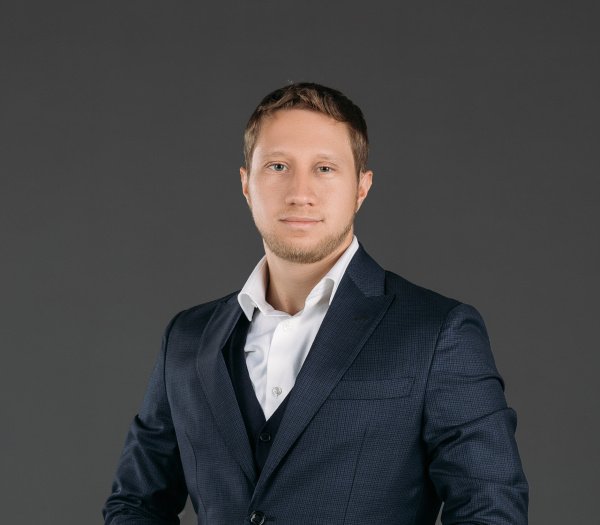
In this episode of the RealLifeSuperPowers podcast, we speak with Eugene Levin, the Chief Strategy Officer at SEMrush, a software solutions company that offers online visibility and marketing analytics data to over 5,000,000 registered users.
He’s super analytical and pragmatic, making very calculated and aware choices but at the same time super-intuitive and follows his heart. His career path is quite extraordinary.
We discuss:
– His unique journey from being an engineer in Russia to becoming a successful investor (and partner in several VCs), then founder of several startups to now a c-level employee at SEMrush.
– His investment philosophy.
– When things go right, what bears more profit potential – being an investor or a startup founder?
– His decision making process with respect to his career
– What makes a good team
– And much more
Anyone considering their next step or curious about the world of investing can find inspiration in this episode.
We hope you enjoy your listen!
Zooming out, if you like listening to this podcast, make sure to subscribe so you don’t miss new conversations with peak performers, serving as a reminder we can all tap into the best versions of ourselves.
You’re also welcome to follow Ronen and Noa on Linkedin
And if we may ask for a favor – please leave us a review on your native podcast app.
Some further resources:

[This transcript was generated from YouTube’s auto-captions, not a verified human/AI-diarized transcript. Timestamps and wording may contain errors, and speaker labels below are Claude’s best-effort inference from context, not confirmed against audio. Please review before publishing.]
[Music]
Eugene: When I need to decide what I want to do, where I want to focus, I follow the thought process: am I in this environment the best person to do this? If the answer is yes, then first, am I technically qualified? And if yes, is it the best thing to do among other things where I qualify?
Host: So we’re back from a quite long corona break, no pun intended, and today we’re excited to interview Eugene Levin. He is the Chief Strategy Officer of SEMrush, and he’s also one of the first investors. SEMrush is a software solution company that offers online visibility and marketing analytics data to over 5 million monthly users. I actually use it myself and in my agency, so I’m excited at the chance of getting a peek behind the scenes of one of the key people behind this successful tool.
We have the technology.
[Music]
Host: So, welcome to Real Life Superpowers.
Eugene: Thank you. Thank you for having me.
Host: And how are you holding up in these COVID-19 days?
Eugene: You know, mostly at home. I think I’m lucky enough to have enough space, so at least I can work without too many distractions. On the other hand, it’s great to be more with family. You don’t have to commute, and that probably saves another two hours a day, so I’m spending more time with my kid than I’ve ever had. I think there are pros and cons. I’m always trying to find positive things in all situations.
Eugene: You know, it’s hard to find positives. One of the biggest and oldest car rental companies filed for bankruptcy recently. We’re going to see more things like this, and all these people who work for them are going to lose their jobs, which is terrible. On the other side of the spectrum you have guys like Zoom. We are using them today. For them, I think they party like it’s 1999. Their stock price is very high. I think Zoom is an extreme example of someone who just really benefited from this. I don’t think this was intentional, or that they’re happy with this type of benefit from the situation, but the reality is it benefits the internet as a whole, anything that’s online-oriented.
Host: 100%. [unclear in the captions] in the corona. Are you working physically now from home?
Eugene: We moved everyone to work from home a long time before lockdowns.
Host: How did you do the switch?
Eugene: I think it was sort of not complicated. One day we told people to stay at home, and they stayed at home, and everything else was normal. We just didn’t have the same in-person meetings and personal communications, but otherwise nothing really changed that much.
Host: How do you implement culture now?
Eugene: I think two months is not really enough time for the culture to deteriorate, especially if you have been working on it for 10 years. But I think maintaining culture in the long run, if people never meet in person, is hard. So right now we’re thinking about how we make sure culture stays at the level where we want it to be. We do a lot of things, for example mandatory camera on for video, so at least people can see faces. We do Q&A sessions with the leadership team more frequently than we have done before, so if people have questions about how to behave in different complicated situations, they can understand what type of solution is in line with the culture of the company. But if people don’t meet in person, culture deteriorates eventually.
Eugene: We had the same problem between, let’s say, the European offices and the United States offices, which never meet in person. How do they exchange culture? So we were sending a lot of people back and forth. In normal times I would personally travel back and forth four to six times a year and spend one month [unclear in the captions]. When I lived in Europe I would come here and spend four or five months here; now that I live in the United States, I sometimes go back to Europe and spend one month there. So for a global company, it’s not like we didn’t have this culture exchange problem to deal with in the beginning.
Host: When did you join the company?
Eugene: I joined the company in 2016.
Host: And when was it founded?
Eugene: 2008. So yeah, I’m relatively new here.
Host: Got it. But you’re an investor in the company, right?
Eugene: I personally am not. When I met the founders, my occupation was an investor. I was a partner in a big VC firm. But they didn’t take money, so technically I’m not an investor. When I met them I was an investor, and I was probably one of the first investors who kind of spotted the company. I think before me they maybe had a couple of conversations with investors ever, and it never went forward for many different reasons, but in general they didn’t like [unclear in the captions].
Host: Oh wait, so you were an investor in general, as your day job?
Eugene: I was a partner in a firm called Target Global, which used to be quite a big growth-stage firm, and now it’s a very big European growth and late-stage firm. They also do seed and early stage, but when I joined we were doing mostly growth stage.
Host: What does it take to be an investor? What do you have to do, and how do you know, okay, we’re going for this deal? What is the most important thing?
Eugene: That’s a very good question. I think the type of deals that you want to do changes with the firm’s strategy, and with the period in your life. Early in your career, to have extraordinary outcomes you have to take extraordinary risks, and I think a lot of becoming a professional, successful investor is luck at the beginning. Then over time you can start behaving in a safer way and choose deals differently.
Eugene: For example, when we were doing our first firm, we did seed stage. We didn’t care a lot about the pedigree of the founders. I mean, we wanted to have some chemistry with them, but we didn’t require people to be serial entrepreneurs or anything, and we were optimizing for valuations, because we understood that with the resources we had, we needed to buy good ownership very early and very cheap. So we focused on specific types of deals, technically companies that were sort of undervalued in a way. That was the approach, and with that fund a lot of companies didn’t make it, but a lot of companies showed a very, very good return.
Eugene: Now, with the growth-stage firm where I worked after that, we had a different approach. Technically the idea was that we should not lose money. We should pick assets where maybe they will not go up 20 times or whatever, but we should not be losing money. It was a different strategy, a different approach, and the criteria were very different. We were looking at who else is putting money in this company. Also, because it’s a late-stage transaction, you can see a lot of data, so we were very, very data-focused. We sliced and diced all sorts of cohorts, we did very good analysis of unit economics. So that was our focus.
Eugene: So I think with stage, and also with time in your career, things change. But I think at first, to become a successful investor, you need luck. Because theoretically I can write the best-ever textbook on how to do venture deals, and there are plenty of those books, actually. You can read all this stuff, and the theory is the same, but at first you need luck. And then once you have luck, you get a network. Once you have a network, you start getting better deals. Once you get better deals, you can also start getting a little bit better terms, because you’re such a famous investor and everyone wants to work with you.
Host: So what do you look for?
Eugene: For professional VCs, that would be [unclear in the captions] strategy. You sit together with partners and you say, we are going to invest in A, B, C, D because… and this because can be: we have better experience than anyone else in the world in this area, or there is a great macro thesis. In most cases you want to have some sort of information asymmetry, like: I will be more successful than the average person investing in this because… Even if it’s a macro thesis, it should be some sort of thesis that you know and other people don’t, so you’ll have more undervalued assets in your portfolio that will outperform.
Eugene: But from my experience, almost any strategy is good, because some smart people sit together and make those decisions. What’s really hard is discipline, to actually execute the strategy that you wanted to have. I had this issue with executing strategy a lot, because sometimes you just fall in love with a certain space, and you have some success there and a good understanding, so you start being overexposed to it. That’s why it is very important to have founders from different backgrounds. One of the good deals that we had in our first fund was in the travel space, so we started investing a lot in travel just because we liked the space and we understood it. But from a diversification point of view, it’s not a good strategy, and we understood this. You can have the smartest strategy in the world, but you also need to have the discipline to follow it. That’s actually hard. That’s why you want to have partners who do checks on you.
Host: When you started investing, did you start off as a partner in a VC, or did you first have a mentor and work somewhere? How did you get into this whole world?
Eugene: Yet again, I think I was kind of lucky. My background before VC was engineering. I’m a Master of Science in engineering. I worked for many years in tech as an engineer, then as a project manager. At the end I was doing more business and negotiations than project management, but that’s how the project management role evolves. First you manage internal resources, and then you start communicating with clients. That’s a very natural progression.
Eugene: But at some point I just figured out that if I just followed this path, maybe I might have a comfortable life, but I’m not going to be rich. And I always had the goal to be rich. I don’t even know why. It’s probably because when I was a kid we were, I wouldn’t say poor, but not rich. We watched all the movies from the United States, and it just felt very real that people live differently out there, they’re rich and we are not like that. So I always wanted to eventually have a certain lifestyle, and I realized that engineers make comfortable money, but it’s not on that [unclear in the captions]. So I started looking at what else I could do. One of my friends actually started a VC firm, and at that point, in that part of the world, there were just not a lot of associates that you could hire from the market.
Host: What part of the world is that?
Eugene: Russia. The VC industry there is still not very developed, but at that point it was almost nothing.
Host: When was this?
Eugene: It was roughly 2010.
Host: So at this stage you’re after a few engineering jobs, escalating to more business-oriented jobs, and now your friend is opening a VC.
Eugene: Yeah, I was looking for something, and he was opening the firm and needed someone to help with the VC firm. I didn’t know anything about investing. I kind of liked the idea of investing, because I was trained in statistics and I realized that being involved in 20 things is statistically better than being involved in one thing, from a risk-profile point of view. I liked the approach of not putting all the eggs in the same basket, but I didn’t really know what it was, and I didn’t have a financial background of any sort. But his logic was that it’s easier to train an engineer or a product guy to learn about finance, especially early-stage, seed-stage finance, which is not that complicated, than to have someone who studied finance and make them understand technology and product. And he didn’t have a huge market to hire people from, so he wanted to have someone he could trust rather than necessarily rely on hard skills.
Eugene: I learned a lot, and worked with many, many different portfolio companies, helping them with everything from product to business partnerships and marketing. At some point there was a company where I was really heavily involved, and then we sold this company. It was a very good outcome for us, and I was promoted to partner. That’s kind of how this whole thing started for me.
Host: So that’s how it started. Did you stay a few years in the investment world? What happened between that and joining SEMrush? [unclear in the captions] What company did you follow?
Eugene: So that’s a good question. After we sold most of the portfolio companies…
Host: You sold most of them?
Eugene: Yeah, we sold most of them. And I think there’s probably one of them that we are still waiting on, even though it’s been almost 10 years, it will be 10 years soon. But they’re doing well. It’s one of those cases where you wait, but in a good way.
Host: And these are Russian companies?
Eugene: No. We were doing mostly global companies that targeted global markets. A lot of them had R&D in Eastern Europe, Ukraine, Russia, Belarus, but we didn’t target the Russian market specifically. We were not big believers in the consumer space in Russia, and even less did we believe in the B2B space in Russia. At that point we thought it was a great market from a talent perspective. You can get really talented engineers, and now even marketers and even business people, but it’s not a good market to sell products to.
Host: I love your humility, because you’re speaking about things where the statistics [unclear in the captions] are really against you, and you’re passing over them as if you said nothing. You just told the story where you started working for a VC with no experience, which I understand, because a product guy is like an integrator between technology and business, so it’s actually a good person to hire for that. But then you said, okay, and then we sold that company, and we sold a lot of our portfolio, and you left that alone. But this is like a pivot point in your life, right? Because suddenly you get something like a master’s degree, and those case studies behind you. So I want to understand for a second: what are the companies, how did you sell them, and what are the statistics there? Because it sounds like you did something incredible. There are not a lot of firms that sell most of their portfolio. How many were sold and were successful?
Eugene: Yeah, I think two deals were what I would call really, really good outcomes. One transaction technically returned the whole fund; another one provided very, very material upside. Then some companies closed. Some companies reached the point where they were sort of profitable, and the founders decided they were not going to make a huge story out of it, but it was going to be a healthy business, so they just collected cash and distributed the cash, and we got some money out of it. Some companies pivoted and were sold later, but in a different way. And some companies are still there and growing.
Eugene: So that was the first fund. We did mostly seed and early stage. I think the trick was that with those two deals that did really well, we returned the fund, and the question was: we can raise a new one and deploy new capital, or we can do something else and just wait for the whole portfolio to eventually be [unclear in the captions]. So we were passive investors in all remaining transactions. We sold [unclear in the captions] at all the companies where we were an active investor, and we had some time to do other things.
Eugene: One of the things that we noticed is that from a statistics point of view it’s really good to be an investor, but in terms of outcome, if you’re the founder of one of those successful companies, you end up doing better. And we felt that the companies where we were more involved actually did much better than companies where we were not involved. We started correlating this with our personal skill sets, and we thought, okay, if we can make the difference, then why don’t we build a couple of businesses ourselves? So me and my partner decided to build a couple of companies.
Eugene: I was focused on gaming companies. We built a game development studio and a publishing company. We published a massively multiplayer online RPG game in Eastern Europe. My friend actually started a SaaS company in the competitive intelligence space and later sold this company to [company name uncertain from the audio], and then he started one more company and sold it to Adjust. So he decided to focus on an entrepreneurial career and was very successful in it. My companies, where I was more involved, kind of went into, I would say, the lifestyle business stage, where they make money. It’s [unclear in the captions].
Eugene: So we were publishing the massively multiplayer online RPG, which was browser-based, almost like World of Warcraft but in the browser, in a steampunk setting. It was a very cool game; I played it myself. Yet again, at some point you reach a certain level where it’s a stable business and you can get cash, but you realize it’s not going to be Fortnite. Gaming is a hit-driven business, even more than VC. Sometimes you have Fortnite, sometimes you have total failure, and sometimes you have something in the middle. We had a game that was something in the middle. It was niche, to the point where the audience that we were able to acquire was very loyal. It was not for everyone, because of the setting and because of the skill requirements. It was mid-core at a time when most browser games were very casual. But it was good, I’m not complaining. It was good money.
Eugene: And then the second company was the game development studio. We were building games, but for other people, you know, like [unclear in the captions]. Not always games; sometimes we built assets, models, pretty much anything. We worked with a lot of really top gaming companies, EA, Wargaming, many other companies. So that was cool. But yet again, ultimately any sort of outsourcing is labor arbitrage. Our differentiation was that we had really amazing talent, but the problem with an outsourcing business based on amazing talent is that you cannot predictably hire amazing talent. We had great people who stayed with us because they liked the vibe and the culture and felt comfortable, but we couldn’t find more people like this.
Host: It’s kind of fascinating for me that you’re a statistics-oriented engineer and you actually chose to go into a non-statistical area of the industry, because gaming as content is sort of like putting out a movie. Either they love it or they don’t, and there are no statistics you can hold on to; it’s taste. And actually your partner went to SaaS, where statistics and modeling have a lot to do with it. So suddenly you’re going to the opposite of what you did before. In that sense, are you a gamer? Do you love gaming? Was it a passion?
Eugene: Exactly. I think most people who do gaming understand how bad the situation is from an odds point of view, but they do it anyway, because it’s a childhood dream. For me it was a childhood dream. I was always fascinated by video games. I played a lot, and I just felt that this would be something very interesting. Unfortunately, building games is not as exciting as playing them. But I think very few people who go into gaming usually have a solid plan like, yeah, we are going to make a huge company and do A, B, C, D. They just have a good idea that they want to see live.
Host: So what would you do differently this round, if you did it again and you had the energy?
Eugene: Well, I wouldn’t do anything different. It was a great experience. I learned a lot, and I didn’t spend my whole life chasing something that is impossible to achieve. But also, sometimes in gaming it’s about running a long distance. Rovio, for example, did all sorts of things before they had this hit with Angry Birds. Maybe I didn’t wait enough, but honestly, at that point I realized what this is about, and I realized it’s much less fun than I thought it would be. Technically, building a game is not much different from a process point of view than building other things. It’s actually way more complicated, but with much lower rewards, from my experience. Some people get more lucky, but I think yet again I had my share of luck with gaming. As I said, the publishing business was quite healthy, and the game development studio was also healthy as a business, but it was a lifestyle business, not something you can scale. And when you’re 28 years old, actually I was even younger than that, I was like 26-ish, it’s too early to retire and have a business where you just enjoy getting into the office.
Eugene: With the game development studio, as I said, the issue was not that I couldn’t sell more deals and find more demand. It’s just that I didn’t have supply, and I didn’t know how to scale supply. So I could show up in the office maybe a couple of days a week and sell enough to have work to do for the next couple of months. At that point I started being, not really bored, but I started looking for other things.
Eugene: And that’s when I was approached by the guys from Target Global. They had just raised a huge fund at that point and needed someone who could help them deploy the capital. So I joined the firm, and the strategy was to invest in things that we understand, which meant mostly consumer internet. We looked at late stage, where the job is mostly crunching the numbers. We had quite a lot of interesting deals, companies like Lyft. In Europe we did Delivery Hero, which, yet again, at that point felt like a late-stage deal, but they grew unbelievably since then, and right now they have a 16 billion dollar market cap as a publicly traded company. So that was a very, very interesting experience.
Eugene: But at some point those consumer internet companies started to be sort of inflated. It was the period where everyone was looking for the Uber of something, the Uber of laundry, and everything was very, very expensive in the consumer internet space. The revenue multiples didn’t make any sense to me, so I started looking at other things, and I felt that software was really undervalued. Software multiples were almost at an all-time low, especially for SaaS, and I just felt this side of the market was undervalued and we should focus there.
Host: How much was the multiplier?
Eugene: Well, I would say roughly four times revenue, compared to right now, where I think good publicly traded companies have eight times, ten times. At that time it was more like four. The problem was that software is a complicated space, and we had this rule about investing only in things that we know. So we looked at software that we used in our companies, like Dropbox. And I personally had used SEMrush for many years. I used it for marketing, I used it for due diligence, and I felt that I understood their model and their product, so I would be qualified to invest. I reached out to the guys, and I very quickly realized that this is probably one of the most financially successful companies that I’ve ever seen, by my definition of financial success: very profitable, growing fast, never raised any money. So I was very excited, but the problem was they were so profitable they didn’t need my money.
Eugene: As many investors do in those cases, I just wanted to invest in the relationship. I was trying to be helpful, provided advice, introduced them to other people. Eventually we met one more time, and I gave them another [unclear in the captions] about why investors can be helpful beyond money and what else you can do for the business. They told me that they still didn’t need money, but I seemed to be very helpful, so they kind of made me an offer that I couldn’t refuse.
Host: So you sort of stopped being an investor and entrepreneur and joined the team as an employee.
Eugene: Yeah, you could say it this way. I don’t think it’s a problem if you work with people you like. I mean, I wouldn’t go and be employed at, I don’t know, General Electric.
Host: You believe in the product itself, so you want to be a part of it.
Eugene: Yeah. I like to do things that I enjoy. As you said, in this case I like the product, I like the mission, I like the people. So being an employee, I don’t have the sort of moral code that prevents me from being an employee somewhere.
Host: Oh, I wasn’t saying it in a critical way, I was trying to understand where you’re at.
Eugene: Yeah, yeah.
Host: And how were the people at the VC about you leaving?
Eugene: It’s a very progressive conversation. If you can show that you’re going to make more money in the other place, people understand this. In this case it was kind of an obvious calculation. I also had to give up a lot. When you leave a partnership, partners don’t take it kindly, so you lose pretty much almost everything that you had in the firm. It depends on the specific types of agreements, but yeah, I had to give up a lot. Also, whenever I changed places, I tried to make the transition as smooth as possible. I think I stayed partially involved for at least a year, to make sure that everything I started gets finished and that whatever I was working on is transitioned and in good shape. So it was all good. I still have good relationships with my partners at Target, and I help them where I can.
Host: I have a question about getting deeper into your superpower or skill set here. I’m wondering something: do you get bored quickly? Because it looks like you like challenges a lot. You really evolved, right? You started as an engineer, then a project manager, and you said, okay, statistics, I’m moving on to the VC area. In VC you changed different industries, and then you pivoted to being the advisor, financial strategist. It sounds like you’re a person of evolution. It’s not like you’re an engineer; you’re anything you want to be, and you’re changing characteristics. You have that engineering brain, but it looks like you’re adapting and learning and changing and evolving with the times. You moved to software at a point where you had to, because of the multipliers. So you’re solving a lot of problems, and I’m wondering: is it that you get bored and want to challenge yourself? Is it meeting different people and saying, okay, I really like what these people are doing? What keeps you moving? What’s your next step?
Eugene: There is no grand plan. I just follow the thought process when I need to decide what I want to do, where I want to focus. I follow the thought process: am I in this environment the best person to do this? If the answer is yes, then what sort of impact can I make there, for the business, for the partners? That’s kind of how I evaluate things. First, am I technically qualified, and if yes, is this the best thing to do among other things where I’m qualified?
Eugene: I think especially in a small company you have to wear a lot of hats. You can do marketing, but you also need to understand the product, and you need to speak the same language as the engineers. So you’re sort of a full-stack professional, and this type of profile is very good for early-stage companies, where you cannot hire five different people, so you want to hire one person who can do all those things. Obviously not full-time, but at least close the gaps, so as a company you don’t have gaps. Then as you move to later stages, you want to focus on specific areas where you feel stronger than other people. Can I do finance and P&L for a small company of 20 people? Yeah, absolutely, easy. But am I the best person to do the same thing for a company with 800 employees? Probably not. There are people who have done it longer and better and more successfully. So I need to focus on areas where I’m more helpful, and over time this area gets smaller in terms of what you do, but bigger in terms of what sort of impact you can make. That’s my thought process on what to do next.
Eugene: And it’s not just between companies, like you said, jumping from one occupation to another. Within one company, the role evolves a lot. I was Chief Strategy Officer when I joined, and I’m still Chief Strategy Officer, but the role changed very, very significantly. As we were hiring extremely skillful and knowledgeable people, I would take off one hat and give it to them, and then focus narrowly on other areas. But because the company gets bigger, even with a narrow focus you can still do more every year.
Host: If you say, listen, I’m looking forward to succeeding in this or doing this, what would it be?
Eugene: That’s a good question, because when I was young, I mean, it’s not like I’m old now, but when I was younger, I wanted to retire early and just relax and do things. And when I had a chance, I felt that I just cannot do this. I think this is very consistent with what I’m hearing from other people. Our Chief Revenue Officer had multiple opportunities to retire, and somehow he’s still working, and working more than a lot of people I’ve ever met. For some reason, retirement is not necessarily going to be a good option, at least not early retirement. So the question is, if this is not the option, then what else can you do?
Eugene: I would be happy to tell you that I have a grand plan like Elon Musk, to go and colonize Mars. That’s unfortunately not the case. I don’t plan too far forward for myself. I plan four or five years forward for the company. I think companies should have an end game, but I personally don’t necessarily [unclear in the captions]. If tomorrow life brings me new challenges, that’s great. I’m optimizing for happiness, for me and for my family. If my family and I are happy with where we are today, I just need to continue doing this. And for me personally, I think what makes me happy is solving new puzzles in a way. I don’t want to have problems like a global pandemic to solve; that’s a little bit above my pay grade. But I want to have challenges that I can reasonably solve, and I think that’s what gets me excited. If I just stayed at home for half a year and played PlayStation, I wouldn’t be a happy person. Yet again, this is right now; maybe tomorrow it changes. But right now I just want more challenges that are interesting but solvable. I don’t want to hit an unbreakable wall.
Host: And what would you say your superpower is?
Eugene: Well, we talked a little bit about luck. I think it is important. The trick is, if you do some research, most people feel that they’re lucky. I try to justify that I’m probably more lucky than many other people, that there is some logic to prove it, but I think ultimately it’s just subjective, and most people feel like that. So that would not necessarily be the best thing to pick as a superpower, just because a lot of people feel this way.
Host: Well, first of all, Domino in Deadpool had the same superpower, so it’s not really that bad. But beyond that, I think with luck, what I’m thinking, can I just try, and you can tell me if I’m wrong: I think because you’re a statistics person, deciding to be in the right area makes the potential of being right higher. So minimizing the risk is not really luck. You’re right that maybe you have 80 percent of making a good decision, and there’s 20 percent where you have to be lucky. But I sort of see it because you have a lot of success behind you. At the end of the day, each time you picked a place that either you knew about, or was safe, or had multipliers or arbitrage, where statistically you have a high percentile of being lucky. Everybody has to be lucky, but you had higher potential than someone who just did things from a different side. So I think decisiveness, deciding where to be, is actually a good superpower.
Eugene: I agree. I think a lot of this is, fundamentally, just from statistics theory: you can make numbers work in your favor. So if I had to choose it this way, that’s the superpower, and I wouldn’t call it luck. I think the Domino example is actually good. I would like to feel like I’m Domino and I’m just always lucky. I’m not like that. But you’re right: choosing your path to make numbers work in your favor is a good superpower, and seeing the world in numbers and probabilities, I think, is also good. I think there is some fundamental [unclear in the captions], like tossing a coin, but there is also the type of luck where you subconsciously make decisions, but your brain actually did the whole math. So that’s this one.
Eugene: And then I think, I wouldn’t call myself extraordinary in anything. I can play guitar, very, very average. I play computer games, very average. But I think what was different for me is that I could pick up things very fast and become average, a little bit above average, in almost anything. So that kind of gave me the context, because of all of these experiences. Because it was easy for me to pick up things, I would on average make the right decision with higher probability than most people. And I think with life, the trick is you don’t need to be right a hundred percent of the time. You just need to be right more than other people, and that can lead to disproportionate success.
Eugene: I like the stock market example. In the stock market, if you can be right 51 times out of 100, you’re extremely rich, better than anyone, because you’re making those choices so many times that even this extra one percent gives you an unprecedented gain. But that’s only one percent better than random. In life you make a little bit fewer decisions than in the stock market, but let’s say I’m just 10 percent better at making decisions than random. That’s already good. And if some other person is five percent better than random, then I already have double the gain versus this person. So that’s kind of how I approach this superpower thing.
Host: I love that, because you’re talking about 100 percent of the money, right? You’re either on the winning side, taking the five percent, or not. There’s 100 at the end, so you just have to be one percent more right, and you’re taking the one percent from the losing side. I like that.
Host: Okay, last question. If you were to decide to invest in something, what is a tip for an entrepreneur? Like, don’t make this mistake, or have this ready, or do this. Just one thing that’s super important.
Eugene: This one thing always changes. But I started my professional career with an approach that I should be the smartest guy in the room, and then at some point I evolved to the understanding that if I’m the smartest guy in the room, I might be in the wrong room. So I think the overall conclusion is that you need to be smart and helpful for the team and partners, but if you are the only one who delivers value, then it’s the wrong room. And I think that’s how I choose partners to work with. I want to see people who are way, way ahead of me in certain areas, and I can be way ahead in other areas. That’s what makes a good team. I think a lot of the mistakes that I’ve seen from CEOs in early-stage companies are that they want to be the only smartest person, the final decision maker. I just don’t believe it is viable in the long run. But I had the same attitude when I was younger. So that’s kind of one thing that I would probably, not necessarily change, but I would change certain decisions that I made back in the day if I knew that.
Host: Wow. You’re giving us a lot of food for thought here. And I’m personally super curious about where you’re going to be five years from now.
Eugene: Yeah, you never know. Yet again, I used to have plans, but my grandma used to say that if you want to make God laugh, you should tell him your plans. So the idea is, you can have whatever plans, but life will not take them into account.
Host: John Lennon has a similar quote. Maybe your grandma is Yoko Ono.
Eugene: Well, I honestly don’t know, but she definitely had some crazy superpowers. Unfortunately she passed away, but I learned so much from her. She was very, very influential through my childhood. Like with all grandparents, you always wish you had a chance to spend more time with them when you’re grown up and can appreciate the wisdom, instead of just rejecting everything like teenagers do. She had [unclear in the captions], and I think she was one of the first people who explained to me the value of liquid assets, and why liquid assets are better than illiquid assets in some ways. She did it without any sort of financial background or anything. Her idea was that if you think that just buying jewelry is an investment because jewelry is expensive, well, try to sell it. That was, okay, I hadn’t thought about this. How do I sell this thing?
Host: Not the typical grandma-grandson relationship, I think. Mine made meatballs really well.
Eugene: No, no, that’s the same. I learned all the nutrition things from her too. But she was coming from a different background. For example, right now, I wouldn’t say I don’t eat bread, but I try to eat less bread. If she learned about this, she would be devastated: what do you even eat if you don’t eat bread?
Host: Yeah, the generations are evolving and thinking differently and adopting such different mindsets.
Eugene: Yeah, but the problem was their generation didn’t have enough food, and we have too much food.
Host: And handling that. Okay, thank you so much for taking the time. This has been really great. I have a lot to think about now. I think Ronen does too.
Host: Yeah. I really like your perspective in the last two notes. I think that gives really deep thought about what we’re looking for, and I really appreciate your humility as well. I’m really happy that we met you at this age and not when you were 26, because apparently you’re different. I hope we’ll be in touch, and I hope to do this again sometime in the near future.
Eugene: Perfect. I really, really enjoyed the conversation. I like those types of podcasts.
Host: And also with SEMrush, I’m a user, I love it, so keep up the good work there.
Eugene: Thank you.
Host: Thank you so much.
Eugene: Awesome, thank you.
Host: Bye for now.
[Music]
We have the technology. Real Life Superpowers.
[Music]
Dr. Zohar Bronfman – The Limits of Knowing Dr. Zohar Bronfman is the... Read more
Building a Company That Doesn’t Depend on You Naveh Ben Dror is the... Read more
Life Is a Game Lior Pozin built AutoDS into a company with more... Read more
What started as an idea between two Technion graduates became one of the... Read more
Going all in, whatever it takes In this episode, we speak with Lior... Read more
In this episode, we speak with Eli Goodman, co-founder and CEO of Datos,... Read more


