
Episode #99: Zohar Bronfman – Co-founder and CEO of Pecan AI
Dr. Zohar Bronfman – The Limits of Knowing Dr. Zohar Bronfman is the... Read more


Episode #99: Zohar Bronfman – Co-founder and CEO of Pecan AI
00.00/57:41
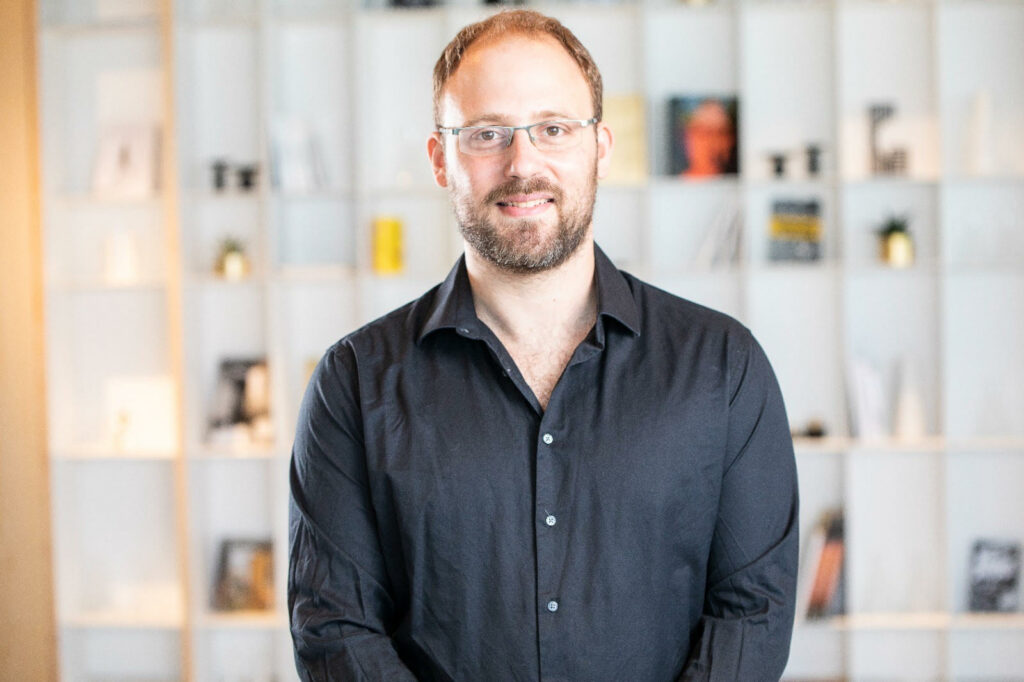
In this episode of the RealLifeSuperPowers podcast, we speak with Kfir Damari, COO of Tabookey and Co-Founder of Space IL.
Kfir made history by founding a company that is the first private organization to ever reach the moon! It’s a bitter sweet achievement because the official goal was to soft land on the moon, making Israel the fourth nation in the world to do so. But as life (or physics) would have it, Beresheet, the lunar lander that the team built, failed to do so and crashed on the moon at a speed of 1km per second (making Israel the 7th nation to orbit the moon).
Failure is a funny word to use in this respect for reasons that are self explanatory. But above all, the high level goal of the mission was to create an effect similar to the Apollo effect that will inspire younger generations to go and study science and technology and to set moonshot goals for themselves.
In order to do that Kfir and his team spent years visiting schools across Israel, giving talks to kids, telling them the story of Space IL. As the venture progressed more and more volunteers joined this mission and the educational aspects of the project became the core values of it (and its true success). To date they’ve reached more than a million kids.
There’s a lot to be learned from Kfir’s mindset. We asked him what set his heart to go for the project. He said “it was mainly that it was an impossible mission”. He wanted to do something bigger than life. To make an impact. To take an impossible mission and show that it’s possible.
We discuss:
• How Space IL started
• Why it’s so difficult to land on the moon
• Persistence – it took Kfir and his team about 24 hours to announce they’re going to try again
• The non-material rewards of solving a problem of such magnitude and the motivations for taking on such a challenge
• Why founders are like stem cells
• The importance of asking a lot of questions and speaking out
• Kfir’s current venture Tabookey and its super original value proposition (that can potentially disrupt how companies do business with end users)
Much more!
The Apollo effect spun-off a host of inventions that permeate the US economy (and probably the global one) to this day. It’s fascinating to see what the Beresheet effect will yield, what the future holds for Space IL’s second stab at the impossible, and what Kfir will do next on his overall mission to make a dent in the universe.
We hope you enjoy your listen.
Zooming out, if you like listening to this podcast, make sure to subscribe so you don’t miss new conversations with peak performers, serving as a reminder we can all tap into the best versions of ourselves.
You’re also welcome to follow Ronen and Noa on Linkedin
And if we may ask for a favor – please leave us a review on your native podcast app.
Some further resources:

[This transcript was generated from YouTube’s auto-captions, not a verified human/AI-diarized transcript. Timestamps and wording may contain errors, and speaker labels below are Claude’s best-effort inference from context, not confirmed against audio. Please review before publishing.]
[Music]
Host: We’re here with Kfir Damari, COO of Tabookey, and — most importantly — one of the people who just landed a spacecraft on the moon. Kfir, how are you?
Kfir: Great, how are you?
Host: We’re good, thank you. So how does it feel to be one of the people who actually reached the moon?
Kfir: It’s amazing. A lot has happened since then — a lot of support from the public, from around the world. It’s been hectic, but amazing. A lot of people reaching out to hear the story, to invite us to give lectures, to be part of what’s next — we’ve already announced we’re planning to build another spacecraft, Beresheet 2.
Host: Some people would point out that the spacecraft didn’t actually land softly on the moon — it crashed. Does that mean, to you or to others, that the mission wasn’t fully accomplished?
Kfir: I’d say we need to be accurate — some people say it crashed, but we reached the moon at a speed of about one kilometer per second. Our goal and hope was to land softly, but I think the major achievement was reaching the moon at all. By doing that we already made history — Israel became the seventh country in the world to reach the moon, and the first private organization ever to do so. We were hoping for a soft landing too, of course.
Host: Why does the soft landing matter so much?
Kfir: It would have made us the fourth country to soft-land, and the first private organization to do that. But beyond the numbers, we were also hoping to gather more scientific data during the descent — we did collect some, just not everything we’d hoped for.
Host: Why is this so hard? Why have only a handful of countries ever pulled it off?
Kfir: It’s genuinely rocket science, but there are specific reasons. One major one is that everything in space has to work correctly the first time — on Earth, if something doesn’t work, you can go fix it. In space, you don’t get a second chance. There’s a famous story about solar panels sent to the International Space Station that didn’t deploy properly, and astronauts had to go out on a spacewalk and literally hit them with a hammer to get them open. Normally you don’t have that option, so you design around eliminating moving parts wherever possible. The second reason is the environment itself — extreme heat, extreme cold, vacuum. Even on the moon, the dust is electrostatically charged and can work its way into any mechanical system and destroy it from within — which is a huge problem if you’re building something like a rover with moving parts.
Host: Is all of this something you had to learn from scratch once you decided to go for the moon?
Kfir: Pretty much, yes. My own background is in cybersecurity, which is what I still do professionally — we had to defend the organization against real attacks, though not attacks on the spacecraft itself in orbit. It’s a different part of my life, though I think what connects everything I do is solving genuinely hard problems. Space, in general, is extremely hard, for the reasons I mentioned, and that’s exactly why so much innovation has historically come out of the space industry. The way we build modern roads today traces back to NASA’s Space Shuttle program. Scratch-resistant coatings on eyeglasses came from NASA. Even freeze-dried food technology was originally developed to feed astronauts. A lot of what we use in daily life is a byproduct of the huge challenges the space program had to solve, which forced new technology to be invented.
Host: That connects to a bigger question — do you think most innovation today is fairly superficial, because people are comfortable, compared to something like landing on the moon or Elon Musk’s push toward Mars?
Kfir: I think the big challenges are still out there — the UN has a list of around twenty specific global goals it’s trying to solve. I think it’s a very personal choice whether someone devotes their life to something like that versus, say, building the next Snapchat.
Host: Was that a deliberate, principled choice for you — going nonprofit instead of chasing something more financially rewarding?
Kfir: It’s not especially financially rewarding to land on the moon, honestly. We decided early on to be a nonprofit because it felt right — we felt the spacecraft belonged to everyone in Israel, not just to us. A lot of our effort went into education — we reached more than a million kids and tried to inspire them toward science and technology. On a personal level, we didn’t make much money from it. I think if you look at the nonprofit and social-entrepreneurship world generally, most people in it aren’t primarily driven by financial reward — some manage to combine impact and income, but most don’t, and that’s fine, because the reward is something else.
Host: So what’s the actual end goal now, for SpaceIL going forward?
Kfir: Good question. Morris Kahn, our chairman, announced we’re going to build Beresheet 2 — right now we’re still figuring out what that actually means in terms of budget and timeline; there isn’t a full plan yet. In the meantime we’re focused on making sure kids keep getting inspired by space and science generally.
Host: Is the organization’s real mission to inspire future scientists and engineers, or is it literally about reaching new destinations in space?
Kfir: When we started, the vision was to inspire kids — not just around space specifically, but to pursue their own dreams, and to understand that turning a dream into reality takes real, deliberate effort. We ended up being the first non-governmental organization to pull off a mission like this, and now we’re looking at the possibility of building more spacecraft. We’ve had interest from other countries too — there’s real know-how in Israel now, at places like Israel Aerospace Industries, in building small, lightweight satellites and spacecraft, and we’re thinking about how to take that further, even though the number of potential customers for something like a moon mission is still pretty limited.
Host: Let’s go back roughly a decade — you were on a track toward a cybersecurity career. Tell me about the moment you realized you wanted to do something bigger. Was that the same moment the spacecraft idea came up, or separate?
Kfir: A lot of friends of mine from my military intelligence unit had their own startups, and I had an idea for my own. Around that time I saw a Facebook post from Yariv — he’d actually been a guest on our podcast too — asking, essentially, who wants to go to the moon. I told him, if you’re serious, count me in. That’s how it started.
Host: Did you actually think he was serious?
Kfir: I did, for some reason — it didn’t strike me as an odd thing to say at the time, even though looking back it obviously sounds a little wild.
Host: Would you have personally gone to the moon, if it came to that?
Kfir: On a personal level, I’d want to make sure I could come back — our spacecraft was never designed to carry people anyway. There are people today aiming for one-way trips to Mars, but I have a family here on Earth. The longest I’d consider being away, if I knew I could come home, is maybe about a year.
Host: Were you a space enthusiast growing up?
Kfir: Not really — even today, people assume I know a lot about astronomy, constellations, that kind of thing, and I mostly don’t. What drew me in was that this was essentially an impossible mission, and I wanted to help make it happen. The other part was the impact — doing something big for Israel, for the world, and proving that something seen as impossible could actually be done.
Host: Did you feel confident from the start that it would actually work?
Kfir: Not the whole time, honestly. There were points where we genuinely thought the organization might have to shut down the following week. It didn’t feel entirely out of reach, partly because a few countries had already done something similar before us — though hypothetically, if no country had ever done it, I think it would have felt much harder to believe in.
Host: Tell us about that first meeting with Yariv where you actually committed to this.
Kfir: I told him over Facebook that if he was serious, I was in, and the three of us met in person at a pub in a city here in Israel. We started thinking through what the spacecraft would even look like. Originally we wanted to build something tiny, around ten centimeters, using very new technology, but once we actually got into the engineering, we couldn’t find a fuel tank small enough that could still carry enough energy to get us all the way to the moon and land.
Host: Did you have day jobs at the time, or were you doing something else entirely?
Kfir: I was lecturing at a college in Israel and had actually been planning to start my own for-profit startup. But when I heard this idea, I just thought it sounded amazing and I wanted to be part of it.
Host: What sacrifices did that require early on?
Kfir: First, I quit my lecturing job after about six months. When we sat down at the end of 2010, we were aiming to land a spacecraft within two years. At the time it didn’t feel like an enormous sacrifice, because we were planning something much smaller and lighter than anything that had come before — but I don’t think we understood yet just how complex it would actually turn out to be, or that it would take us close to eight years and around a hundred million dollars.
Host: When did you realize this wasn’t going to take two years, and did your confidence waver?
Kfir: It took a while just to understand what the spacecraft would even need to look like — you could say it took about six years to really nail that down. The design changed radically about four times, going from one fuel tank to two, then four, then bigger tanks again, because every time we calculated it out, we didn’t have enough fuel. The problem is that every extra kilogram of fuel you carry to the moon requires roughly four more kilograms of fuel just to carry that fuel — so bigger tanks meant heavier tanks, which meant needing even more fuel. In the final design, more than four hundred kilograms out of roughly five hundred sixty total were just fuel and the tanks holding it — the actual electronics and payload were a small fraction of the total mass. So it wasn’t one dramatic turning point, it was a series of them, and most of them were technical, which then created financial pressure too, since a bigger spacecraft costs more and takes longer.
Host: Where did the money actually come from?
Kfir: Not investors — donors. It’s important to remember that distinction. Morris Kahn was central, along with the Adelson family, the Schusterman family, and others.
Host: Why would people donate to something like this?
Kfir: I think there were roughly three motivations. Some wanted real impact and thought, simply, we’ll have a spacecraft on the moon, and that felt meaningful to them personally. Some were drawn to the technology itself — the fact that we were building something smaller and lighter than anything designed before, showing that with the same resources you could potentially reach many more destinations than people assumed. Others cared about the educational mission — inspiring kids the way people once looked up to figures like Albert Einstein, at a time when we don’t have many household-name scientist or engineer role models. And a third group was specifically moved by the idea of an Israeli flag on the moon, showing that the Jewish people, and Israel, could achieve something at that level.
Host: You started with three founders. By the time you actually landed, how big was the team?
Kfir: I say “we,” because in some ways the whole country ended up feeling like part of it. But the core team was around forty full-time employees at SpaceIL, plus roughly another forty at Israel Aerospace Industries, and more at the Weizmann Institute. Beyond that, we had hundreds of volunteers — some in engineering, but most working on the education side, going into classrooms and telling our story to kids.
Host: At some point, did you get asked to step back and let more experienced managers take over — that happens a lot in projects like this.
Kfir: It did happen, around five years in. Partly it was personal — we’d started families, had kids, and financially I can say my own bank account only went one direction the whole time. But we also recognized we needed to bring in professional managers. Early on, almost everyone, including most of the engineering, was volunteer-driven. Eventually we needed a core paid team, though most of the actual engineering was still done by volunteers for a long time. A real turning point came when a new CEO came in and made everyone on the project full-time and paid.
Host: Were you okay with that shift — did it feel like someone was taking over your baby?
Kfir: It’s still my baby, honestly. It felt a bit like walking your kid to kindergarten for the first time and having someone else take them the rest of the way — you go on with your own day, but you don’t always know exactly what’s happening moment to moment. I did stay on full-time for about another year after that change.
Host: Why did you eventually step away?
Kfir: I felt I’d done most of what I personally could contribute at that stage. I never fully left — I’m actually back full-time with the organization again today. But at the time, I also needed to make sure I could support my family financially, and I think I’m someone who’s never been able to focus on just one thing.
Host: That’s around when Tabookey started — but you were also doing other things, volunteering locally. Has that always been your pattern?
Kfir: I think it comes from curiosity — I want to understand how things work, and I’m genuinely drawn to solving problems. When I hear about an interesting problem, I want to be part of solving it. Over the years I’ve done everything from early programming work to operations, legal, finance, marketing, education. A friend of mine, my co-founder at Tabookey, once told me that founders are like stem cells — you have to be ready to become whatever the organization needs at that moment. At SpaceIL my title was technically “business development,” and we used to joke that half the time I was doing business, and half the time actual development.
Host: It sounds like solving problems, broadly, might be your actual superpower.
Kfir: I think so — superpowers usually come from things you genuinely love. I think it goes back to being a kid — building with Lego, figuring out how things worked, taking on challenges. It wasn’t just technical either — it was social too, being the person among a group of friends who’d figure out how to solve something logistically complicated. I think the bigger shift happened in high school, when I became a youth leader in the scouts — that really reshaped how I thought about things. Looking back at SpaceIL, Tabookey, and other things I’ve started, what really interests me is building an organization that brings together a whole group of different superpowers to solve one really hard problem.
Host: Do you feel like you have a particular knack for finding or attracting those people?
Kfir: I think something the three of us shared was the ability to get people genuinely excited and on board. We recruited PhD students, professors, engineers with twenty years of experience, and told them, essentially, come work for us — at the time there was no real money, everyone from the CEO down took the same modest pay, but people believed in the story and the bigger vision.
Host: It sounds like this project was almost built for someone like you — was there ever a real question of whether you’d sacrifice for it, or was it never really in doubt?
Kfir: As a problem solver, this was one of the most complex problems out there — the kind of challenge people like Elon Musk or Richard Branson are drawn to as well.
Host: So what’s the next thing that could hook you the way this did?
Kfir: There’s something uniquely compelling about a challenge at that scale — global hunger, fusion energy, longevity research. But right now, honestly, I’m also just trying to balance my life a bit more, and focus on solving problems people are actually willing to pay for, since as we discussed, a lot of the most meaningful problems aren’t necessarily the ones with a clear business model. Tabookey is developing a decentralized cybersecurity platform — we started by building solutions to protect digital assets controlled by a computer, whether that’s cryptocurrency, command-and-control channels for drones or satellites, or software updates for autonomous vehicles. We’re using blockchain technology to build a new kind of cybersecurity solution, and what we found talking to customers is that what they really want isn’t just protection — it’s a guarantee. So we’re essentially offering something like insurance: if the system fails and you lose funds, we make you whole. That’s fairly unusual for a cybersecurity company.
Host: Let me make sure I understand — you’re not just selling cybersecurity, you’re insuring the outcome, backed by blockchain rather than a centralized server that could itself be a single point of failure?
Kfir: Exactly — using a centralized server, someone could hack the server itself and undermine everything, so you can’t really offer a real guarantee that way. Blockchain lets us remove that central point of failure. We’re not “building the economy on blockchain” in some abstract sense — it’s a specific building block we’re using to make a concrete guarantee possible. Eventually we’re also thinking about opening this up as a decentralized insurance platform other companies could build on top of.
Host: What insights from the SpaceIL journey are you bringing into this venture, now as a more experienced entrepreneur?
Kfir: Ask a lot of questions, and don’t be afraid to voice them. Early on you often have a gut feeling that something’s off, but you’re not fully sure, and you hesitate to say it out loud because you don’t want to sound uncertain or inexperienced. I learned, sometimes the hard way, that you should speak up much earlier than feels comfortable. At SpaceIL there were times we had a gut sense that a particular technical approach wasn’t going to work, and it took us far too long to actually say so out loud — which cost us real time.
Host: What else did you take away?
Kfir: A lot about people, and how to actually engage them. Because SpaceIL was a nonprofit relying heavily on volunteers, we had to learn real leadership — volunteers don’t owe you anything, they show up because they connect to the cause and to the people leading it. I think whoever manages a large volunteer base well usually has stronger leadership instincts than someone managing people who are simply being paid, because money is an easy incentive, and without it you have to actually make people feel genuinely appreciated and part of something. The bigger your volunteer base, in a sense, the bigger you are as a leader, as opposed to just a manager.
Host: What’s the secret to getting a team to really buy into a story like that, not in a manipulative way, but genuinely?
Kfir: I think people want to be part of the story, not just told what to do — their name becomes part of something larger than themselves. A lot of people who were part of SpaceIL know that most people will never know their individual names, and I think most of them are completely fine with that, because they feel like they were part of something much bigger than themselves.
Host: What role did just giving people space to pursue their own ideas play in that?
Kfir: A big one. Part of how you keep people engaged with the vision is that when they bring you an idea, your default answer isn’t automatically no — usually it was yes. We said yes a lot at SpaceIL, honestly sometimes too often, to things we ultimately couldn’t fully support and had to wind down later. But I think giving people room to run with their own inspiration, connected to the broader mission, mattered a lot.
Host: I can personally attest to that — I volunteered with SpaceIL for over a year and I’m still loosely involved. Before I started, you interviewed me and were almost trying to scare me off, making sure I understood the commitment. But once I was in, you really let me run with whatever I thought made sense.
Kfir: That’s genuinely how it went, and I think we got better at it over time. It let us do so many things in parallel — the entire education team, for example, started from a single conversation, similar to the one we had with you, where I told someone I had a dream of building an education team that would go give lectures in schools, and she took that and ran with it, building something incredible.
Host: You’ve become something of a public figure in certain circles, getting a lot of media attention, especially since the landing — or, as some insist on calling it, the crash. How does that feel? Did you want that kind of attention?
Kfir: There are two parts to that. I’ll tell you a story — the first time I gave a lecture, afterward around forty kids came up to shake my hand, and one asked for my autograph. First time in my life anyone had ever asked me for that. On a personal level it felt amazing, but when I really thought about it and retold the story later, what struck me was that an engineer could stand on a stage and get that kind of reaction at all — because we don’t really have that many household-name engineers as heroes, the way people used to look up to figures like Albert Einstein or Henry Ford.
Host: So in a way, you turned engineers into something like rock stars.
Kfir: In a small way, maybe. Today’s version of that tends to be people like Elon Musk or Mark Zuckerberg — which is a bit different, more about business and platforms than pure engineering. I think there’s room for more of that kind of recognition for engineers specifically — it makes it feel cool, in a way it maybe wasn’t ten years ago, to work on genuinely complex, hard things.
Host: Do you think that same humility helped you deal with the emotional aftermath of the crash — the fact that it made a lot of kids genuinely cry?
Kfir: I think that was actually a good thing, in an unexpected way. It made kids go home and start real conversations with their parents and teachers about failure, not just success — conversations that don’t usually happen when everything just works and looks easy from the outside. It humanized the whole project, made it more emotionally real, and got people talking about how much failure is genuinely part of succeeding at something hard. Kids actually made videos afterward about Beresheet 2 before we’d even officially confirmed we were building it.
Host: You’ve said something like, “I’d love to do the next one” — is that partly a great excuse to keep going, given how many more people are likely to want to be part of it this time?
Kfir: Honestly, yes — I think the number of people who’d want to be involved this time around would be multiplied many times over, because now it’s proven feasible, it’s approachable, and there’s already a team with real experience.
Host: Last question — you mentioned the difference between problems that already have a known “recipe” to solve them, versus problems where you have to invent the recipe from scratch using first principles. Is that the core difference in the kinds of problems you’re drawn to?
Kfir: Exactly — some problems, you already have an established method to solve. Others, there’s no existing playbook, and you have to work from basic principles to invent the approach itself. I’m drawn to the second kind — inventing the next product, solving something genuinely new for an organization, where there’s no recipe yet.
Host: That’s genuinely exciting — I’d love to dig into Tabookey more with you sometime, and Beresheet 2 sounds even more exciting on a global level. Keep solving great problems — both of the ones you’re working on right now are genuinely inspiring, and I hope other people feel inspired to go after problems just as interesting.
Kfir: Thank you.
Host: Next time, we’re covering your kryptonite — we’ve got you on the hook for that one.
Kfir: Thank you, bye.
[Music]
We have the technology. Real Life Superpowers.
[Music]
Dr. Zohar Bronfman – The Limits of Knowing Dr. Zohar Bronfman is the... Read more
Building a Company That Doesn’t Depend on You Naveh Ben Dror is the... Read more
Life Is a Game Lior Pozin built AutoDS into a company with more... Read more
What started as an idea between two Technion graduates became one of the... Read more
Going all in, whatever it takes In this episode, we speak with Lior... Read more
In this episode, we speak with Eli Goodman, co-founder and CEO of Datos,... Read more


