
Episode #99: Zohar Bronfman – Co-founder and CEO of Pecan AI
Dr. Zohar Bronfman – The Limits of Knowing Dr. Zohar Bronfman is the... Read more


Episode #99: Zohar Bronfman – Co-founder and CEO of Pecan AI
00.00/57:41
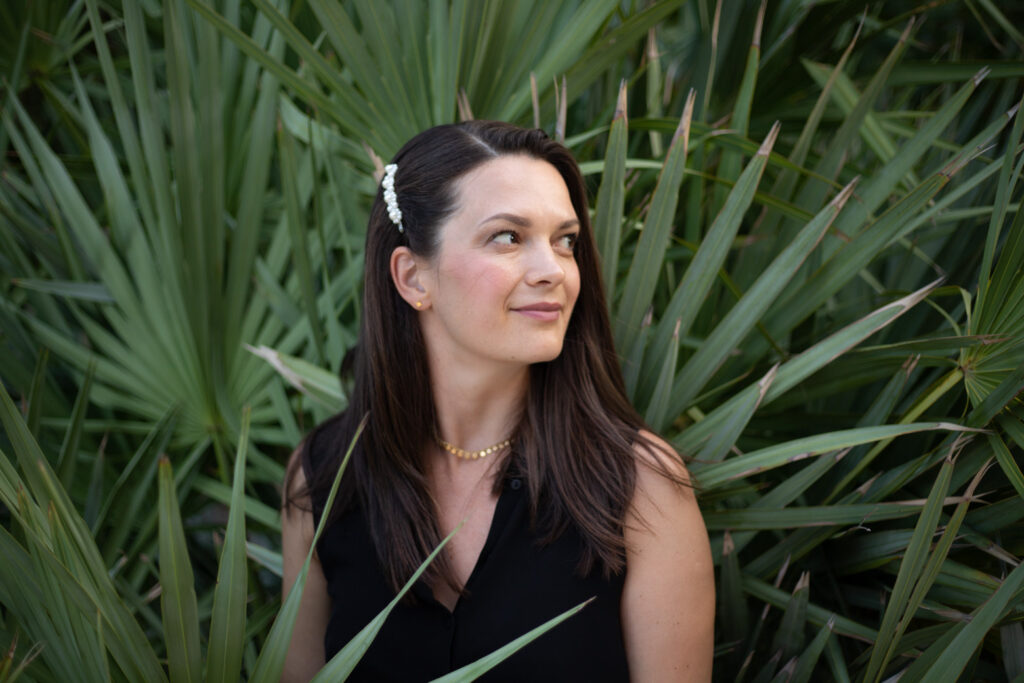
In this episode of the RealLifeSuperPowers podcast, we speak with Vik Harrison, who’s most known as the co-creator of Charity: Water, a nonprofit that provides drinking water to people in developing nations.
Since it was founded in 2006, Charity: Water has inspired a movement of one million supporters from 100 countries and to date, they’ve helped 10 million people around the world get access to clean water.
Vik is the brains behind the charity’s design and branding, she’s played a major role in its success.
She now has her own consulting firm – The Branded Startup, where she brings all her knowledge and experience to help purpose-driven entrepreneurs and nonprofits clarify their vision and tell their stories.
We discuss:
If you’ve heard of Charity: Water – you probably already know why this episode is a gem. If you haven’t – you’re about to find out. And if you manage a nonprofit – this is simply a must listen.
Zooming out, if you like listening to this podcast, make sure to subscribe so you don’t miss new conversations with peak performers, serving as a reminder we can all tap into the best versions of ourselves.
You’re also welcome to follow Ronen and Noa on Linkedin
And if we may ask for a favor – please leave us a review on your native podcast app.
Some further resources:

[This transcript was generated from YouTube’s auto-captions, not a verified human/AI-diarized transcript. Timestamps and wording may contain errors, and speaker labels below are Claude’s best-effort inference from context, not confirmed against audio. Please review before publishing.]
[Music]
Vik: In business, it’s really easy to say — like if you’re an assistant for the CEO and the CEO says, “Hey, that person, I don’t want to talk to them today, can you just make up a lie and say I had to go home because I don’t feel well?” We would never, ever do that at Charity: Water. We would always find a way to say, “Sorry, so-and-so isn’t able to speak with you today” — meaning, that’s not a lie. But even those little tiny details, we care deeply about, because we realize there’s no way we can live with integrity if we’re wrapped up in a bunch of lies we can’t keep track of.
Host: Hello all. Today we speak with Vik Harrison, who’s most known as the co-creator of Charity: Water, a non-profit that provides drinking water to people in developing nations. Since it was founded in 2006, Charity: Water has inspired a movement of one million supporters from 100 countries, and to date they’ve helped ten million people around the world get access to clean water. Vik is the brains behind the charity’s design and branding, and has played a major role in its success. She now has her own consulting firm, The Branded Startup, where she brings her knowledge and experience to help purpose-driven entrepreneurs and non-profits clarify their vision and tell their story. If you’ve heard of Charity: Water, you probably already know why this episode is a gem. If you haven’t, you’re about to find out.
[Music]
Host: So Vik, welcome to Real Life Superpowers.
Vik: Thanks so much for having me.
Host: Thank you. What are you up to these days?
Vik: You know, I’m doing a little bit of everything. I’m a mom of two kids, and that’s obviously the most important role, which means I juggle trying to work and also being a parent — and that’s been very interesting during COVID, because school can unexpectedly shut down at any moment and then I’m trying to work around the kids. So that’s the most important thing I focus on — figuring out how to parent and work. We also just bought a farm about eight months ago, so I’m getting excited to start planting a garden.
Host: Where is your farm?
Vik: We moved from New York City. During COVID, when everything shut down, my husband Scott — who’s the founder of Charity: Water — moved our entire organization to remote, and we decided there was no more compelling reason to stay in New York City, and we’d always wanted to live somewhere else. So we’re on a farm in Pennsylvania, about two and a half hours outside New York.
Host: Wow, that’s quite the change. How does it feel?
Vik: Amazing. I mean, I do get these piercing moments of missing my hometown, New York City, where I grew up for 25 years. But most of the time, when I see my kids running barefoot in the grass, it’s all worth it.
Host: It’s quite the change in mindset too. Do you feel like there’s a certain electricity in New York City, being where the action is? Do you feel left out, or are you comfortable where you are?
Vik: I think I miss what New York City made me — that’s my reason for missing it most of the time: it shaped who I am at the very core. I moved to New York when I was nine. I was a Russian immigrant — my family came to the United States when I was nine, from Russia. I spoke no English. We moved to Brooklyn. Then I went to art school in Manhattan. I grew up, I met Scott, I built my career in New York, and it made me a real New Yorker. So coming out to the country is very different, and it’s also really interesting politically — I’m sure you’ve been following everything going on in the United States over the last few years — and I get to see now what the other half of America is talking about, Republicans versus Democrats. Out here there are farmers who’ve lost their jobs, lost their livelihoods, and it’s really interesting to meet the people that I think, in many ways, city Democrats kind of demonize, and to really see that they’re real people underneath it all. I think that’s been a good experience for me, for my kids, and for my family — to really see the other side of the argument.
Host: That’s something a lot of successful business people are changing because of COVID — it’s almost an epiphany moment, or an excuse to do what they really want to do, which is a good thing. But the two things I find most fearful for them are: one, how to motivate yourself every day to be an entrepreneur, because as an entrepreneur you take responsibility for others, and when you’re far away you’re responsible only for yourself, and that’s scary, because people aren’t managing you even though you’re the boss. The second is moving — as an entrepreneur you start seeing different opportunities because you’re seeing different challenges, so it changes people’s mindset a little. How do you navigate between those two fears — is there a pivot point, a challenge, in your mind, about what you’re doing?
Vik: Absolutely, it does challenge you, because when you’re an entrepreneur in a big city — San Francisco, LA, New York, Tel Aviv — you’re around that energy all day long, and when you exit that environment and are forced to self-motivate, it can definitely change things. But for me specifically, and for Scott, we became parents before we moved out here, and we were parenting in New York City, which was hard, because you’re constantly living in this tension: when you’re single, or married without kids, you can devote most of your time to your career, but once you become a parent you have to spend time with your family unit to raise healthy, happy kids.
Host: Is “have to” the right word? I’m going to challenge that, because people who say “have to” usually mean “I want to” — and that’s okay. So what’s the price of that? This is interesting, because we talk to a lot of entrepreneurs, and for me, I’ll say it: I don’t have the heart not to want to. If you challenge me on it, I’ll say I have to — if I wanted to not be with the kids, I’d physically feel bad, I’d get laryngitis. My conscience is big. But what’s the price of that, and how do you manage yourself as an entrepreneur? What are your boundaries — what’s the toll?
Vik: To answer the first part — after “want to” — I honestly sometimes have to force myself to get off the computer or the phone. Spending time with a four-year-old as an adult can be pretty hard — there’s only so many minutes I have the patience to play blocks or a train set; I’d rather be writing an email to my list or planning my next course. But I know I’d have nothing if I didn’t raise healthy, emotionally healthy children, and that means spending time — children understand quality, not quantity, of time. As for boundaries, I’ll tell a story, because I think it’s the best way to answer: I’d wanted to launch a course for non-profits for about four years, and was always scared to do it, didn’t know where to start or how to put the content together. Underneath it all, I wasn’t sure people would want to engage with the course, to buy it. Before COVID, both my kids were in school full-time and I had five days a week of work time to myself, and I’d spend month after month procrastinating, creating free content for my audience and pretending that’s what I needed to do before I could launch the course — but really, I think I was just scared. When COVID hit, and we were all cooped up together in a house we’d just bought, with so much going on, it seemingly was the worst time to launch a course — but that’s when I actually did it. I locked myself in my office for six weeks, put all the content together, shot twelve videos, wrote the scripts, set it all up — and it was actually the lack of time that forced me to get it done. In a way, when you have a lot of time you tend to waste it and take it for granted; when you suddenly have a deadline in six weeks, you’re forced to get it done. I announced my launch date before I had any of the content created, which scared the crap out of me — I said, “Okay, in six weeks, on September 15th, the course is launching, here’s what it’s about,” created a landing page, and then basically didn’t sleep for two weeks because I was terrified. Then I got it done, and it was awesome. Looking back, if I’d had six months instead of six weeks, I think the course would have been worse, because I’d have had too much time, reshot things, and overthought it.
Host: Have you heard of Parkinson’s Law?
Vik: Remind me — what does it say?
Host: I read about it in Tim Ferriss’s book, The Four-Hour Work Week — the law says a task will take as long as you let it. Give it six weeks, it takes six weeks. Give it a week, you’ll still make it on time. I guess some tasks objectively need more time, but what you’re describing makes me think of it — you couldn’t afford to let your fears interrupt you, because you had a deadline, which is a great way to get things done.
Vik: Exactly, and that’s what I plan to do going forward. There are two things that create good pressure to get things done: one is the belief that you can jump off a cliff and grow wings on the way down, and the second is the deadline. If you have both — a deadline, and the belief that you’ll figure it out once the pressure’s on — that’s how I’ve gotten most of the scary things in my life done.
Host: Does it help to say it out loud to a third party? Sorry for the strange question, but when you wake up and say you want to go for a run, there’s this other side of you saying, “No you don’t, sleep another hour.”
Vik: Absolutely, it happens to me every day.
Host: Right — there’s this negative voice saying you don’t have to do that. So does it really help to say that statement, and the deadline, out loud to someone else, as opposed to just yourself?
Vik: Yeah, absolutely. In fact, I’d say that’s a third component — if I’d set this deadline for myself in my own head and hadn’t told anybody, I would have absolutely missed it. But because I created a landing page, posted it on social media, told everybody, and sent an email saying “this is the drop-dead date” — that’s the only reason it got done.
Host: It’s sort of like strategy one and two are the same strategy, because you’re setting a deadline and throwing yourself in the water at the same time.
Vik: Yeah, and it has to be a public deadline. A lot of people talk about personal integrity, keeping promises to yourself, but that doesn’t seem practical to me — it takes a very disciplined person to keep promises to themselves, and I know those people exist, but I’m not one of them, so I need that outside accountability.
Host: Listening to you, your humility really comes across, and it’s almost a bit confusing, because at the end of the day I think it’s fair to say we’re sitting here with one of the best storytellers in the world — and I’ll tell you why: the story of Charity: Water is one nobody can be indifferent to. There are a lot of non-profits out there with important causes, so it’s hard to decide what to support. I’m an example of someone who donates to Charity: Water, and I think part of the reason — if not the main reason — is the storytelling, which I know you’re behind. I heard Scott, your co-founder and husband, tell the story a few years ago in a podcast interview, and then live at one of the HubSpot conferences, at INBOUND in Boston, and both times, I don’t think anybody who listens to Scott tell that story without getting a little teary-eyed — you just can’t stay indifferent. He goes up on stages, tells the story, and it converts, I’m sure of it — people feel like they want to be part of it, to do good. It’s amazing on so many levels. What I’m curious about is — was this intuitive?
Vik: I entered the marketing world very young, at 23, and I’d been fed this huge dream that I probably picked up from watching Cheerios commercials as a kid — wanting to be the person who makes those commercials, to work behind the scenes creating content and advertising. When I got into advertising, it was this incredible slap in the face, realizing — this was back in 2003 to 2006 — how much of mass mainstream advertising was fake, spun up to sell products, but not in an authentic way. I saw, behind the scenes, the people who made advertisements for Pepsi, a cereal brand, or a lipstick brand, who themselves didn’t use those products, didn’t believe in them, would never actually use them — yet they were creating the sexiest advertising for them. That began to unravel the dream I’d always had, and showed me the dark side of advertising. There’s a study by the Havas Group that found, over about ten years, a huge decline in consumer trust of big brands — the study polled hundreds of thousands of consumers around the world, asking how many brands they’d actually miss if those brands disappeared, and found that 73% of big-name brands would not be missed by most consumers if they vanished tomorrow. That’s where more authentic advertising comes in, timed with the dawn of social media, where you can see the real faces and stories behind a brand, instead of the image they’d like you to see on the front page of a magazine or in a commercial. We found out, over the last fifteen years, that a lot of brands just lie and don’t tell the truth — but that created a real market for authentic storytelling instead of fake advertising. Charity: Water grew up in this new age of social media and transparency, and we said from the beginning that there’s nothing we’re going to hide from the public. A lot of it was also a reaction to the fact that so many non-profits had zero trust with the public — half of Americans don’t trust non-profits, there have been so many scandals over the years, mismanagement of funds, embezzlement, lies — and we wanted to counteract that from the start, which is how we approached all our advertising, branding, and marketing. We don’t really say we market or advertise — we say we tell stories.
Host: But was that intuitive? Did you feel disgusted with the selling-out, commercial side of advertising, and want to do something with purpose?
Vik: Yeah, absolutely — a lot of it was intuitive, but it was also intentional. We intuitively knew that whenever we saw a brand telling an authentic, genuine story — about a customer, an employee, even a fictional story to advertise a product — we’d bookmark it, pass it around the office, and say, “Look at this, this is what advertising should look like, these are human stories we can all connect to.” That was always something we talked about, the kind of content we wanted to create. So it was both intuitive and intentional.
Host: That’s funny, because it surprises me — what I thought was the seed of it, and I see now that I was wrong, was the idea that people want to be part of the story, not just invest in someone else’s story — meaning the galas of getting people to donate, which feel so far removed. I’m imagining the gala, people dressed nicely, giving money for “the African starving child” they never see the outcome for — forget about embezzlement, for a different reason. I’ll use Phoebe, from Friends, as a reference: she gave money but wanted to feel the feedback, to feel she’s doing something good, to feel connected to the story every day. I thought the epiphany was the connection between the story and the person, feeling proud they’re actually helping, that it’s transparent — that if you connect people to how they’re actually helping, they’ll keep seeing the outcome. So I assumed it came from there.
Vik: Well, it evolved into that, and that’s an excellent point. There’s so much in Charity: Water’s DNA, and one piece of it is — we didn’t believe people should just sit comfortably in their glass mansions and give throwaway money to charity to write it off on their taxes. We believed people had a capacity for generosity and compassion well beyond that, and that’s what we called people into from the beginning. That really came from Scott — to this day, when he asks someone for a large donation, he makes it feel like we’re doing them a favor by letting them be part of this mission, this story of ending the water crisis: “If you want to join us, awesome, we’re already on our way, we’d love to have you — but if you’re not really passionate about it, we’d rather you didn’t give us your money unless it’s with generosity, a full heart, and passion.” That really resonates with donors, because donors don’t like to smell desperation — when a non-profit comes across as, “Oh my gosh, we’re going to run out of money, please help, we can’t do this without you,” it doesn’t feel good.
Host: On a business point — if I had to name a method, it’s like you found a way to hack retention rate instead of conversion rate. If someone converts to a non-profit, fine, but then the ask, from the beginning, is “this year, how much do you want to give” — as opposed to retention, where someone sees the impact every time, so it’s always top of mind. Whereas if I make one donation, I give the money, then I want to see the impact — there are people who want the publicity, and people who want to donate because of the impact, and those people keep donating. They see the retention, they see the impact — as long as it’s impacting, they’re there and they keep going. It touches on what you’re saying, Vik — I think I understand now, because there’s something about a non-profit that comes to you on bended knee, saying you’re their last chance, versus one where you feel confident the people leading it are on top of it, and you’re joining something bigger than you. Even if it’s not conscious, you’re not risking your money — it’s not like they’re going to fold tomorrow — you’re joining something bigger than yourself. And — not very PC of me to say, but maybe cool — part of the narrative is also Scott’s “I used to be a party guy” story, and everything tied to it. I’d love for you to break down that formula, so people can learn how you hacked the way people feel like they can join, that they’re accepted — in a non-profit, that’s amazing, that’s tilting the pyramid.
Vik: Yeah, and we consciously try never to exclude anybody, but we also realize people like to give to something that’s working — it’s the same with startup investing, investors invest in what’s working. So when people give to non-profits, what they’re really buying is trust and confidence, because you’re not buying a physical product. When you shop for clothes, a car, or furniture, the first thing you think about is whether it’s good value for the money — you don’t necessarily think about the company’s values, or whether the founder is a good person. You’re thinking, “Is this chair worth five hundred dollars.” But with non-profits, all you’re really buying is how these people are going to manage your money — are they competent, passionate, going to work hard to spend it well, going to show you results, run their company well. You’re buying trust in people. That’s why I encourage non-profit founders to get in front of the camera, be personable, tell their story, show their face — it’s important that we trust the people managing our money. There’s a book called The Human Brand that talks about why we trust brands the same way we trust humans — it’s like a proxy, and there are two qualities that make a brand attractive: warmth and competence. The first is warmth — does this brand feel human — which probably comes from our lizard brain; as cave people approaching a stranger, the first thing we’d have to figure out is whether this person means us well or means us harm. When they smile, when you can see their eyes, when they tell you a human story — that triggers a warm feeling. Warmth is first, and competence is second: now that this person isn’t going to hurt me, can they actually help me. I think that’s really the core of why Charity: Water has been successful — we work hard to create a human connection with our donors, and then we show them we’re competent and confident.
Host: That makes perfect sense. Let’s talk a little about storytelling, because I’ve heard Alex Blumberg, of Gimlet Media and Planet Money, talk about this — with respect to non-profits, but I’d say it applies beyond that. People who run a non-profit — and I think this applies to any company or startup with a mission — feel like once they have a mission, people should buy into it, and they get a little angry, feeling like, “You should understand this is important, you should pay, and you’re a bad person if you don’t.” But in reality, people have to prioritize, they can’t choose everything — at the end of the day, people are doing what they can. It’s like if someone isn’t a vegetarian, and now feels everyone else should be — it’s not enough to just be righteous, and I think being righteous is a disease of non-profits, maybe of startups in general. What Alex Blumberg was saying is: something made your heart spark, made you relate to this at a very deep level, and if you can tap into that truth and communicate it, you win — because that’s something people can join you in, and see through your eyes. Can you relate to that?
Vik: Absolutely — that’s why Scott’s story works, because people see themselves in it, one way or another. He was living for himself — going after the models, the money, the bottles, private flights to Cannes in his twenties, promoting nightclubs, doing drugs, drinking too much — and found himself, at 29, hating what his life had become, because he was living only for himself, for his own pleasure and ambitions. A lot of people get to that place — I got there myself at 24, before I met Scott, in advertising; I had visions of myself walking in stilettos through an advertising office to my corner office — that’s what I envisioned for my life. And quickly I realized that was never going to make me happy, especially having to lie to sell products I didn’t believe in — who was I going to be at 40, or 50, or 70? Scott had that same revelation — he didn’t want his tombstone to say he got a million people drunk for a living — well, drunk in a different way — so he wanted to change his life. Telling that story is why so many people relate to Charity: Water, because at some point we all have to switch our motives from building up our own life to contributing to the world in a bigger way, and that’s what people see in the Charity: Water story — I think it’s really relatable.
Host: But Vik, you realized this pretty early, and you still took quite the leap — leaving the promising day job and going all in on a non-profit. Were you scared?
Vik: Yeah, I was 24, I didn’t have children, I was pretty free, and I just believed in Scott — for whatever reason, because he didn’t show very much promise in the beginning. He was broke, had no money in his bank account, and we were working out of his SoHo loft, which he shared with three roommates, one of whom was a heroin addict — so it wasn’t like I joined an established non-profit with an office. But he showed promise in unconventional ways — he was a rugged entrepreneur, never without his laptop, cracking it open at restaurants, in train stations, to show people the story of his trip to Africa. I’d never met anybody like him before, so in that way it wasn’t so scary, because I knew he had this raw potential. But when I told my family — we were immigrants — they were so upset with me. They said, “We did not bring you to this country, our only child, to leave your promising advertising career, that we sent you to college for, so you could go help people on a different continent and probably be poor for the rest of your life.” Well, fast forward fifteen years, we have a pretty good income, we bought a home, we’re doing just fine — we actually help pay for my grandparents’ rent. So now they’re very proud of what we’ve accomplished, but that first time I told them I was leaving a nice advertising job to go sit on this guy’s couch in SoHo and build a charity — they didn’t speak to me for three weeks. They were mad.
Host: That’s harsh, but you still did it.
Vik: Yeah, I did. I just felt like I’ve got one life to live, and I didn’t want to regret, at 70, how I spent that time.
Host: That’s deep wisdom for a young woman. I love this notion of jumping and growing wings on the way down as a mantra for life — it’s a really great way to live. I think a lot of people, as they approach 38, 39, 40, 50, stop being generative, stop trying new things, stop creating — they just stop doing anything new. You’re not jumping off cliffs, though — sorry if I sound like a fan of yours, but I am a little, because you’re loyal to yourself — you’re jumping off certain cliffs saying, “I’ll take a leap of faith as long as I’m loyal to myself,” which matters, because we have listeners — the point isn’t just leaping, it’s leaping with loyalty to yourself, taking that leap because you’ve thought it through. I don’t want people taking risks they’re not loyal to themselves about.
Vik: Absolutely — or where it feels wrong. I think it’s important to understand there’s fear, and there’s dread. Fear is something that, in a way, is the right decision, but you’re really scared. Dread is this horrible feeling that the universe, or your own intuition, is telling you, “This is not for me, this is really bad, don’t do it.” Telling those two apart can be hard, but if you really quiet yourself and listen to that inner voice, you’ll know what you’re actually supposed to do but are just scared of, versus what you’re scared of because you really aren’t supposed to be doing it.
Host: That makes perfect sense, and I think a lot of people listening are struggling in a day job they don’t feel fulfilled in, but it’s hard to take that leap of faith in themselves. I think you’re an example of someone who did — if it feels right, if you listen to your gut, it’s visceral, it’s going to be okay, especially at those ages, but also at 38, 39 — things work out, there’s always some way to find your way back. I don’t think things are irreversible, and I think it’s important to listen to your gut, to really feel: am I in tune with myself and my values? I think you’re a real example of that — and also, beyond you as an individual, Charity: Water conveying that to the world, being transparent, genuine, and visceral — it’s amazing that you can talk about Charity: Water almost as if it’s a being, as if it’s possible for a non-profit to be visceral.
Vik: It makes sense when I talk about it, I think — it’s an expression of the values that came out of myself and Scott, that really got transferred to every person who works there. We’re so intentional about only hiring people who are 100% aligned with every one of our five values — if they’re aligned with four but not the fifth, we don’t hire them.
Host: What are the values?
Vik: Transparency, integrity, passion, humility… and the fifth one — I haven’t worked full-time at Charity: Water for about five years now, so I’m a little rusty. But I’ll remember the fifth.
Host: That’s fine — you’re proving your integrity by admitting you don’t remember.
Vik: I’m not going to make it up — I don’t remember. You got four out of four.
Host: I think just saying words like “we value integrity” isn’t enough for a company — it doesn’t mean anything to anybody on its own.
Vik: Exactly, and a lot of companies say it. With transparency, it’s really the synergy of the two together — if you have integrity, you can be transparent. I think the way Scott and I live our personal lives, we will never lie about anything, ever. And at Charity: Water, since just saying “integrity” doesn’t mean much, we have a set of about 20 “isms” — little micro-stories or examples of what those values mean in practice. One of the isms is “no white lies,” and we go as far as saying: in business, it’s easy, if you’re an assistant to the CEO and the CEO says, “That person, I don’t want to talk to them today, just say I had to go home because I don’t feel well” — we would never do that at Charity: Water. We’d always find a way to say, “So-and-so isn’t able to speak with you today” — meaning, that’s not a lie. Even those little tiny details, we care deeply about, because there’s no way to live with integrity if you’re wrapped up in a bunch of lies you can’t keep track of.
Host: Lying is expensive — it takes a lot of brain power to remember and keep track of. So how do you differentiate between someone white-lying, and someone who’s just guessing at what the problem is, without actually knowing?
Vik: I think I understand — if you don’t know, you’re not lying, you’re just not sure. If you’re covering up for it, then you are lying. But you know you’re going to be transparent and give an answer, even about something you can’t fully confront right now.
Host: Say someone gives an excuse for why he didn’t deliver something — right now you have to decide whether to be transparent with him, which might take an hour and a half to explain, not to humiliate him, but to give him a better outcome — and you don’t have the hour.
Vik: I think it’s important to spend the hour. That’s really a different conversation about managing people and investing in those you lead — if you don’t have time to help your employees grow emotionally, to mature as human beings, you’re not going to get very far as a company. I think that hour is very well spent — probably the most important thing you can do that day.
Host: I love that. Tell us about the new startup, then.
Vik: Sure — and I’ll tell the backstory, because it shows that leaving something you’re comfortable with often isn’t a straight path to the next thing. When I left Charity: Water, I became a mom, had two little kids, and everything got much harder. I first tried to write a short book, thinking I could teach some of the principles we’d learned at Charity: Water to other non-profits — I’d sneak away for two or three hours when my grandmother would babysit, so I could go to Starbucks and type on my laptop. I wrote a pretty good book proposal, about 25 pages, over about a year, in those little windows of time — and took it to a couple of publishers, who said the publishing world is different now: if you want us to publish your book, you have to bring the audience with you. At the same time, Scott was writing his book, Thirst, with the power of Charity: Water behind it — it got published, became a bestseller, and Charity: Water was able to push and promote it. I realized that without a platform, without readers already in place, nobody was going to publish mine, and self-publishing just didn’t feel like the right path. So I abandoned that, and it took a year to figure out that writing a book wasn’t actually the thing I was supposed to be doing. I was very lucky to have a husband with an income during that time, which let me keep trying things — a lot of people don’t have that, and it’s harder for them, but I think it’s still doable. After that, I decided I wanted to teach branding and marketing to startups — for whatever reason, trying to get as far from the non-profit world as possible, maybe trying to prove something to myself. I thought teaching for-profit startups would be “cool,” that people would think it was cool that I was doing that — and I realized I was caring more about what people thought of me than what I was actually passionate about. I got caught up in that for a couple of years, thinking that if I left Charity: Water I should do something fabulous that everyone would admire — and it just never felt right, so I couldn’t find my niche.
Host: It sounds like dread, not fear.
Vik: Yeah, it was. Then I consulted for three months for a startup, which was the most dreadful experience. A lot of people, after Charity: Water, told me, “You should consult, that’s what people like you do after co-founding a non-profit like Charity: Water” — so I thought, okay, maybe I should consult. I kept thinking about what would make people admire me most, which is silly, because after Charity: Water I should have known better — but we still go through those moments. I was flying to Austin twice a week; the startup was a mess, very confused, nobody knew what I was supposed to be doing, there was no real job description — just, “Come in and do whatever you want, work your magic.”
Host: He literally said, “work your magic”?
Vik: Yeah, exactly — “we want your magic here.” That should have been such a red flag — never take a job where someone says “work your magic.” It was horrible, I failed miserably, I didn’t know what my magic was or how to work it.
Host: People were expecting you to pull something out of a hat.
Vik: Everybody was also threatened by me, because I was the consultant flying in from New York, that the CEO brought in without a job description, supposed to “work her magic” — so does that mean she’s going to fire me, restructure the organization? Everybody was scared, it was terrible, nobody trusted me at all — and that really made me understand the difference between dread and fear. I dreaded going there; thankfully, it only lasted four months in the end. Dreadful experience, great people, just a bad fit.
Host: And a misalignment of expectations — the CEO saying, “I brought in the best of the best, you guys just listen,” when reality doesn’t work that way.
Vik: Huge misalignment — he wanted me to focus on storytelling, everybody else was saying, “No, we’ve got to make money, this is a startup, we don’t have time.” After that, I did a major life check-in — “Victoria, what are you doing, who do you really want to help?” It took me right back to being 23 in marketing, thinking I didn’t want to sell stuff to people who don’t need more stuff — not that there’s anything wrong with a marketing career, it just wasn’t for me. When I said, “let me go back to what I’ve always been passionate about” — using marketing to solve global problems and help make the world a better place — that cleared my mind: I should be coaching non-profits on marketing and storytelling, so that at the end of my life I could say I’d helped a thousand, or three thousand, or ten thousand non-profits be more visible, more appealing to donors, raise more money, solve more problems, help more people. Once I believed that for myself, shortly after I launched my course I made a hundred thousand dollars in a year — everything fell into place, because I stopped caring so much about what other people wanted me to be doing, and just did what felt right for me.
Host: And you went into flow — instead of questioning who you are without Charity: Water, shaking your self-esteem, feeling like you had to prove something in an arena you weren’t comfortable in — I think once you stopped asking “how can I prove something” and started asking “how can I be of value,” you tapped back into yourself, into what you always were. Charity: Water was just one outlet, and now you’re channeling the same energy elsewhere, but it’s the same essence — maybe along the way you lost touch with that essence for a while, and that’s okay, that’s the journey.
Vik: Of course — by the way, I should pay you for this, this is such a good therapy session, thank you. And if there’s anyone listening who’s a parent — if your identity is rooted in being an entrepreneur, a working person, and all of a sudden you’re home in your pajamas every day, you lose your identity at work, as a boss, as a leader, and you’re also sitting home with a baby all day. Both of those things happened to me at the same time, which really shook my confidence. It’s so important to just be aware, to understand where you are, and where you are on the scale of who you want to be — and sometimes it’s just a matter of owning that you lost your track, and that now that you’re aware, you can find your way back to it.
Host: Absolutely. What do you think your superpower is?
Vik: Oh gosh, that’s a good question. I’m an Enneagram four — I don’t know if you know much about the Enneagram.
Host: No, no.
Vik: You should read about it — it’s an ancient personality typology, used by the ancient Romans and Greeks. There are nine personality types, and you can be on a spectrum from integrated to disintegrated, meaning emotionally healthy or unhealthy, which manifests differently. I’m a four, which is the most creative type, and also the one that feels the most emotion in a day. Learning my type — like with Myers-Briggs and similar typologies — taught me a lot about myself, and I think my superpower really is being myself: authenticity. I just cannot be someone I’m not for very long — trying to write a book, trying to be a consultant, all those things fizzled out quickly because I can’t pretend to be somebody I don’t feel like I am. So I’d have to say it’s authenticity, even though I kind of hate that word because it’s so overused.
Host: So — this is my own version, I call it accountability — commitment to yourself, accountability for what you say and what you do.
Vik: I agree — that’s exactly the thing you’re accountable to, yourself. I think it’s also your gift. I’ll explain: I once heard, on a podcast, about Peter Thiel of PayPal, who used to be a lawyer at a big, prestigious firm and couldn’t bear it, and left — he described walking out with his boxes, and the envious looks, at least in his interpretation, of him stepping out of this dream job. He said he was lucky enough that he just couldn’t bear it. I think that’s a bit of what you mean — at the end of the day, you need to be lucky enough to not be able to bear what’s not in tune with your inner self. It’s also a curse, because we can’t bear something that’s very painful — but I think it’s like teething pains for kids: once you go through it, on the other side of fear and uncertainty, the most amazing things happen, because everything good that follows is the result of having overcome that fear, taken that leap, tried that new thing — and you’re filled with a deep sense of pride that it was hard, but you did it, and nobody can ever take that away from you. That’s different from having something handed to you that just happened to work out — which is, in a way, what happened to me with Charity: Water. Scott swept me up into the thing he was starting, I came along, and it all worked out beautifully. But that’s also why I think I still didn’t have confidence after ten years of working with him and building Charity: Water — you’d think, with something that successful, I’d have all the confidence, but it happened to me, I didn’t make it happen. Now that I’m doing my own thing — coaching non-profits, having launched a successful course that 300 non-profits have gone through — I did that by myself. I don’t want it to sound like “it’s all me,” but you need those achievements in your life that only you can take credit for.
Host: Are you able, now, in retrospect — even with the startup work you do now — to recognize where you connected really important dots, and that a significant part of the success wouldn’t have been the same without you? Or are you still not sure?
Vik: I still, some days, have moments where I think, if I hadn’t shown up in Scott’s life, he would have found someone else just as good. I don’t know why I still think that, but I do — maybe because one of our values is humility.
Host: I’m going to let you go with that one, because you have no good answer there — say it to your husband, not to me, since he’s your husband, not your boss. But I want to summarize something important before we go — you said it was therapy, but I think there’s a real epiphany here, and I’ll try to put it in a sentence: as an entrepreneur, you make a lot of decisions involving risk, and you called that fearful versus dreadful. I think the real distinction is: don’t confuse something exciting that carries risk with something where even the best outcome still leaves you unhappy — meaning you’re dreading anything less than the best outcome. That’s the bad kind. When you make a decision, be excited that there’s a risk, and don’t be scared, because without risk there’s no reward. Out of the roughly 142 decisions an entrepreneur makes in a day, that’s a useful test for whether you’re being loyal to yourself — and if there’s a chance the outcome could be worthwhile on a bigger level, that’s a key differentiator.
Vik: Thank you for that. And — can we say a certain word on this podcast?
Host: Oh yeah, go ahead.
Vik: Okay — I think what you’re saying is very similar to the writer Elizabeth Gilbert, who wrote Big Magic. She talks about the “shit sandwich” — the stuff in the middle that no one wants to do, but you’re willing to do because of the ultimate goal it can achieve, and fear or nervousness is part of that. It’s a good test, too — if you’re happy to do the worst parts of the job because you enjoy the end result so much, and it feels right for you, then you’re on the right track. If the worst part of the job is so dreadful that you don’t even want to show up, then you’re doing something wrong.
Host: Amen. I want to tell you, Vik, for what it’s worth — I think your co-founder and husband is hands-down a rock star, and I know that can be a little confusing to be in the light of. But I’m sure that you’re part of the success in a way that, without you, this wouldn’t be the reality it is, and I hope that someday you’ll fully own that. Last question — what type of companies and startups should reach out to you, because they’d be a good fit, and how can they find you?
Vik: You can find me at [her website address — name uncertain from the audio], and I spend a lot of time on Instagram, at Vik Harrison. I work with purpose-driven entrepreneurs, and mostly, these days, non-profits and non-profit founders.
Host: That sounds like a great fit. Thank you very much, and I hope you keep materializing your integrity and values to make the world a better place — I’m pretty confident you will, and I hope as many non-profits as possible find you and reach out. I wish you the best of luck.
Vik: Thank you both for such a fun time chatting — I loved it.
[Music]
We have the technology. Real Life Superpowers.
[Music]
Dr. Zohar Bronfman – The Limits of Knowing Dr. Zohar Bronfman is the... Read more
Building a Company That Doesn’t Depend on You Naveh Ben Dror is the... Read more
Life Is a Game Lior Pozin built AutoDS into a company with more... Read more
What started as an idea between two Technion graduates became one of the... Read more
Going all in, whatever it takes In this episode, we speak with Lior... Read more
In this episode, we speak with Eli Goodman, co-founder and CEO of Datos,... Read more


