
Episode #99: Zohar Bronfman – Co-founder and CEO of Pecan AI
Dr. Zohar Bronfman – The Limits of Knowing Dr. Zohar Bronfman is the... Read more


Episode #99: Zohar Bronfman – Co-founder and CEO of Pecan AI
00.00/57:41
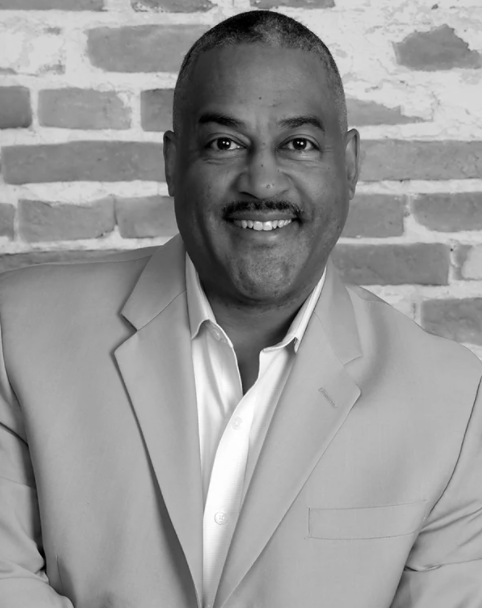
In this episode of the RealLifeSuperPowers podcast, we speak with Derek Gaunt. Derek is a lecturer, author of Ego, Authority, Failure©, and a negotiations trainer and coach at the Black Swan Group. Some of you may be familiar with the Black Swan Group as it is managed by Chris Voss the author of the bestselling book “Never Split the Difference”.
He has 29 years of law enforcement experience, 20 of which as a team member, leader and then commander of hostage negotiations teams in the Washington, D.C. metropolitan area.
He is a hostage negotiation and incident command subject matter expert who frequently speaks at hostage negotiations and SWAT conferences across the US.
If you’re asking yourself what this has to do with you, the answer is a LOT.
Derek teaches leaders how to apply hostage negotiation practices and principles to their world.
Spoiler? It’s all about interpersonal communications and increasing performance by changing the way we think about communicating.
We discuss:
We hope you enjoy this special episode.
And if you’re curious to learn more about him, checkout the Black Swan website and his book on Amazon
Zooming out, if you like listening to this podcast, make sure to subscribe so you don’t miss new conversations with peak performers, serving as a reminder we can all tap into the best versions of ourselves.
You’re also welcome to follow Ronen and Noa on Linkedin
And if we may ask for a favor – please leave us a review on your native podcast app.
Some further resources:

[This transcript was generated from YouTube’s auto-captions, not a verified human/AI-diarized transcript. Timestamps and wording may contain errors, and speaker labels below are Claude’s best-effort inference from context, not confirmed against audio. Please review before publishing.]
Real Life Superpowers. [Music]
Derek: And then a simple question, or what we call an asking label, where I would say, “It seems like you have a vision of how this partnership is going to work. It seems like you have a vision of what this is going to look like going forward.” And I use the word vision specifically because of its power. When you say to someone, “It seems like you have a vision on how this is going to work out,” they immediately become a narrator for the movie that’s playing in their head, and they tell you exactly what’s important to them.
Host: Hey everyone. In this episode we speak with Derek Gaunt. He’s a lecturer, author of Ego, Authority, Failure, and a negotiations trainer and coach at the Black Swan Group. Some of you may be familiar with the Black Swan Group, as it’s managed by Chris Voss, the author of the best-selling book Never Split the Difference. Derek has 29 years of law enforcement experience, 20 of which as a team member, leader, and then commander of hostage negotiations teams in the Washington, DC metropolitan area. He is a hostage negotiation and incident commander subject matter expert who frequently speaks at hostage negotiations and SWAT conferences around the US. If you’re asking yourself what this has to do with you, the answer is: a lot. Derek teaches leaders how to apply hostage negotiation practices and principles to their world. Spoiler: it’s all about interpersonal communications and increasing performance by changing the way we think about communicating. All right, I’ll step out of the way and let you enjoy this special episode.
Real Life Superpowers. [Music]
Host: Derek, welcome to Real Life Superpowers.
Derek: Thank you for having me. It’s a pleasure to be here.
Host: Awesome. So what are you up to these days?
Derek: I’m spinning plates. I’m trying to keep plates spinning. Very busy in the virtual world. Our business at the Black Swan Group has not tapered off that much at all. It wasn’t a hard pivot for us to go virtual. We had a lot of content virtually before the pandemic, so the pivot was really easy, and we’ve been able to continue pushing out content to people who are hungry and wanting to be better.
Host: But truthfully, that behind you, there’s an amazing and beautiful setup. Is that pre-Zoom, or, you know, pre-corona [inaudible] Zoom, or was that strategically after the camera had to be open on conversations?
Derek: This is strategically placed behind me, and I did it once I started to set up my office. There was a long time there where I was working from a kitchen table, and there was a particular painting in the background, and I didn’t want that painting. I wanted something that spoke to where I was and who I am now, and that’s what this wall does.
Host: By the way, the black swan theory, which I don’t know if many people are familiar with, but I think it was Nassim Taleb who thought it up, talks about the probability of improbable events and how they can be foreseen. And the pandemic is classified by some as a black swan. So are you aware of that? Is that something that you tried, when you thought of the name, to sort of identify and tap into such things?
Derek: That was a huge motivator for naming the company. We believe that there are black swans in every difficult conversation and negotiation, and if you are courageous enough to engage the other side from their perspective, you uncover those black swans. Those are little small pieces of information [that, once] uncovered, dramatically change the course of the conversation and ultimately the results. So yeah, we’re always looking for those one-offs.
Host: And then it’s like, how people are measured by how they respond to this?
Derek: They’re not so much measured. It just gives us a better understanding of what their view of the world is, understanding what the lay of the land looks like from their perspective. Once you understand that on a deeper level, you’re closer to understanding them, and if you can understand them, you can build that rapport, gain that trust-based influence, and ultimately get them to move in your direction, to change their behavior.
Host: That’s really interesting, and we’re definitely going to want to touch on that and get some practical tips from you on how to identify things in a conversation that can help you steer it to, I would say, a win-win situation, but one that you wanted to reach. But before that, I’d love to take a step back. I’m curious, what family did you grow up in? Were you in an environment that was encouraging communication, or is this something that you were compensating for? How did this evolve?
Derek: Well, it wasn’t a childhood dream of mine. This is something that I kind of fell into. When I started my career in law enforcement, I was put into a street-level narcotics unit very early, and we were very aggressive in our approach, because at the time crack cocaine was king. That was the drug that was the scourge of the country, and so we took a very aggressive stance towards that. So anyway, I’m a part of this narcotics group, and our job was to go out and effect the arrest of buyers and sellers of this particular drug. In doing so, invariably the people involved had information about other crimes. And so when I would sit down and interview them about who they got their drugs from, they would ultimately tell me that, as well as, you know, “I know a location where they’re still selling stolen property. I know where a gun that was used in the shooting can be recovered, and I know who did it.”
Derek: And so I was intrigued by the fact that I could say specific things in a specific manner to elicit specific responses from other people, responses in some ways that were against their penal interest. And so I said, there’s got to be more. An opportunity arose for me to go to the criminal investigation section, and that took my interview and interrogation skills to another level. Still hungry for more, I became a detective in ’94. Then in ’97 an opening came up on my hostage negotiations team. I had seen them work, and I knew that they were the alphas when it came to using communications skills to influence. So I competed for a spot, I got the spot, and I never looked back. I was a regular negotiator for about four years, got promoted to sergeant, took over the leadership of the team, got promoted to lieutenant a couple of years after that, took over command of the team, and that’s a position I held up until the time that I actually left.
Host: For us, this is like, you know, [inaudible] business. So when you’re saying that, I’m trying to understand something. There are skills in that type of negotiation that I’m thinking maybe apply to even picking up women, because you need to use, you know, the empathy, or you have to be trustworthy, you have to be likable, because he’s giving information against [inaudible]. It’s not really persuasive, it’s more like a trust, or making him feel like it’s his interest without him knowing that. So [inaudible] the key features, like, of course communication, probably body language, but I’m sure there’s something like empathy, getting into his shoes, or mannerisms. What else attributes to being especially good at that?
Derek: Well, you named three of the things right off the bat: empathy, trustworthiness, and likability. Those are the three critical ingredients. Anybody anywhere on the planet would do anything for you if they felt like… do they like you? People will make an agreement with you, they will do anything for you if they like you, based on no other criteria whatsoever. Tactical empathy, and there’s a difference between empathy and tactical empathy. You used the term walking in their shoes, and that’s not what we want you to do, because that implies feeling what they feel. I don’t want you to feel what they feel. I want you to see through their eyes. That’s deliberately recognizing the perspective of another person. It doesn’t mean that you like them. It doesn’t mean that you agree with it. It just means you understand this is what it looks like from their perspective. And tactical empathy is what leads you to trust, because people want other people to understand how they feel, what they’re going through, what circumstances they’re in. Once you can demonstrate that, there’s no clearer way to show that you’re actually stepping to their side.
Host: But doing that, I’m thinking, when you’re looking from their perspective, there’s diversity between people, but more importantly you first have to find the main motive, what motivates them, and then you have to apply the tactical empathy. So that’s even before the trust part, because you don’t know what to apply. So how do you get to that point where you understand? I’m going to give a random example, it’s probably totally off, but just for the context: if someone is [dealing] the drugs, you got him. Now you want to understand first of all why is he doing that. Is it to be cool, to make money, to help his sister, or whatever? And then you can get into the perspective, right, and leverage it. So how do you get to that point that he trusts you enough to give you the motive?
Derek: Well, it’s all a matter of, regardless of the relationship, your ability to subordinate yourself to the other side, to make them feel like they are the most important person. It’s all about you putting whatever your ultimate goals and objectives are on the back seat and just focusing on them. In the example that you just gave, the ultimate resolution for me is to get him to confess and then get him to give me more information about other things that are going on. That’s my ultimate goal. But I’m not driving for that at the beginning of the conversation. I’m trying to show this person that I get what they’re going through in that moment. What are they going through in that moment? I just did one of the most offensive things that one human being can do to another, and that is restrict his freedom. That’s an awful lot of power to have.
Derek: Regardless of if it’s… you get pulled over on the road by a street cop. You can’t go anywhere. I mean, you could, but it’s going to cause you some problems. Your freedom has been restricted. How does that make you feel in that interaction? You’re nervous, you may be a little angry, certainly frustrated. It’s certainly something that you didn’t plan for in your day. So think about, and I’m not saying that you guys speed all over the place, but think about the last time you got stopped by the police and what you were going through mentally.
Derek: On a deeper level, we take something that they cherish almost more than life itself, and that’s autonomy and freedom, away, even if it’s for a brief period of time. That’s what they’re going through, and so that spikes up negative emotions and dynamics, and they’re not prepared to have, for lack of a better term, a logical conversation with me until I deal with the negative emotions and dynamics as they see them. Because when emotions are high, rational thinking is low. And so it’s incumbent upon me in that situation to demonstrate for them that I get it. I get that he probably thinks I’m the worst thing on the planet right now. I get that you’re suffering under the scourge of being addicted to this drug. I get the fact that you don’t have any gainful employment. I get the fact that you can’t get seen or treated at a clinic, and it’s just a snowball that keeps rolling downhill and getting bigger and bigger. Once I’ve done that for him, he returns to what we call the normal functioning level, where I’ve mitigated those negative emotions, and now he’s ready to talk to me in earnest about X, Y, and Z, which is where I wanted to ultimately go. So we intentionally slow the process down to speed it up.
Host: But this is intriguing for me, because I would imagine myself, if I would always understand the perspective, I may have Stockholm syndrome. Don’t you soften up after so many times you’ve done it? I can see behind you all these awards and all this prestige, but it slowly softens you up, because you’re understanding the other person’s perspective, right? Isn’t that a bit confusing sometimes?
Derek: It’s not confusing, because I understand the box that I’m in when I’m working those particular jobs. I’m not using this type of empathy because I’m a nice person. I’m using it because I know it works. The waterboarding, versus tactical empathy [in] interrogations, always produces less results.
Host: Is this somewhat of a skill that you’ve acquired, or do you feel like you have a natural tendency towards this and were always good with people?
Derek: No, I’m an introvert at heart. I’d rather not talk to anybody. I’m the guy at the party who’s standing by himself on the wall watching everybody else mingle. Now, if you approach me, I’ll engage you, I’m not going to be rude, but you’re not going to see me moving from group to group within the party, engaging people in conversation. So to answer your question, these are all skills that can be learned, they can be taught, they can be taught to anybody. I don’t care what your gender is, what corner of the globe you come from. The Black Swan method is based on skills that are taught to hostage negotiators all over the world, and it’s the same skills. If you’re in Asia, Africa, North America, South America, Europe, in the Middle East, all negotiators are trained in the same skill set. So what does that tell you? It tells you, A, that it’s highly teachable, and B, it’s based on the human nature response, and human beings are human beings all over the planet. Now, having said that, there are people who are predisposed to learning this stuff faster. They just pick it up faster. It could be the way they were raised, it could be something that’s genetic, I don’t know. But there are people who do this better than others, and there are people that pick it up faster than others.
Host: When did you realize that you’re good at this?
Derek: Probably the first time that I went out. This was a guy who was stalking his estranged wife. We spent a few days trying to track him down. We had some brief phone contact with him, and then ultimately he walked onto a bridge. The bridge is just south of Washington, DC, the nation’s capital. He walked onto the bridge and he threatened to jump. And so I spent six hours, seven hours on the bridge with him, and he ultimately did jump. But the dialogue that we had, I thought, was really good. It was my first time out, so I had nothing to rely on but how I was trained, and the training did not disappoint. The training did not let me down. And so every time after that I wanted to get better and better and better by sticking to my training.
Host: [inaudible]
Derek: No, he didn’t. When he first got to the bridge he was over a portion of the bridge that, if he had jumped at that point, he most certainly would have died, because there were pilings immediately under the surface of the water that he couldn’t see, that we knew were there. In fact, when we first started to engage him there were construction barges beneath the bridge, and we had to call the construction company to get those barges towed out of the way, because he would have hit the deck of one of those boats. But during the course of the seven hours, towards the end of the last hour, we were able to walk him towards the Virginia side of the bridge, and there were no pilings there. It was mostly water, probably four feet of water with six feet of silt underneath. And while we were talking, they shot him in the backside with a less-lethal round. I heard him scream out, and he flipped himself over the side and hit the water.
Host: So he wanted to jump, or just fell from the…?
Derek: No, his jump was intentional. He actually flipped his legs over the side and jumped into the water. There were rescue boats that were there, so he was in the water for maybe 30 seconds, 45 seconds, before they pulled him out.
Host: Oh wow.
Derek: It was November 6th, I think it was 1997. They fished him out, and they wound up taking him to the hospital and then ultimately to jail.
Host: Do you remember how you felt when you saw him jump, like, that moment?
Derek: Well, it’s funny, because when he got hit, I mentioned he yelled out, and I heard somebody behind me yell, “Grab him!” And I was like, no, I’m not grabbing anybody, because he’s not taking me over the side with him. But you get a certain level of disappointment because of all the work that you did, how hard you worked to keep that from happening, and it happened anyway. Like I said, it was my first one. I was new, so I was kind of angry at him for doing it, because I was like, did you see all the work that I put in? Yeah, I made it all about me at that point. I wasn’t grateful. When he flipped over the side I was like, oh, this is not good. And then he hit the water, and I can hear him talking and yelling in the water, “Ow, ow, ow,” and they’re pulling him up on the boat. I looked over the side and I could see them pulling him up on the boat, so I knew he was alive. Once that emotion left me, the fear of him being seriously injured or dead left me, then I got angry, because it was my ego. My ego got in the way. It was like in American baseball, when a pitcher is on his way to a no-hitter and then the last batter he faces cranks one out of the park, and you’re like, didn’t you see all the work I did for eight innings, and you’re going to do this to me in the ninth?
Host: That’s [a nice] analogy, by the way. And I’m wondering, do you watch film of yourself doing this afterwards? Do you [inaudible] the negotiation, like, you know, you do an NBA game?
Derek: We listen. Rarely do we have video of the jobs that we do, for a lot of reasons, but we listen. We do record.
Host: Would you stop in a situation and say, okay, I shouldn’t say that?
Derek: Yes. That’s the whole purpose for the after action, or the hot wash. I told my team, look, we’re going to make mistakes, we’re not perfect people, but each mistake that we make on a subsequent job should always be a new mistake. It should never be something that we’ve done in the past. And we’re our own worst critics. In fact, in this one particular negotiation, emotions got the better of me. We’re five hours into this thing, and he’s giving off indications that this is more about the manipulation than it is about wanting to die, and my frustration level with him got to a point where he and I were actually yelling at each other as we’re walking off the bridge. Because, you know, I’m a human being. And that’s where you’ll find the importance of having a coach with you in these difficult conversations, to help pull you back, physically or emotionally, when you start to get amped up or you start to get triggered.
Derek: And so, to your question, yes, we always record, because at the end of the day, not only is it a hostage taking, but it’s also a criminal investigation, where he’s also going to be charged with, you know, kidnapping and armed robbery or whatever it is that he’s done. In this case they were all misdemeanor charges, very minor charges. But the recordings of these events are great evidence in court when you’re trying to prove a kidnapping, because he’s going to admit stuff to me on the phone. You know, “I didn’t mean to shoot that guy, he just startled me and I shot him. Is he okay?” That’s great evidence in court.
Host: And what’s amazing is that your specialism is so useful, because negotiation is everything. You could be in business, from salaries to exits to even minor things, just, you know, the communication, negotiating a deadline. But what’s interesting for me is you did it in such an intense situation, where also the rules applied, where you were interrogating, the leverage was yours. Now how would you apply these same aspects in the business sense, where the cycle of negotiation is long term, as opposed to, like, seven hours and [inaudible], which is super intense? Here there could be a few cycles of negotiation and it’s long term, so it may act a little bit differently. So what do you apply from that world to the business world, and what do you not apply? What would be the [inaudible] features you took over?
Derek: Everything that we did as hostage negotiators, and when I say did, I’m talking about the skills that we employed, are applicable to the business world. The stakes are just different. Lives are not [at stake], but livelihoods are at stake. And if you’ve got a long sales cycle, that means every time that you engage the other side you’re in another negotiation. Think back to 1993, Waco, Texas. That thing went on for 51 days. And because what we espouse as hostage negotiators, as negotiators with the Black Swan Group, is based on the human nature response, it’s applicable to hostage negotiations, it’s applicable to mergers and acquisitions, it’s applicable to salary negotiations, it’s applicable to getting your son or daughter to get their college application in, it’s applicable to the house you’re going to buy. Because ultimately you all are compliance professionals. You sell a good or a service and you want people to do what? To comply, [to] buy. Hostage negotiators are the ultimate compliance professionals on the planet, because we sell jail time and we get people to buy it all of the time. Even if you’re not involved in traditional sales, you’re involved in non-sales selling, where you’re spending 40 [percent] of your day trying to get people to buy into an idea, a concept, a proposal, a suggestion. And so anytime “I want” or “I need” [is] in your head or in the head of your counterpart, you are in a negotiation, and you should conduct yourself accordingly.
Host: So let me do this on the business side. I’ve seen people who negotiated… in one of the deals that I did with a public company, I saw them investigating online the counterparts before meeting them, to try to understand them before the meeting. But the hardest thing to do in business, as opposed to, I think, the criminal or justice industry, is that the motives are random. Most usually it isn’t about money. You know, that is the excuse, but there’s a lot of power and different people who want different things, and you have to separate them and connect them and find whatever interest. And they can be really complex, just because it’s not negotiating [with] a person. Let’s say [it’s a] merger and acquisition, so you’ve got the founders, the CEO, the key employees, all these factors around it, and at the end of the day [inaudible] you have to actually find a win-win situation. I don’t know a negotiation that you haven’t found a win-win situation and did it anyway. Are you advising for win-win situations to do the deal, or to maximize the deal, or would it change between strategies?
Derek: It’s dependent on the circumstances. It depends on what the environment looks like. With multiple stakeholders there are multiple negotiations that are going to have to be had. “Who are the decision makers? How do I get to the decision maker?” That’s what I hear all the time. And the reality is you need to be more concerned with the deal killers, because there is a team of deal killers on the other side that will cut your legs out from under you, and what the decision maker wants to do is irrelevant, because they’re going to kill it before it gets to the decision maker. So it’s not bad to go online and do some due diligence to determine who your counterpart is, but take it with a grain of salt. Anything that’s open source, take it with a grain of salt. The reality is there are things going on with your counterpart that Google is not going to tell you. The only way you’re going to uncover it is with a conversation with them.
Derek: I would rather spend 20 minutes on the phone with my counterpart than spend two weeks of research online about who they are and where they come from, because there are going to be things that you uncover in that conversation, the black swans, that will change the course of the conversation. It could be budgetary constraints. The guy that you’re dealing with just put a mortgage on a beach property, or put in an application to purchase a beach property. He’s going through a divorce. Internal conflicts could be going on with them. They’re going to release a new white paper on their position on a new piece of software. Budgetary constraints or reallocation has occurred. Anyway, there’s just an abundance of things that are going on with your counterpart that you can uncover during a conversation. I don’t know if you heard me say this before, but you have to be curious. You have to stay genuinely curious during the conversation. You have to go into the conversation assuming that you have something to learn, because there are going to be pieces of information that, if you uncover them, are going to dramatically change the outcome for you.
Host: If I simulate now a conversation with you, okay, what would you do in the beginning? This is the first negotiation, the first time we started to meet, and you’re on the side that’s trying to buy a company. If you want to dissect the other side to understand what strategy you choose, what would be the beginning of the conversation? What would you look for?
Derek: Beginning of the conversation, I’m going to look for their vision. First of all, I’m going to ask them, why are we having this conversation? Why are they considering selling to me? Are they considering selling to me because they really want me to buy? Are they selling to me so they can use me as leverage against whomever they really want to sell to?
Host: Nice. Okay, but they’re not going to tell you that.
Derek: Oh, sure they will. You simply ask them: Why are you considering selling to us? What makes this attractive? Why are we the most attractive buyer for your whatever? If they don’t have a robust response to that question, you’re probably being used. Are you the fool or are you the favorite? You need to figure that out early in the conversation, because none of us have time to waste. And if you can’t answer “am I the fool or am I the favorite,” I can tell you which one you probably are. And if it’s the opposite, same thing: Why are you agreeing to sell to us? What makes us so attractive? There’s got to be a reason. If you get, “Well, we’re taking multiple offers, we just wanted to see what you have,” then they’re probably not really interested in doing business with you. Now, that’s my initial mindset. I’m going to do a couple of other things to test that hypothesis, but I want to know sooner rather than later, because for the time that I’m engaging this person who has no intention of doing business with me, who else could I be chasing down? Who else could I be engaging that really wants to do business with me? Time is money. And I’ve seen it over and over again: when you don’t determine early whether or not you’re the fool or the favorite, you’re going to get burned.
Derek: I had a guy in Luxembourg who was buying property in Germany, and he never got to the fool-or-favorite conversation. He got a letter of interest from a person, a conglomerate, that was actually thinking about doing business with him. He thought it was on solid footing, and the guy went radio silent for six months. So the guy in Luxembourg calls us up and says, “What did I do wrong, and what do I need to do to fix this?” I said, “Are you the fool or the favorite?” “I don’t know what you’re talking about.” “Did you ask him why he agreed to become a tenant in your new strip mall?” And he goes, “No.” I said, “Well, here’s what we’re going to do. Send him an email and then get him on the phone.” So we strategized a little bit, and he got him on the phone. He called me the next day after the conversation and he says, “I found out that he used my interest in him to drive down the rent price in the place that he’s currently in, and he wound up staying.” This conversation started in February of that year, and he had this conversation with this guy in November. So from February to November he could have been pursuing other tenants, and he didn’t, and now he’s nine months behind. So it’s important to find that out sooner rather than later. That’s why I start the conversation with that.
Derek: And then a simple question, or what we call an asking label, where I would say, “It seems like you have a vision of how this partnership is going to work. It seems like you have a vision of what this is going to look like going forward.” And I use the word vision specifically because of its power. When you say to someone, “It seems like you have a vision on how this is going to work out,” they immediately become a narrator for the movie that’s playing in their head, and they tell you exactly what’s important to them: “This is how I envision this playing out.” And then you’re going to listen to that and determine where it meshes with what your vision is and where it diverges, and that’ll tell you where you need to devote your attention during the conversation.
Host: And then those black swans that will come up at some stage, what do you do?
Derek: It depends on what the black swan is. When you get it and it’s a black swan that benefits you, that supports your position, then I’m going to make sure that I label it. Labeling positive dynamics reinforces the positive dynamics. And labeling is just “it looks like,” “it seems like,” “it sounds like.” “It sounds like X is very important to you.” “It sounds like you want a partner that you can trust.” “Sounds like you’ve been burned in the past.” “Sounds like you’ve had bad experiences with companies just like mine.” Those are all ways to either reinforce a positive or diminish the negative. But it’s hard to answer what you do with the black swan when it shows, because it could be anything. The basic rule of thumb is: if it’s a positive, label it to reinforce it. If it’s a negative, label it to get rid of it, to mitigate it, to dissolve it, to diffuse it.
Host: So I actually learned this brilliant thing from an international negotiator, and you told me to ask the next question: what is your vision for the Black Swan [Group]? What do you want it to be, and what is success for you? What is the vision for the company?
Derek: To continue to make people’s lives better. That’s the vision for the company going forward: continue to improve other people’s lives. I can’t tell you how many people have come to us for business negotiation training, gotten the training, and reported back to us that it has changed their life. That’s not hyperbole. That’s not us patting ourselves on the back. Those are the words that are coming out of clients’ mouths. We were doing a live event, when we were still traveling, in Dallas, Texas. We had a woman fly from Vermont, which is thousands of miles away, to Dallas, Texas, just to tell us, and she was very emotional about it, how our stuff changed her life professionally and personally. And so if I can continue to do that, especially in today’s climate, when nobody is acting like they care about anybody but themselves, if we can continue to give in that regard, I call the company a success. So that’s what we’re in pursuit of.
Derek: Now, I’m saying this as not the CEO and not the founder of the company. I’m saying this as a company rep, and so the president of the company, the founder of the company, they may have different ideas of what they want the Black Swan Group to be. But for me, I’m at the stage now where I’m retired from all of this, so this Black Swan work is more fun work than it is anything else. From this stuff back here I’m getting a pension, so I don’t need to be doing this. But I do it because, first of all, I meet cool people like yourselves, and secondly, it gives me an opportunity to continue to do what I was doing back in those days, and that is just helping people, helping them be better people.
Host: I really believe you about that. It’s actually giving people the [empowerment] to control situations in their life, and knowing what bucket they’re in, and then control the situation. So I believe you, and it’s a great power. What is your superpower? If you give people control and you love that, it must have something to do with that, and I believe in the great deed, but what is your superpower then?
Derek: All right, you ready for this? It’s complicated, and you may need to write it down. My superpower is listening. Why do I call it a superpower? Because the vast majority of the people on the planet don’t do it, which puts me at a distinct advantage over most people. And I’m talking about empathetic listening, listening at the deepest level. I’m not talking about intermittent listening, where you’re listening just long enough to get the gist of what the other side is saying and then you refocus on your own internal monologue. Or rebuttal listening, where you’re listening long enough for them to say something you know you can argue with, and now you’re waiting for them to shut up long enough so you can jump into the conversation and tell them how brilliant you are. That is where most of us dance throughout the course of the day. But empathetic listening is understanding their emotions, their logic, their worldview, their symbolism, the meaning of what they’re saying, what they value, and, critically, what’s not being said. In every difficult interaction there is a presenting dynamic or emotion and there’s a latent dynamic or emotion. When you start to identify that latent dynamic or emotion, the stuff that they [haven’t] said, you look like a mind reader. And, go ahead. Now I’m shooting myself in the foot, because I’m not listening good enough.
Host: Yeah, but we know you’re also speeding on the streets and also not listening.
Host: I wanted to add to what you’re saying that there’s a saying that for everything there’s a good reason and a real reason. And I think part of the magic of your art, and I think it’s an art, is to be able to listen well enough to identify when you’re hearing a good reason but it’s not the real reason.
Derek: Yeah. And people, for example, they’ll say, “Take this out of the contract or I’m not going to sign,” and we start to freak out. We run back to our side and we go, “Hey, we’ve got to modify this one point in the contract or we’re going to lose the business.” No. There’s a reason why they said that. “Take this out of the contract” is a smoke screen. What did they not tell you in that statement? They’re scared of something. That’s what they’re telling you. They’re afraid of something and you haven’t picked up on it. So instead of freaking out and running back and saying, “Take it out of the contract or we’re going to lose the business,” find out what’s driving that. To your point earlier in the conversation, you said “what’s motivating.” Motivation, motivation. We’re always on the hunt for motivation. People get so wrapped around the axle because of something that was said or something that was done, instead of looking at it from the perspective of, okay, why did she just say that? Why did she just do that? If I’m in a bank and I’m holding hostages and I tell you I want a car in 60 seconds or she dies, what did I really say?
Host: I want to escape. Help me escape.
Derek: Why do I want to escape?
Host: Because I’m scared to get caught.
Derek: Boom. I’m scared. The car is incidental. “Car in 60 seconds or she dies” is tantamount to stuff that you guys hear all the time: “Take this out of your contract or I’m going to someone else.” “Cut your price or I’m going to a competitor.” “Give me this now or I walk.” Most of the time you’re not even spotted 60 seconds. They want it immediately. But instead of focusing on what they said or what they did, it’s always about the motivation.
Derek: Another example that I use all the time: in 2004, Chechen terrorists took over a school in Beslan, Russia. The first day of school in Russia is a national holiday. 1,200 hostages, most of them kids under the age of 12. They went in and they shot up the building, and then they immediately herded everybody into the gymnasium, and they rigged the gymnasium with explosives. They get on the phone with the authorities, and the first two demands out of their mouths were: “We want Russian boots off of Chechen soil, and we want Vladimir Putin to resign.” Now, everybody listening to this knows that neither one of those things was ever going to happen. And so the authorities panicked. They said, “This is a non-negotiable event,” instead of [asking], what are they saying? So when they say, “I want Russian boots off of Chechen soil,” what are they really saying?
Host: They want media, they want exposure, or just chaos, random chaos.
Host: Or acknowledgement.
Derek: The acknowledgement of what?
Host: Of their worth.
Derek: Acknowledgement of their worth.
Host: That the Russians are doing something wrong.
Derek: Exactly right. Think about the vision of those words. Those words are powerful. “Russian boots off of Chechen soil.” What are they saying to you?
Host: They’re saying to you, our rights are being breached.
Derek: Rights are being breached. “We don’t recognize you as an authority over us. This is a sovereign country. You don’t belong here. You’re encroaching. You’re trespassing.” And all of that leads to a lack of respect. They’re telling you that “we have not gotten respect.” Now, whether you agree with them or not is irrelevant, but that is what’s driving the behavior. So I’m telling you guys that in your daily lives you hear “Russian boots off of Chechen soil” every single day. Anytime somebody tells you no, anytime somebody pushes back against you, anytime somebody shows hesitancy or reluctance, they’re telling you something else.
Host: And if I have to generalize, I would say that maybe in 80 [percent] of the instances they’re seeking validation.
Derek: Could be, could be. Why?
Host: Well, at least based on my experience, I think that a lot of the time people try to break a deal because they feel like they’re not being appreciated enough, whether it’s through the pricing or through any other validation of work.
Host: I would [say] yes, losing control, actually, also. Because if they have full control, they don’t need the [inaudible]. It means they have less security with themselves. They don’t trust themselves.
Derek: Yeah. And when you start to see adverse behavior on the part of your counterpart, what’s driving that is usually fear and mistrust. Fear or mistrust. When the conversation starts to get difficult, you should not be worried about what was said. You should be worried about why it was said. Take an aggressive communication style. I’m sure both of you have sat across the table from someone who had an aggressive negotiation style, or they attack you out of nowhere. Instead of attacking back, as most of us are likely to do, or instead of figuratively or literally running from the conversation, which is the other reaction: curiosity. Where is it coming from? Abhorrent behavior, adverse behavior, or counterproductive behavior is coming from one of three areas that you’re missing. It’s either they think you’re not listening, they’re under tremendous pressure on their side, or they’re trying to manipulate you. You have to figure out which one it is.
Host: I was going to say that you’re a scary person to be in a relationship with, because, you know, that superpower is very dangerous. It can be used for good or evil.
Derek: There’s no question about it. But we don’t espouse using this to take advantage of other people. That’s not the business that we’re in. I get that question quite often: “What do I do if I come across somebody else who’s a Black Swan-trained negotiator?” And I say you should be thankful, because you guys are going to come to a resolution faster than anybody else on the planet. Now, there have been instances, and there will continue to be instances, where people will use this stuff for evil purposes, to try to manipulate. How do you know the difference? Your intuition is going to tell you. You know in your heart of hearts and you know in your gut when people are trying to paint you into a corner. And once you start to feel that, you’ve got to ask yourself a hard question. Negotiations by and large occur at the beginning of a relationship. Sometimes they occur in a current relationship, but for the most part [at the beginning]. So if you feel this person is trying to manipulate you, is that somebody you want to do business with? We get so seduced by the money that we go into the room and we let them do whatever they want, talk to us however they want. That’s the hard discussion you have to have with yourself. For me, if I’m faced with another Black Swan negotiator and I think he’s trying to manipulate me, I’m going to cut it off right there. Because if he’s trying to manipulate me now, what’s it going to look like in two years? How many times am I going to have to go through this with this person during the course of our relationship?
Host: I feel like one insight that I’ve reached recently is that sometimes you don’t have to reach an agreement. For example, if somebody in a negotiation is trying to manipulate you, you don’t have to end up shaking hands and agreeing on anything. You can just choose yourself, tell them it’s not going to work out, and step away. I think sometimes you enter some sort of spin where you’re trying to reflect and get them to understand, but that can become a paradox, because if a person is trying to manipulate you, they’re probably not even exactly aware of it. They’re just being, you know, selfish, and maybe narcissists in a way. And maybe they are aware, but I don’t think you’re going to reach a stage where they say, “Yeah, you’re on to me, I was trying to manipulate you, so let’s start in good terms.” So I think sometimes a negotiation can just end with walking away, and that’s also a success.
Derek: Yeah, you’re absolutely right. No deal is always better than a bad deal. Always better than a bad deal. And to your point, it’s how you end it. The last impression is the lasting impression. I talked earlier about tactical empathy. Tactical empathy simply sounds like, “I’m sorry, that’s just not going to work for us, which is a shame, because I really wanted to do business with you. If the opportunity presents itself again down the road, I hope that we can find a way to be successful together.” Boom, and walk out. And what was the last thing that I said? What was the last thing that they heard? “In the future, I want us to be successful together.” That’s the last impression. And because I ended the interaction like that, I have increased the likelihood that if I make a phone call again, he’s going to pick up the phone. If I shoot her an email, she’s going to respond.
Derek: The last impression being the lasting impression, we call it the Oprah Winfrey rule. You’ve never heard of Oprah Winfrey in a public spat, fight, or disagreement with another celebrity. But that doesn’t mean it hasn’t happened. It has happened on numerous occasions, where the celebrity has agreed to X, Y, and Z, and when the time came they didn’t fulfill their agreement. And you’re not just not fulfilling an agreement, you’re not fulfilling an agreement to Oprah Winfrey, and she can make you disappear, in a publicity sense. And so she’s famous for ending those tough discussions with them feeling heard and feeling respected, and that’s why you’ve never heard of any celebrity in a fight with Oprah, even though there have been difficult conversations. She is the epitome of the last impression being the lasting impression. People that used to come to her talk show, she sent a limousine to pick them up. That’s not uncommon for talk show guests. The talk show host will send a limousine to pick you up and then have you call a cab to go home. That wasn’t the way Oprah rolled. If you come in in the limousine, you’re going to leave in the limousine. The last impression is the lasting impression.
Host: And she’s also like an artist in active listening.
Derek: Oh, probably. I’d put Oprah up against any hostage negotiator on the planet, without a doubt.
Host: I agree with that. I don’t even know why, but probably because of lasting impression. So, by the way, very insightful. I really liked a few practical tips that [you] had, about listening to what’s not said, the power of listening. And what you’re giving to people is more than negotiation, it’s control, right? And I love those three attributes, and they’re super important no matter what business. Any business in the world and any person wants to communicate greatly. And I really believe you that you do have the pension and you are just preaching something that you believe in, [that] will help people, and I want you to continue doing that.
Host: Having said that, I want to finish off with this question that has nothing to do directly with what you said, but about the beginning of the conversation, and your insightfulness to people, and your understanding intrigues me here. You said that the justice system, for a brief moment, takes away the freedom from someone. Negotiating on a global scale is [the] pandemic right now, and taking away people’s freedom, as a higher source. How do you see that? You’re sitting at home and you’re negotiating against who? And I’m wishing for this outcome that is not feasible, and I feel like [inaudible] is uncontrolled. So how do you deal with that? Because this is like the extreme sense of taking something basic, of freedom.
Derek: So when you say not feasible, it sounds like you have a reason for saying it’s not feasible. What is that?
Host: My reason is that the outcome itself… there are two kinds of negotiations here. [One] is negotiating with the coronavirus, which is getting rid of [it] or dealing with [it]. And I think that everybody wants to decide one or the other opinion already, or get [it] decided for [them], and at the end of the day a lot of action items would come out of that. But someone has to decide, and I haven’t found in any country or any place the decision maker who I’m negotiating with. And I have a feeling that most people feel the same way, and by that it’s taking away the freedom, because no one wants to take responsibility.
Derek: Yeah. So it kind of goes back to what I talked about earlier, the gatekeepers or the deal killers on the other side. Your challenge when dealing with them, especially in a pandemic environment, is how do you make them a teammate in the problem-solving venture? Your problem is to get to the decision maker. How do you make them a teammate in that venture? First of all, you’ve got to demonstrate that you understand exactly where they are at this juncture. Where’s everybody as far as the pandemic is concerned? They’re sequestered. They’re holed up in their house. They haven’t been out in weeks, if not months. What does that do for a person? It provides a certain level of anxiety. There’s no way to alleviate stress. They’re trapped, and that’s a bad term. They’re at home in an environment that they weren’t accustomed to seeing prior to March, which is kids running everywhere and dogs barking, and the spouse that they didn’t see for eight hours a day they’re now seeing 24/7. That exerts a lot of stress and a lot of pressure. The sooner that you identify that and get those things out of their heads, the sooner they’re going to step to [your] side.
Derek: Your ultimate goal, if I understood your question correctly, is how do I navigate that conversation to get to people who can make decisions. And that’s simply tactical empathy for the gatekeeper, respecting his or her relative power within the hierarchy of that organization. They are a gatekeeper for a reason, because the decision maker doesn’t want to have to deal with every overture that comes his or her way. So in that regard, the gatekeeper or the deal killer is in a position of power. You have to recognize that. You have to acknowledge that. Be careful with your drive to get around them to get to a decision maker, because if you’re forceful about that, what message does that send to the gatekeeper? The gatekeeper’s in place so the decision maker doesn’t have to deal with you. But now the decision maker [is] dealing with you. That means the gatekeeper didn’t do their job. And so, given the opportunity to exact the same kind of embarrassment that you caused them, they will do it. That could be something as simple as not forwarding a message, not giving you an email contact, et cetera.
Derek: So it’s about understanding what environment they’re in, demonstrating that understanding, verbalizing, articulating that perspective. And then you’re going to have to ask them some implementation questions. “How do I know that you’re going to relay the message to the decision makers in the fashion that we just talked about?” is a great implementation question, a great opportunity for you to test the yes that you’ve gotten.
Derek: When we hear the word yes, regardless of where it comes from, we get all excited. The other side says yes and we’re like, “Yeah, I did my job.” And the reality is, the first yes or agreement you get is counterfeit. You should look at it as non-existent. In fact, I would dare to say look at it as a lie. There are three types of yeses: counterfeit, confirmation, commitment. You always want the commitment yes, which means you have to test the yes at least twice during the conversation. This is not to be confused with yes momentum. Yes momentum is nonsense. It’s been out there forever. Testing the yes means getting a yes to the same thing in the same conversation three times. So your gatekeeper tells you, “All right, I’m going to tell the boss that you came by and you dropped off this package and you want to meet.” That’s your first yes. “How’s that conversation going to sound? How would you articulate my position? How will you relate exactly what we talked about?” Two more times, until you get a commitment yes. “I’ll get back to you on Friday as to our decision.” “So it sounds like Friday is a better day for you.” “Yes, it is.” “Seems like you have to go back and run this by your people, and sometime Friday afternoon I’ll have a response from you in my email.” “Yes.” That’s your third yes. You’re on more solid ground now. Having said that, intuitively you may have a bad feeling about it. It doesn’t mean that you can’t test it more, depending on who you’re dealing with.
Host: But that’s the minimum?
Derek: Yeah, the minimum is three. But there’s a third of the population that will tell you yes just to keep you happy, and they’ve got no intention of moving, no intention to execute. But they’ll tell you yes in the moment because they want to keep you happy in the moment.
Host: And then they’re just going to dismiss you later.
Derek: A little bit later, yeah.
Host: I can see why that lady made that effort to come to you and tell you how you changed [her] life, because this really sounds like, when understanding and implementing, [it] can really change the way people think, not just communicate, but approach situations. And, you know, interpersonal relationships are the bottom line of life, I think. That being said, I hope for everybody listening that they learn tactical empathy, because that’s a really good word, by the way, to explain a lot of things. And I would vote for you today using that. Thank you for inspiring everybody. We will put a link for people to find you as well, and your book.
Derek: [inaudible] Audible, Amazon. The Audible book has taken off, but you go to Amazon and it’s there in print. I’m getting ready to release another edition, if you will, to clean up some edits that were missed the first time around, but the edits have been taken care of in the Audible book, and people seem to like the Audible book a lot better. More information on the Black Swan Group: blackswanltd.com. We’ve got a plethora of resources there that’ll help you change the way you think about communicating, one person to another, and you too can make your life better.
Host: I’m sure that’s true. Super appreciate your time. Feel like we both learned a lot.
Derek: My pleasure, my pleasure.
Host: All right, bye for now.
Derek: All right, take care.
Real Life Superpowers. [Music]
We have the technology. Real Life Superpowers.
Dr. Zohar Bronfman – The Limits of Knowing Dr. Zohar Bronfman is the... Read more
Building a Company That Doesn’t Depend on You Naveh Ben Dror is the... Read more
Life Is a Game Lior Pozin built AutoDS into a company with more... Read more
What started as an idea between two Technion graduates became one of the... Read more
Going all in, whatever it takes In this episode, we speak with Lior... Read more
In this episode, we speak with Eli Goodman, co-founder and CEO of Datos,... Read more


