
Episode #99: Zohar Bronfman – Co-founder and CEO of Pecan AI
Dr. Zohar Bronfman – The Limits of Knowing Dr. Zohar Bronfman is the... Read more


Episode #99: Zohar Bronfman – Co-founder and CEO of Pecan AI
00.00/57:41
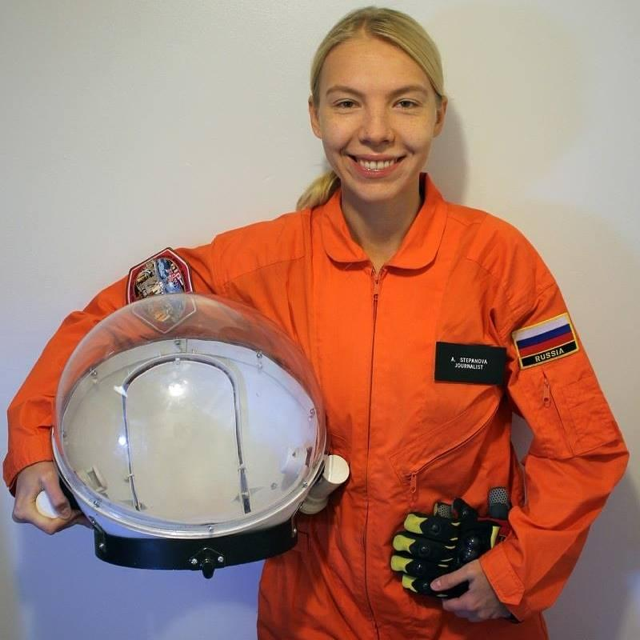
“The worst problem is when people don’t know what they want to do and who they want to be. My advice to them is go back to your childhood because when you’re a kid you don’t have the mindset that’s from society or from your parents,
Hey everyone, you’re quite a clean sheet of paper and you just explore the world – if you like something – you like something.”
In this episode of the RealLifeSuperPowers podcast, we speak with Anastasiya Stepanova.
She’s an engineer at the Institute of Biomedical Problems at the Russian Academy of Sciences, a Space journalist, co-author of the book “I Wish You A Good Flight”, a test subject in first in the world female dry-immersion experiment at the Institute of biomedical problems, a Health and safety officer and crew journalist in the international project “Mars160” through which she’s spent 80 days at the Mars Desert Research Station in Utah and 30 days at the Flashline Mars Arctic Research Station on the uninhabited Devon island in Canada.
She’s also spent 120 days in isolation as a Mission specialist in an international isolation experiment. And on top of those, she’s also a rescuer at the public search and rescue squad “SpasReserv” and an ambassador of the charity project Unity helping to send children’s dreams to space.
We discuss:
We hope you enjoy this episode (please forgive us for the quality of sound in this episode – Anastasiya was speaking to us from her car. We think it’s still very much worth your listen!)
Zooming out, if you like listening to this podcast, make sure to subscribe so you don’t miss new conversations with peak performers, serving as a reminder we can all tap into the best versions of ourselves.
You’re also welcome to follow Ronen and Noa on Linkedin
And if we may ask for a favor – please leave us a review on your native podcast app.
Some further resources:

[This transcript was generated from YouTube’s auto-captions, not a verified human/AI-diarized transcript. Timestamps and wording may contain errors, and speaker labels below are Claude’s best-effort inference from context, not confirmed against audio. Please review before publishing.]
[Music]
Anastasiya: If you’re still hesitant and you’re still afraid and you continue to live your old life, maybe the moment hasn’t come yet when you really understand that you can’t do this anymore. But it’s better not to wait for that moment, because time flies and the most precious thing is your time. So it’s better to actually see some examples — maybe you can get some inspiration from this, and you just start to change.
Host: Hey everyone, we have a special episode today. We’ve interviewed over 30 peak performers, and one thing they all have in common is their visceral belief that if you can dream it, you can do it. Typically we interview tech entrepreneurs — I think that’s probably because it’s our personal landscape — but every once in a while we get an opportunity to interview someone from a whole other universe, and this episode is one of those. In it, we speak with Anastasiya Stepanova. She’s an engineer at the Institute of Biomedical Problems at the Russian Academy of Sciences. She’s a space journalist and co-author of the book “I Wish You a Good Flight.” She was a test subject in the first-in-the-world female dry immersion experiment at the Institute of Biomedical Problems. She’s a health and safety officer and crew journalist in the international project MARS160, through which she spent 80 days at the Mars Desert Research Station in Utah, and 30 days at the Flashline Mars Arctic Research Station on the uninhabited Devon Island in Canada. She’s also spent 120 days in isolation as a mission specialist in an international isolation experiment. And on top of all that, she’s also a rescuer with the public search-and-rescue squad Space Reserve, and an ambassador for the charity project Unity, which helps send children’s dreams to space. What a character — when does she ever sleep? All right, I’ll step out of the way and let you listen to this amazing woman. I think listening to her will help you look within.
[Music]
We have the technology. Real Life Superpowers.
Host: So Anastasiya, welcome to Real Life Superpowers.
Anastasiya: Thank you so much for inviting me.
Host: What are you up to these days?
Anastasiya: Well, just today I finished my 24-hour shift as a duty technician in a dry immersion experiment. We simulate microgravity effects on the human body — so I was not the test subject, but now I was on the other side; I was actually taking care of the security and health of the test subject.
Host: Oh right — that sounds like my day. So what are the effects of gravity?
Anastasiya: We simulate the negative effects of microgravity, which is muscle atrophy and also hypokinesia. Basically we have a big bath filled with water and covered with waterproof foil. Then you put the human in and they dive in — the full body except the head, of course. So you’re basically floating, and you have to stay there for a couple of days. I think the longest one was 56 days, and the shortest was three days. So you just stay there — they bring you food, they bring you a toilet, they take you out once a day for a maximum of 15 minutes to take a shower, and the shower has to be done in a horizontal position, so there won’t be any effect of gravity.
Host: Because it’s not really a natural way to be testing gravity — I’m thinking it’s kind of like cheating, because you’re also in a position where you’re not moving. How do you take that into account?
Anastasiya: Yes — I mean, we need to move as little as we can. The negative effect, most of all, is that the lower part of your body suffers a lot in microgravity, since you don’t use your legs much. Here on Earth we use all the muscles of the lower body for our posture — we’re standing, we’re sitting, and all those muscles are working all the time — and in microgravity we don’t need to use them. When we’re in the dry immersion experiment — it’s called “dry” because we’re not actually touching the water, we’re in the water, and “immersion” because we’re immersed in this bath. The first experiments were actually wet immersion, so it was terrible — you had to stay in the water for a couple of days, and of course you have skin problems, etc. But that was back in the ’70s, so now it’s much safer, but it’s still not as easy as it seems. Many people think, “oh, you’re just floating on a kind of bed” — what’s difficult about that? But it’s really crazy how your body starts to react to this extreme environment. In the first couple of hours you start to lose a lot of liquid — basically you pee a lot, because of the redirection of liquid in your body. Since water pressure is pressing on your legs and your lower body, your body wants to get rid of this extra pressure, so it starts to lose liquid to get rid of it — you pee up to two liters a day. And that’s also really crazy, because you just went to the toilet… I mean, they bring you special equipment for that — for women it’s complicated. By the way, this dry immersion I just finished — in October — I was the first female test subject ever in the world. Can you imagine? Fifty years of space exploration, of spaceflights, and so far nobody did it with a woman.
Host: This is really fascinating, and I’m sort of wondering — what is your motivation to do this?
Anastasiya: Of course I want women to be more present in the space field, in science — especially among cosmonauts or astronauts — because so far they were saying, “oh, it’s more complicated to bring women to space, it’s easier with men,” etc. We need to study the female body better, and we need to write new protocols for women, etc. So yes, it’s a bit more complicated, but not because we are “like that” — it’s because it wasn’t being done. We need more statistics, we need more data on how a female body reacts to this kind of environment. And of course we can bring many women into space, we can bring all the equipment, all the scientists — that’s why we simulate microgravity effects here on Earth, in these kinds of experiments. And I was ready to be the first test subject, to actually prove that we are not worse, or that we might have the same reaction as a man — so there’s nothing to be afraid of.
Host: And how did you end up volunteering and finding yourself as the test subject?
Anastasiya: Oh, it’s a long story. I was dreaming about space since I was a kid, but then it was not the best times in Russia and the USSR, so I actually went into journalism — but space journalism. After I graduated and worked a bit, I understood that life is too short, you need to follow your dreams. I think it was 2013 when more private space companies were announced, and more possibilities opened up for people who are not professionally involved in the space sector to actually participate in projects. So I applied — there was a controversial Mars One program, which is now frozen, or closed, I don’t know the best way to describe it. Mars One planned to send humans to Mars — it was a private company, but they didn’t get enough funding, so nothing happened. But I passed all the rounds, I was one of the finalists out of 100 people from around the world. When I started doing that, I understood that you have to believe in yourself and actually work hard, and maybe you can achieve something and totally change your life. So when I got involved in all of that, I understood that I also needed to try different projects, because if I just put all my hopes into one — like Mars One — and then it closes, I’d be left with nothing, and I didn’t want that. There’s also the Mars Society organization in the United States, and they have a simulated Mars research station in the Utah desert, and an uninhabited island in the Arctic, where crews actually go and live a “Martian life” — as if they’re landed on Mars and exploring the planet. You can only go out in a spacesuit, you have limited food, water, internet — everything.
Host: What is a Martian life like?
Anastasiya: Well — have you seen the movie The Martian? Of course it’s not as hardcore as in the movie, but imagine six people as a crew fly to Mars, they land there and start to live and explore the planet. Every hour is scheduled, and you have to go out in spacesuits — it’s called EVA, extravehicular activity — and search for life. So basically you climb the hills, take samples of soil or minerals, then bring them back to the laboratory and examine them. We’ve actually been running a protocol searching for extremophiles — microorganisms that survive in extreme environments. It’s so fascinating how they behave and where you can find them — they reminded me so much of us, also surviving.
Host: They were probably the first organisms to try to “float” like you did. The thing is, I’m a big fan of Alone on the History Channel, so I’m trying to imagine — because I can’t do more than that, I’ve seen the movies, but now I’m talking to a real person who can tell me what I have to know to survive in extreme situations. Like, every day you go out of the ship and you have to put on this suit, and you have to be careful about what happens, and what kinds of weather and surprises — it’s actually living there. So what are the biggest challenges? What survival skills do you need to be there?
Anastasiya: Before I went there we actually spent three months in the Utah desert, and then we were supposed to spend another three months alone in the Arctic on an island. Before that I finished rescue courses and became a first responder, because I understood there would be a lot of hazards, and I wanted to be sure I could help my crewmates and myself — that I wouldn’t freeze or become hysterical or do something that wouldn’t help at all. And of course you have to take care of how much food is left, all the supplies you have, the water, all the technical equipment — if something breaks, that can be a big danger to your life. Apart from that, you need to do the science, because that’s why you’re there, and also be a good crew member — which isn’t always easy, because you’re stuck with five people, all different, with different nationalities, language skills, and personalities.
Host: This is the crazy thing — no one thinks about how you survive not just physically, but mentally. How do you get the mental strength to be alone and motivate yourself every day, even not on Mars — let’s talk about Antarctica or any place you’ve been?
Anastasiya: I think it’s about motivation — what really drives you. If you do it only for money or fame, that won’t last long, and it’s not the best idea. But if it’s really in your mindset, in your heart, and you understand that you’re doing something so extraordinary, so rare, and that even if it’s a tiny chance that it might help future space exploration and you’re playing a small part in it — that’s amazing, because I’m a fan, I want to see people living on different planets, and I want to see governments fighting not in wars but fighting over the next giant scientific discovery, a new invention — not what we have now. When I was living there, although I of course knew I was on Earth, sometimes the feeling that I was on Mars felt so real. I think I had some of my best times there — although it was hard, it was still one of the best experiences. You grow a lot, you learn so much every day from your crewmates, from the different skills they show you — you’re working with geologists in the field so you need to know some geology, then you’re working with a microbiologist or an engineer, and it’s fascinating that you learn every day. Plus you get an information detox — you don’t have your phone, the internet doesn’t work, you can just send emails — and that’s really good.
Host: You’re talking about being a real-life superhero — like, I don’t know, Bruce Banner. Where did that come from? I understand the motivation — on day 12 you’re celebrating being alive because you’re doing something for humanity, unbelievable and much appreciated when spoken to directly, but unappreciated by most people. Where did that come from — who do you want to save?
Anastasiya: It came from science fiction novels — Ray Bradbury, Arthur C. Clarke, H.G. Wells. I was a fan of science fiction books as a kid, and I was reading about perfect worlds, where people were mostly doing science and art, where they’d stopped fighting, where they were exploring and much more intrigued by what’s out there in the universe. I was thinking that when I grew up, surely I could easily go to a moon base or a Mars base — but nothing changed, our progress in the space industry really froze, and only now, with Elon Musk and Jeff Bezos’s companies, is there something new. For 50 years there was nothing new, and that’s crazy.
Host: I’m curious what kind of household you grew up in — a lot of kids tell their parents at some stage that they’re going to be an astronaut, and it sounds like you probably did too. What did your parents say?
Anastasiya: Well, I didn’t say I wanted to be an astronaut — I just wanted to travel to space. Back then I didn’t even have that word, “astronaut” — I just wanted to see with my own eyes the amazing worlds I read about in astronomy books, different planets where conditions are so different from what we have on Earth, and I would imagine how I’d behave there, or wish I could see it with my own eyes. My parents also loved science fiction, but they don’t work in the space field. When I changed my path from journalism to — I don’t know how to call myself now, because in the last five years I got my bachelor’s degree, then a second degree, in engineering, and I became a test subject, which isn’t really a profession, although it used to be one in Soviet times — they were very happy and proud, because they could see that I love what I do. I think that’s the most important message they always conveyed to me as a child — go do what you love.
Host: Did they also present obstacles, or were they more grounded about it?
Anastasiya: My dad always encouraged me. My mom was a bit more on the side of a traditional mom — she’d ask when I was going to have kids, etc. But then she understood that I was more focused on my passion, and when the time comes, it comes — so she stopped asking me about getting married and having kids a long time ago. And maybe there are some good Martians out there.
Host: So, you were a journalist — how does one become a test subject? Can you just go and submit a form and start getting tested on? I doubt it’s that simple.
Anastasiya: Well, yes — actually, if you have good health you can get into those programs. With the Mars Society, they have the base in Utah, the Mars Desert Research Station, and they host teams — usually every two weeks. Our mission was a long one, but if you want to just go there with your crew and live a Martian life for two weeks, you can do that, you just pay money. You’re not exactly paying to be “tested on” — you’re using their base for your research, or your film, or whatever — that’s why you pay. When I was on our mission I didn’t pay anything, because it was the Mars Society’s idea to have a real Martian mission with a crew for a long duration. So, no — when I’m a test subject, they pay me, not the other way around. But with the Mars Society, they just covered our flight expenses, etc. — we were totally volunteers, it was true passion. The Mars Society is a non-profit organization doing really great work, and Robert Zubrin is actually inspiring — Elon Musk was also at Mars Society conventions in the past, and he still supports and donates money to the Mars Society.
Host: Do you think there are a lot of people out there like you — how much do you think people choose themselves over humanity?
Anastasiya: I think there are a lot of space enthusiasts, for sure — a lot of people who want to think of something bigger, because what’s happening in the world right now is quite sad, and you don’t want to be in that all the time. Of course you want to think of a brighter future.
Host: I’m sort of wondering — how do you not become pessimistic that all your goals and dreams of a utopia will become real, when you see everybody now — during the pandemic, for example — how do you perceive the pandemic in relation to your goals?
Anastasiya: I think the pandemic just showed humanity that we need to work much more on our intellectual level — if we had much more advanced technology, science, and medicine, we could solve this coronavirus thing in a couple of weeks, not what we have now. So I hope the world understood that we need to invest in other fields, not what we had before — a consumption-based society.
Host: You’re correct — but why aren’t we doing this? Why are we so stupid?
Anastasiya: Because it’s a long-term return, not a short-term one. You can’t be sure it will succeed — with science, you never know.
Host: So how do you still believe, saying that, when you’re actually investing your body, your life, your mind into something that’s the most important thing — but people don’t understand it right now because it’s long-term, and you may not enjoy it, you may not enjoy the solution you’re helping to study? Why can’t you convince other people of that, when you’re clearly very smart and very powerful-minded?
Anastasiya: When I give a lot of public talks here in Russia, there’s always the same question from the audience: why do we need to invest in space, in science, if we have so many problems here on Earth? Or, “come on, we’re so primitive here, why go to Mars, we’ll just ruin Mars the same way we ruined Earth.” So yes, there’s a lot of that — it’s a philosophical question. I try to convince people by example, by things that are happening — of course not always, I don’t have 100 percent energy all the time, I have my ups and downs. But I can’t imagine any other way, because — what’s the point otherwise?
Host: What are you preaching? You also give a lot of talks — what are you trying to advocate for?
Anastasiya: I’m actually talking about my own experience, not only mine but in general all these isolation experiments, which again simulate spaceflights — what risks we encounter, what surprises we have, how the human factor affects all of that. Now I also give talks about the dry immersion experiment, about following your dream, not being afraid to change your life 180 degrees — I changed mine when I was 28, and back then I was a little scared because I thought I wasn’t so young anymore. But when I imagined I’d live not my own life until my 60s or 80s, that scared me more — so I said, no, I’m changing it, I need to try. A lot of young people, in their 30s, come to me — they feel lost, they’re just going to work to earn money, they don’t really enjoy it, because in the past they chose a profession that was good for earning money but not because it was their passion, and after many years of that they’re lost and not very happy. They ask me how I made the change, and I tell them: if you’re still hesitant, still afraid, and continue living your old life, maybe the moment hasn’t come yet when you really understand you can’t do this anymore. But it’s better not to wait for that moment, because time flies and your time is the most precious thing — so it’s better to see some examples, get some inspiration, and just start to change.
Host: What if a person feels like they’re just going to their day job, frustrated because it’s just about money, but they don’t know what they want to do?
Anastasiya: The worst problem is when people don’t know what they want to do and who they want to be. My advice for them — not from the science fiction books, but — go back to your childhood, because when you’re a kid you don’t have the mindset that comes from society or from your parents, you’re a clean sheet of paper, and you just explore the world, and if you like something, you like something. I’ve actually helped a few friends with this advice — one of them started being an artist, she said “I love to draw,” and I said, okay, then just start doing that. I hope that’s one of the secrets — to go back and remember what you really wanted to do, what you enjoyed doing.
Host: I think you’re saying something really special — that a lot of people are going to be, quote unquote, “lucky” enough to make that step out of their comfort zone only because it becomes unbearable. And I think you’re saying — tell me if I’m wrong — that it doesn’t have to get to that point. If a person reflects enough and looks within, they can ask themselves: am I content in what I’m doing, or is it just about the money? And if it’s just about the money, that can’t be a good enough answer, because life is short.
Anastasiya: Yes, exactly — if Earth will explode at the end of the day, I promise you everybody will work on Mars.
Host: Exactly — so I think a lot of people listening may be tapping into something they like, but then they’re frozen, because it takes a lot of courage to quit your day job — and even if you do, you can’t be reckless about it, right? You can’t just quit your day job and then, now what?
Anastasiya: Yeah, of course you don’t do that without having anything to back you up — you first do the research, and maybe find some job, because of course if you start a new career you won’t have the same salary as the job you’re quitting. But you also have to be ready to accept that you might start out living not as well, financially, as before. I had that period too, when I had to study, I had to quit my job but keep a part-time job, and I understood it’s not so bad — you just don’t spend money on things that aren’t really needed, you can enjoy life without money, or doing something much simpler. It’s really an amazing process, how you explore yourself and life — you spend all your time, instead of going to restaurants or other things, studying or working toward your new goal. I think if you do it honestly, with your heart — for me, life always sent me, I don’t know, the green light, new opportunities. And [name uncertain from the audio] once said — why spend money on things you want to do, if you can just do what you want to do and not need to spend money on it — meaning, if you’re getting paid enough to fly in space, then why not work in flying to space, and then you have very few other things to spend money on.
Host: People tell me, “why don’t you just open some business, get 50 million dollars, and pay for a space flight yourself?”
Anastasiya: Right — I was like, well, that’s not the point, just to fly as a tourist for two weeks and not be helpful at all. Most of the tourists who flew to space were just hanging out there, they didn’t do any useful work. I was like, okay, of course, let’s get out there, but I want to have a more important job, I guess.
Host: What do you think — will we be able to live on Mars? We were able to get to the Moon back in the ’60s with the computers we had then…
Anastasiya: Oh my god, I mean, we could do so much better now.
Host: But will we see it in our lifetime?
Anastasiya: If all goes well with the American private space companies, yes, we’ll be able to see it in our lifetime. If something happens with the world — I don’t know, everything can happen — and they just stop putting money into the space program, then maybe we won’t see it.
Host: So if things continue the way they are right now, if nothing disturbs it, we should be good?
Anastasiya: Yes, if Elon Musk continues to do what he’s doing now and has success, and Jeff Bezos also has success with Blue Origin — they’re kind of competitors, which is good — so yes, all the hopes are on them.
Host: Would you go, for sure?
Anastasiya: Oh, for sure — even if you couldn’t return. For Gagarin, flying first to space was also a one-way ticket, in a sense — nobody knew what was out there, and he already said goodbye to his family because he understood he might not come back. With Mars, we’ve never been there, and it could be the same. I hope not, but I would go.
Host: If the technology is safe enough…
Anastasiya: We just have to get the technology right [exact wording unclear in the auto-captions] — if it’s safe enough, if they really build a good spaceship, a good station that will keep us alive there, not like in a horror movie where you just go there and die. That’s no point.
Host: What is your superpower, in your opinion?
Anastasiya: I don’t have one, honestly — I’m a normal person, I have my lazy moments, I have my lazy mornings, sometimes I’m lying on the couch eating potato chips and watching some crap on YouTube, cat videos…
Host: I was like, oh my god, Anastasiya — can you ask me if I would go to Mars right now? You are challenging nature, the universe, and you are winning in the meantime, because you’re doing it. But wait, I’m still going to make your life difficult — what are you pretty good at?
Anastasiya: What I’m good at… I’m good at being a good crewmate — following all the routine procedures, learning new experiments and stuff, I really enjoy that. I’m good at writing, actually — people tell me that all my stories from Mars, they really loved reading them, and everyone’s waiting for me to write a book, but I don’t have the final chapters yet. I’m still hesitant, and I’m still learning how to be an engineer — just imagine going from a journalist to becoming an engineer, I’m still coping with that. But I understood there are no boundaries — if you want to, you can do it, it just takes a lot of work.
Host: What’s your critique of yourself tonight? [exact phrasing unclear in the auto-captions]
Anastasiya: I don’t know how to say — I can be sometimes lazy, and then I’m angry at myself, I kind of judge myself, like “you haven’t been productive this week.”
Host: So was today a productive day?
Anastasiya: I think, eighty percent.
Host: Okay, I thought you’d say “not really.”
Anastasiya: I used to be more emotional, I was expecting a lot from people — high expectations — and I think that’s a bit naive, a naive way of looking at life.
Host: I’m guessing a small part of you is willing to leave Earth because, in a sense, you don’t believe in people that much, and you’re sort of okay with foregoing relationships with human beings?
Anastasiya: No, I love people — I guess it’s all these science fiction books, I’m really happy when I watch movies where we travel from one planet to another on cool spaceships and everyone’s doing what they want to do, and it’s so cool, and I wish I could live in a place like that. But now, actually, after my recent isolation experiment — it was last year, we were in a space station, totally locked, without any sunlight, for four months — after that I became more wise, so I don’t have high expectations from people anymore, I’m much more patient, I understand life is much more complex, and human psychology too — you can do one thing but it doesn’t mean you’re a bad person or a good person, it’s not only black and white, there’s also gray in between, it’s complex.
Host: What’s next for you?
Anastasiya: I’m hesitant — recently the Russian space agency announced a contest, because they want to be first, before Tom Cruise flies to the ISS to shoot a movie. The Russian space agency wants to be the first to film a movie on the International Space Station, so they announced a contest — they’re looking for a woman, an actress, or you can just be talented, and they want to send her for two weeks into space to film a movie. All my friends say, come on, apply, but I look at this and understand it’s unrealistic for me.
Host: The last thing I want is to send you to Mars — and I’ll explain why. I would love you to preach as much as possible while you’re still on Earth, because now that I have children, between your humility, your optimism, and the lack of expectation or need for feedback from other people, and the fact that you’re doing and challenging yourself every day — there was a point in time when we heard a lot of people talking about this, when there were global or national communities, and we don’t hear that enough anymore. I really feel this perspective is a lost perspective for the next generation — people being good, challenging people, doing things not necessarily for “the greater good” — nobody has to — but just doing things because they believe in them, not because someone else believed in something. So, as much talking, as much expressing what you’re feeling as possible — for me, if I had an end goal for this, it would be as many people as possible hearing that kind of outlook, which is incredible, and that’s a definite superpower in my opinion.
Anastasiya: You’re too nice to me — honestly, I had my portion of negative feedback when I started my path. Everyone was laughing at me — “you want to go to Mars?” — etc. So for those who are listening, my advice is: don’t read the comments, don’t listen to people who don’t believe in you or your passion, just continue doing what you do, and I hope you’ll still have a few friends next to you, or relatives, who support you, because that’s important. But society has changed too — back in 2013 compared to now, space is much more “in” than it was seven years ago, and now I don’t get the kind of feedback like “you want to do this because you’re a woman who isn’t married” — I was like, what? That’s so bad — or “you’re just doing this because you’re bored,” and much worse comments I wouldn’t even repeat. So, I guess more information, more talking about it, helps.
Host: You’re right, we’ll continue to do that.
Anastasiya: Nobody still gives me a ticket to space, so I’m still here on Earth — for me, maybe 10 or 20 years, who knows. But I love Earth, and I just think we should move on — in the same way we were exploring different continents before, now it’s time that we can go further.
Host: That’s amazing, and I’m thinking the people listening to you are at the very least going to be motivated to explore themselves.
Anastasiya: Yeah — when you explore the world, you explore yourself, that’s for sure.
Host: Amazing, thank you so much for doing this, we really appreciate it. Maybe we’ll regroup again after you reach a few more milestones — I don’t even know what’s in store for you.
Anastasiya: Okay, thank you so much, it was really a nice, inspiring conversation for me — you’re really warm, nice people with interesting questions, and I enjoyed it.
Host: Thank you — in the meantime, some people can be optimistic.
Anastasiya: Thank you — well, add me on social media, we can be friends.
Host: Yeah, we’re gonna be friends. Okay, thank you, bye bye.
[Music]
We have the technology. Real Life Superpowers.
[Music]
Dr. Zohar Bronfman – The Limits of Knowing Dr. Zohar Bronfman is the... Read more
Building a Company That Doesn’t Depend on You Naveh Ben Dror is the... Read more
Life Is a Game Lior Pozin built AutoDS into a company with more... Read more
What started as an idea between two Technion graduates became one of the... Read more
Going all in, whatever it takes In this episode, we speak with Lior... Read more
In this episode, we speak with Eli Goodman, co-founder and CEO of Datos,... Read more


