
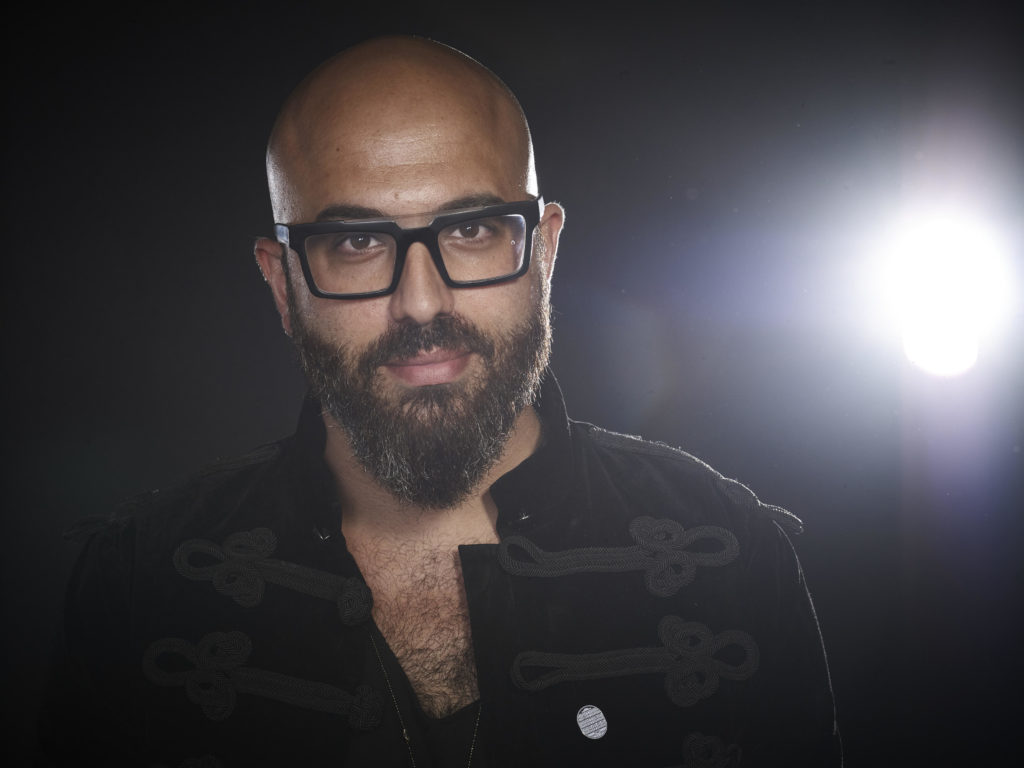
Episode #99: Zohar Bronfman – Co-founder and CEO of Pecan AI
Dr. Zohar Bronfman – The Limits of Knowing Dr. Zohar Bronfman is the... Read more


Episode #99: Zohar Bronfman – Co-founder and CEO of Pecan AI
00.00/57:41
In this episode of the RealLifeSuperPowers podcast, we speak with Tal Zvi Nethanel, CEO and Co-founder of SHOWFIELDS, the pioneering next-generation brick-and-mortar retail store that was recently listed as one of the Top Young Israeli Startups in New York by Forbes Israel.
Tal is a serial entrepreneur and innovator at heart, he’s co-founded several accomplished businesses, including Bluestone Group – which Live Nation (the entertainment conglomerate managing legends such as Madonna, Shakira and Bon Jovi) acquired a majority stake in, and MyCheck – which was acquired by Shiji Group.
He’s never worked for anyone. He founded his first company when he was 21. That company pivoted several times, eventually becoming one of the largest production companies in Israel. His second startup also pivoted more than once, teaching him valuable business lessons as his journey progressed.
In retrospect he can connect the dots and attribute many of the skills he’s acquired in the production landscape, from his business-focussed decision making process to his ability nowadays to bring to life his current ambitious startup of creating “the most interesting store in the world”.
We discuss:
– His entrepreneurship philosophy which combines creativeness with practicality. “When you look at the nature of starting a business, a business is a way to monetize from a product and a product is an answer to a question, a solution to a problem”.
– Pivoting – Tal always makes sure the path he’s going down is one that answers a real life need. He looks for areas where he can add value. He’s mission-oriented and doesn’t become “pot-committed” to a predetermined business model – he’s not afraid to change directions as much as reality calls for. “It’s about constantly trying to feel where you drive more value and not necessarily a situation of the sky falling and needing to find a solution”.
– Growth and the importance of pushing beyond our comfort zones, both for people and for businesses
– Much more
Tal is passionate about making the impossible possible. He’s devoted to constant transformation and growth. That spirit is contagious. Listen to him and go do your thing. It is possible.
Zooming out, if you like listening to this podcast, make sure to subscribe so you don’t miss new conversations with peak performers, serving as a reminder we can all tap into the best versions of ourselves.
You’re also welcome to follow Ronen and Noa on Linkedin
And if we may ask for a favor – please leave us a review on your native podcast app.
Some further resources:

[This transcript was generated from YouTube’s auto-captions, not a verified human/AI-diarized transcript. Timestamps and wording may contain errors, and speaker labels below are Claude’s best-effort inference from context, not confirmed against audio. Please review before publishing.]
[Music]
Host: In this episode we speak with Tal Zvi Nethanel, CEO and co-founder of SHOWFIELDS, the pioneering next-generation brick-and-mortar retail store that was recently listed as one of the top young Israeli startups in New York by Forbes Israel. Tal is a serial entrepreneur and innovator at heart. He co-founded several accomplished businesses, including Bluestone Group, which Live Nation acquired a majority stake in, and MyCheck, which was acquired by [company name unclear in the captions].
[Music]
Host: Welcome to Real Life Superpowers.
Tal: Hey, yes, it’s an honor and a pleasure.
Host: First off, congratulations on your new venue in Miami, right? You’ve just signed the big deal.
Tal: Yes, just a few days ago we announced that we secured another location, our second location, in Miami, which we’re very, very excited about.
Host: Yeah. So maybe tell us a bit about what SHOWFIELDS is.
Tal: Wow. So, I mean, long story short, I guess SHOWFIELDS is the most interesting store in the world. It’s a place that invites customers to walk in and discover engaging brands and products they couldn’t physically see and meet until today. We took upon ourselves a very, very big task, and we are very much determined to stand behind that very big statement.
Host: And how is that different than, for example… you know, there is a sort of trend of making stores super exciting and visual. I’ve just been to New York, and I don’t know, the Adidas concept store, it’s awesome. So you’re saying you’re providing something that people haven’t seen. How is it different?
Tal: I think that in order to kind of understand what SHOWFIELDS is, we should talk for a second about the inspiration, or the origin story behind it. I think it’s going to help.
Host: Right, perfect.
Tal: So I was born and raised in Israel, which I’m sure you can kind of tell by my accent, right? My mother was a [unclear in the captions], and my father was a diamond jeweller. I grew up in a house with design magazines and pictures my mom used to take of storefronts from our journeys around the world. So growing up, I always imagined this very magical universe, and I was so excited for the day that I would be able to see more of the world and, you know, see that magic which I was expecting to see out there.
Tal: Then a few years back, with one of my previous companies, I had the fortune to relocate to the US. So I moved here seven or eight years ago, I guess. I land in New York, and I’m so excited about all of those beautiful wonders that I’m about to see, and, you know, where is everything? I was very surprised, or I should say disappointed, to see that the streets of New York look exactly like the streets of Tel Aviv, maybe wider at some points. It’s dull, it’s boring, and it pretty much looks like everywhere else around the world. The streets of [unclear in the captions], the streets of Paris, Tokyo, they all look the same, and none of them have [unclear in the captions]. They all look the same, right?
Tal: So the first observation was this. I was a bit disappointed, but it is what it is. And then, years into it, I slowly discovered that my gut feeling was right, meaning the magic is out there. We live in a time where there are actually more brands, more products, more innovation than at any other point in time in history, right? [unclear in the captions] the barrier to creation is very, very low, right? Between the WeWorks of the world, to Wix for building a website, to Stripe for accepting payments, to [unclear in the captions], to manufacturing in China, the ability for a person to take an idea and bring it to reality brought so much wonder to this universe that it’s pretty magical. So magic exists, it just doesn’t exist where most people are, meaning it’s not on the high street or on Main Street.
Tal: And that second observation is really what led to SHOWFIELDS, because we then asked: how could it be that we live in a universe where there are so many beautiful things out there, and it’s so hard to find them? The reason I’m giving you this long spiel is because I think that’s what SHOWFIELDS is trying to do in its essence. It’s actually solving for a consumer problem, and that problem is what we refer to as a discovery problem. Discovery in the physical world is pretty much broken, and SHOWFIELDS started with the question of why is it so, and how can we solve for it.
Tal: The first thing we understood, and it’s very intuitive, is that opening a store online is extremely hard, and opening a physical store is extremely hard, right? It takes science, skills, resources, many things that most brands just don’t have. But when you dive even deeper into it, you actually see that the problem is way more complex. What makes it so hard for brands to go into the physical world, to open a physical store, is actually the combination of many, many other factors. One of them is the resources and the barriers that come with the physical world, but the bigger part of the picture is actually what customers want today. Meeting the expectations of today’s consumers and today’s customers is really the hard part of that task.
Tal: So long story short, I mean, it’s not short anymore, but long story short, our vision was: if we can make it easy for a brand to open a physical experience, a magical physical experience, the right type of physical experience, if we can make that process as easy as opening a website, we can make it much easier for more brands to enter the physical world, and as a result we can actually solve that consumer problem, which is discovery.
Host: So to put it into context, give us an example of a brand that you brought to the physical world, and what kind of experience you had.
Tal: I think when you look at the new age of brands out there, there’s a very exciting category called DTC, right, direct-to-consumer brands. These are brands who grew online in the last decade. Let’s call them the superstars of the category, everybody knows them, like Warby Parker and Casper and Allbirds. But we are talking about a category which actually has hundreds of thousands of brands, meaning there are hundreds of thousands of brands who grew online, physical-product brands, and it’s very, very hard for today’s customers to actually meet them in person. So we turned the process of opening a physical store for them to be streamlined, as easy as opening a website, and the way that we did it is by actually turning physical retail into a platform which is both physical and digital.
Tal: The end result is a store, a physical store. Our first location is in New York, at 11 Bond, on the corner of Bond and Lafayette. It’s a physical store, four floors, a 14,000-square-foot space, where customers can walk in and meet brands in a way that they couldn’t until today: A, because they never existed physically, and B, because they are presented in a way which really meets the expectations of today’s customer. It’s done in a very engaging and immersive way which customers can really relate to. Examples can be from Quip [brand name inferred from the captions] toothbrush, which is the category leader in, I want to say, dental care today, to brands who literally launched in the store today, to the City of Nashville, who opened a physical space. When you think about physical retail served to you as a service or as a platform, there’s actually no limit to the number of brands who are relevant.
Host: I guess, do you feel that there’s a change of incentive? Like, for an online store that’s accessible globally, what’s their incentive to open up a physical shop?
Tal: Yeah, so the biggest desire of a brand, the way that we perceive it, is the ability to tell their story. And I think that as time goes by, customers are probably, even today more than at any other time before, very curious and very eager to learn those stories and to get to know brands. If you think about it that way, brands are basically an extension of our personality, right? We want to get to know brands, we want to understand where they come from, we want to understand what they stand for. Telling that story is a very, very complex task. It is correct that five or ten years ago, being able to get in front of you online was something which was relatively doable. The thing is that in the last decade, the ability to get in front of you is actually becoming harder and harder, and today I want to say it’s on the border of almost impossible. When you look at CAC, meaning customer acquisition cost, what it costs to get in front of a person today online, it’s actually 4x what it used to be five years ago.
Tal: The thing is that all brands eventually want to be in front of customers. They all want to tell their story. The question is how to do so. Traditionally, brands grew physically, and then online was a second layer, and then in the last decade we actually have brands who grew online. So all brands want to meet customers, and they want to better engage and create this relationship. The thing is that all brands just need more channels, more effective channels, to tell their story and get in front of the customer. So I don’t necessarily think that it’s only about an online brand with a physical location, as much as all brands need a better way to tell their story.
Tal: Today we actually work with brands which fall into four categories. We have brands who just launched, which are emerging brands. We have brands which are VC-backed category leaders, billion-dollar companies who are just looking for another acquisition channel, another place to intersect with customers. We have brands which are platforms, like Amazon Music, which is one of the brands in our store today. We had the City of Nashville a few months ago taking a space, inviting people to get to know Nashville, and we had Shopify [unclear in the captions] taking half a floor. There are different types of motivations for different types of brands, and they all have the same need, and that’s how to better tell their story, how to get in front of customers in a more meaningful way. And I just think physical is a very good channel to do so.
Host: But the World Wide Web is pretty much open to the universe, and to discover a brand in SHOWFIELDS, a person has to be walking down Bond Street. So how do you overcome that? Isn’t the combination the magic sauce here?
Tal: Yeah, so let’s go back to the beginning of the internet for a second. Ten, fifteen years ago, the web is this thing. Brands understand that they need to get on board, and they’re just not sure how. So they’re faced with the decision: should we build a website, which back then, by the way, was hundreds of thousands of dollars, or could have been a million dollars to open a website? Should we take an agency? Should we build a team in-house? What is it we need to do? They all know that they need to get on board. And then eventually what we see is this new rise of companies like Wix, like Squarespace, like GoDaddy, who basically made the process very easy and enabled brands to do so.
Tal: Then the years go by, and all of those brands who traditionally just had a website, which was more of a storytelling medium, you remember the first websites were just “get to know us” and nothing else, all those brands understood: oh wait, this customer actually has buying power and actually wants to transact. And then again they were faced with the decision: should we build a [unclear in the captions] in-house, should we do e-commerce, should we take an agency and build this e-commerce platform within our website? And then again, by the way, the trend that we see is that companies like Magento, like Shopify, like WooCommerce came into the world and made this process very, very easy for brands to get on board, allowing them to focus on what it is that they do.
Tal: We believe that we are at the exact same point in time when it comes to physical. All brands understand that they need to have a physical touch point, not instead of their online presence, but as another means of communication with the customer, another way to get in front of the customer. The problem is that doing so, as I said, is extremely, extremely hard. SHOWFIELDS today has one store, and in a few months is going to have two stores, but the point is that five years from now, you will see SHOWFIELDS in every tier-one city around the world, in a model where a brand that is in one location is going to be in all locations.
Tal: If you want to jump to the future for a second, the goal is for a brand to have the ability to go into the SHOWFIELDS platform and basically deploy physical presence worldwide the same way they open a website. So you can come to SHOWFIELDS and say: I want to have 20 stores in a month from now. In Tokyo I want to have a store, in Paris, in Milan, I want to have a store in Tel Aviv, to see how that store performs in those markets for a few months, then choose what market to focus on and have a permanent physical presence, either in SHOWFIELDS, or in their own store using our tools, or even without our tools, it doesn’t matter. The ability to think about physical the same way you think about digital is really what I think is interesting here. And yes, SHOWFIELDS has one store, and when you walk into that store from the consumer perspective, you just walk in and say, “Oh my god, beautiful.” I hope that’s what people say. But from a [unclear in the captions] perspective it’s just a very interesting story. Our plan here is really thinking about retail as a platform and making it more accessible every day for more brands and more customers.
Host: And how did you decide to extrapolate that to Miami? Why Miami?
Tal: Our mission as a company is to create a better way for customers and brands to engage, and in order to do so we need to be in a place where customers are, and in a place where brands want to be. So we looked into a few markets, from LA to Chicago. We looked at Boston, we looked at Texas, we looked at the tier-one cities in the US, and we were looking for an intersection of places which have high foot traffic, the right relationship between locals and tourists, the breakdown between domestic tourism and international tourism, and a place which is considered cool [unclear in the captions]. All of those things intersect, I want to say, very well in Miami. But I can tell you the next ones on our list are every [unclear in the captions] you can imagine in the US, and also, obviously, in Europe. SHOWFIELDS, again, is a store, but it’s really more of a stage. We are there to stay, but everything within our space is constantly changing, and that’s what makes it, I want to say, very, very interesting.
Host: And tell me something. If I take the model of a commercial, let’s say, shopping mall, usually how they develop it is they have an anchor base. I’ll give you an example: you have a Walmart that brings in a lot of traffic, and around that you build every other brand. That’s what’s called an anchor brand. In the online world, because they don’t have physical traffic, what for you is an anchor brand that you have to have in your areas to bring in traffic?
Tal: Yeah, so that’s why when we look at locations, at least in the last year and in the year to come, we are focused on tier-one locations. We take prime, prime, prime real estate, which means it’s a place which already has a lot of baked-in traffic. But when you think about the experience that we’re creating, our strategy is actually to infuse those spaces with a lot of content. Traditionally, as you said, when you think about shopping malls, their anchor is usually a specific tenant. Our anchor tenant is curiosity. It’s the fact that you never know what it is that you are going to see.
Tal: Turning retail into a physical platform means that brands can come in a very easy way and have a physical store. So let’s say you’re a brand, you’re invited to SHOWFIELDS, and you go into a process. By the way, 85% of that process is online, so you basically do next, next, next, next, [unclear in the captions], and we can turn your website into a physical store, where our team designs, builds, staffs, we do everything. This ability makes it very easy for brands to [unclear in the captions]. What we do is that every few months we actually change all the spaces in the store. The result is that from a customer perspective, every time you come to SHOWFIELDS you see brands and experiences and products that you didn’t see before. The reason people today come into the store, and every week, every month we see more people and more returning customers, and most people who come in eventually tell their friends, “Oh my god, you have to check out that place,” is because they are able to access beautiful things that drive value to them, things that they couldn’t see, things that get them excited. And this is kind of our anchor.
Tal: And I think that’s, by the way, one of many things that traditionally look a certain way and that we really try to rethink. The anchor tenant is one of them, but the list goes on and on. What I really like about our journey is that we actually allowed ourselves to rethink how a shopping experience would look from the perspective of the customer. Traditional retail environments, traditional shopping malls and shopping centers, are pretty much all running in the same way, which is a landlord model. There is a landlord who is making money from brands and their sales and their ability to make revenue in those places, which kind of forces them to ask: what are the brands that for sure are going to sell? What are the brands that will drive the highest amount of revenue? For us, we had the ability to ask: how can we create a model where customers would always be happy? How can we serve customers and brands in a better way? How can we make it easier to show up? How can we make it more interesting? How can we make it about them and about the brands, and not about us, the hosting platform? And it seems to be working so far, which makes us very happy, because obviously coming into it there were a lot of question marks. And yeah, it’s been a very interesting journey so far.
Host: Yeah, so speaking about journeys, I also want to tap into all those initial questions that you had, because it makes all the sense in the world that the clarity that you now have wasn’t something that was there from the get-go. But let’s take a little bit of a step back and talk about your personal journey. Did you ever work for anybody? You’re a serial entrepreneur, but how did it all start?
Tal: So I never necessarily worked for anyone, but that’s also a complex statement, right? I always worked in companies which I founded. In my first startup I was not the CEO, but I always worked in companies that I founded. I don’t like this word, “serial entrepreneur.” In my head it sounds more like a serial killer than anything else. I see myself, at least, it’s not a common word to use today, but more as an inventor than anything else. But yeah, since I was a child, I guess. My first company I founded when I was 21, in the first year of college, and since then all the companies were ones I was one of the co-founders of. It was always a crazy, crazy journey.
Host: What did you study in college?
Tal: So I studied at the IDC, in the international program, the [name uncertain from the audio, possibly Raphael Recanati] International School. And this led to the first startup. It started as a social media site that was supposed to connect tourists coming to Israel. It was called the Israeli Connection. And then it turned into a site about helping people get to know Israel better. We started doing events, and then eventually we opened an event production company, which, by the way, over the years became one of the biggest event production companies in Israel.
Host: This is Bluestone?
Tal: Yes. So Bluestone is that company. I was [unclear in the captions] the creative in the first years of the company. This was a very fun journey. And when I’m thinking today about what tools I have in order to try and build the most interesting store in the world, I actually think that physical events are a very big part of it. This was a very interesting part of the journey. During the years that followed, I also co-founded another company called MyCheck. This is where we met, Menipaz [name inferred from the captions].
Host: But you’re allowed to [unclear in the captions]… we made the advertisement, where I played in an advertisement of his.
Tal: Yeah, yeah. So we launched a company called MyCheck. We started with mobile payments. We started as a consumer app, so basically a customer can go into a bar or restaurant, see the check running on their phone, and check out like they own the place. Our tagline back then was “check out like a rock star.” We did a series of fun commercials, and Menipaz [name inferred from the captions] was actually the star of those, until…
Host: I don’t really… I said no over the negotiations. And then he took someone called Bar Refaeli, which was the [unclear in the captions].
Tal: Yes. [unclear in the captions] So Menipaz [name inferred from the captions] was the first star, and he was the main rock star in our first ads. And then [unclear in the captions] we said, you know, who can top that? Because it’s really hard, he’s really good. And then we decided to basically go with Bar Refaeli, which was the second-best thing after him. And Bar Refaeli did another ad with us, which eventually got a lot of attention. So it was a very fun time, and also a lot of lessons from that part of the journey. We started as a consumer app. Building a consumer product in Israel is one thing; building a consumer product in the US is a completely different thing. So there was a lot of good learning there.
Host: I have to say something. Something is really interesting in the story. You’re going through it really fast, but there are two things that I noticed, now that you said it; we knew it before, but you see it’s reoccurring. One, you said you don’t like “serial entrepreneur,” which I understand. But something I’m really interested in is that in your whole story I find you pivoting a lot, meaning you’re taking momentum from one thing and then pivoting to another product, and another product, and another product. It starts from one adventure and it just materializes into other things while you’re doing it. I feel like that’s something that you’ve done a few times, like from [unclear in the captions] to Bluestone, there were a few pivots on the way, and even when you’re talking about MyCheck. The other thing is that all of the things that you did in your life are both physical and online. You’re never just the online or offline person, right? Am I correct?
Tal: Correct. When you look at the nature of starting a business, businesses always start with products, right? A business is a way to monetize a product, and a product is always an answer to a question, or should I say a solution to a problem. So when we started the first startup, the problem was how can we create a better way for tourists coming to Israel to [unclear in the captions]. So this was the pain point. And then we saw that producing those events [unclear in the captions] was where we actually saw a lot of traction and where we could bring the highest value. So then we knew what it is that we needed to do, and from that point in time the company grew, it just became bigger and bigger and better at what it does. So this is chapter one.
Tal: And then you look at chapter two, which is mobile payments. MyCheck started with the problem that the consumer paying experience is broken. It doesn’t make sense that you’re sitting in a restaurant and you wait. It’s annoying, it’s awkward, there’s social awkwardness when you want to pay the check in a restaurant, you pay for this, you pay for that. There are a lot of pain points. So again, we started with a consumer problem. The problem was that this process is not effective, it can do better, and by doing so the venue, the restaurant, the hospitality venue, and the customer will win. We started with the consumer, but we then understood that in order to have our solution serve more and more customers in a better way, we actually needed to take it on a B2B [unclear in the captions]. Meaning, instead of saying it’s about us, instead of creating a consumer app called MyCheck and thinking the whole world is going to use MyCheck, we said: you know what, there are so many beautiful brands out there, let’s just give them the tools. So instead of creating a MyCheck app, let’s give mobile payment abilities to [unclear in the captions], which was one of our first customers. Let’s power the Cheesecake Factory and give them the tools.
Tal: So while there are [unclear in the captions], because there always are, I think it always starts with the consumer problem you’re trying to solve. And I think that the journey, and you know that as an entrepreneur as well, is always starting with the pain point, and the question is what is the best angle, or what is the best way to solve it.
Host: Yeah, and the journey of finding it is usually the hard part that nobody likes to talk about, right? Because it’s really [unclear in the captions]. And that’s exactly what I think I’m hearing from you, because what you’re describing, those pivots, correct me if I’m wrong, but didn’t they always happen at an intersection where there was a problem in the business? Because pivots don’t just happen when everything goes fine. An entrepreneur has a choice to make: it’s either let’s just stop and give up, or let’s reimagine and reinvent ourselves. And it sounds like you were always able to take a step back, reinvent yourself, and then get back on course. Am I right?
Tal: I mean, yes or no. I wish things were so simple, but the reality of a founder is that things are way, way more complex. It’s not as if you are on your journey and then you see a red light, so now you know there is a problem, and now we need to go into a room and find a solution. It doesn’t work that way, because the reality is that the day-to-day of any startup is hard. Every time I interview a new team member, or every time I talk in front of a group of startups, I always describe that a startup is like being on a roller coaster. You’re up, you’re down, most of the time you want to vomit. But the point is, if you don’t feel that way, it only means that you’re not moving fast enough, or you’re not moving at all. So that’s the day-to-day situation.
Tal: My point is that when you are starting a business, it constantly feels that way. So it’s not “oh my god, there’s a problem, we need to solve it.” I think it’s more about constantly trying to see where you drive more value, and not necessarily “the skies are falling, let’s find the solution.” It’s not that the business model we had in the first company was broken, so let’s get into a room and start doing events. We did a few things, then we saw this part works the best, let’s focus on that. And when you look at the core of MyCheck, MyCheck has a very unique technology that allows mobile payment using point-of-sale integration. This is the core. Our mission was to bring the solution to as many people as possible, and we asked ourselves what is the most effective way to do so, and eventually we decided to go B2B. But it’s not because one day it was like, okay, X doesn’t work, let’s do this now.
Tal: And by the way, I’m not saying it because I think that we did something good. I’m saying it because I wish that this is how it was, but the reality is that most of the time you don’t have such a clear answer, and it’s really about trusting your gut feeling and trying to work in a very methodological way: building a thesis, deploying an experiment, building a feedback loop to see what works and what doesn’t, and then trying to double down on what works more. It’s not really like, okay, this doesn’t work, next. So yes, to your question, I think there are a lot of pivots, but I feel like for people a pivot is something which comes with a negative connotation, whereas in reality I think that everything that we do is about [unclear in the captions] and it’s about growth. The question is where do you want to grow.
Host: Yeah, where the compass is now pointing. And [unclear in the captions] it seems like since you were 21 you’ve had a constant feeling of nausea in your stomach. Is that something that gets easier?
Tal: Wow, no, I wish it was. I mean, it’s yes or no, because there’s another layer to it, which is the level of intensity. The feeling is the exact same feeling. It’s ups and downs, and your stomach has a very weird feeling. But if you take the ups and downs that I had in my first business, compared to the ups and downs of a company which raised six million dollars, to a company which raised 20 million dollars, to a company which needs to have physical locations, it’s like going from a basic [unclear in the captions] type of roller coaster to, maybe today, a [unclear in the captions] type of roller coaster. So yes, you develop a stomach for a certain type of feeling, but also the level goes up, and now there are [unclear in the captions]. It’s like the roller coaster goes into water, right?
Host: But you have more skills.
Tal: You have more skills, but the minute you have more skills, you want to go next and just build a bigger roller coaster.
Host: There you go. That’s the question I’m [unclear in the captions]. Let’s try to speak here as straightforwardly as possible. This is my theory. A lot of people who are entrepreneurs, it’s not that you cannot stop vomiting or getting to higher peaks, it’s something in you saying: okay, I can build this roller coaster higher, I can twist it more, let’s see if this velocity works. Are you putting yourself in uncomfortable modes to get the best out of yourself, or is it actually the business just pulling you there?
Tal: Yeah, I think that as an entrepreneur, and as humans, we always want to grow, and I think that growth can only happen at the end of your comfort zone. And even though what I’m saying sounds spiritual, it’s actually the same with your business. When you are a company in a growth stage, you constantly need to try to push past the point where you are right now. In your business there are things which are working for you, and they’re great, so now the pressure level is a bit lower. But now that you see what is great, you say, okay, I want to double down on it, and then again it becomes harder, and you need to grow, you need to hire more people, you need a different set of skills. The nature of growth is always at the end of your comfort zone, and the same goes for that feeling, the metaphor we were talking about with the roller coaster. I don’t think it’s a conscious decision as much as people who put themselves in those situations just like it. The reason they began this business is because the compass pointed in a certain way, and they have this vision to solve this very big problem on a very big scale, and getting there requires that constant increase in the levels of everything that you do, and as a result, that feeling, I guess.
Host: I love it that you’re using the word “need” and not “want.” Because you want to grow, but you need to grow, you know what I mean? And I’m not saying this in a bad way, because I think this is a winner’s state of mind. These are the people you want to work with; they always need to get to the next level. I don’t know, but I’m not sure you needed to challenge the next step each time, rather than wanting it, you know what I mean?
Tal: Yeah. Let me give you another… we are very much [unclear in the captions] today, so let me give you a small metaphor. When you’re going to the gym and you want to build a muscle in your arm, you take a weight and you start doing 10, right? In the beginning it’s very painful, your muscle kind of shrinks, and you feel this pain. Then after doing it one week, two weeks, three weeks, suddenly when you do it you don’t feel that pain anymore, so you now need to either do more or increase the weight. A muscle is always built from resistance, from you applying more resistance to that part. So I’m not saying that a founder is necessarily after the thing, but a founder is after building the biggest muscle possible, and in that case that muscle is the business. If your goal is to grow the business, because by growing the business your solution can actually serve more people and more customers, and as a result do better, then you want to build a bigger business, and as a result you constantly need to build that muscle.
Tal: There’s a funny quote that I really like. Someone once asked Muhammad Ali how many push-ups he does, and he said: I’m doing 10 after I cannot do any more. Meaning, I never count them, but the minute I feel I cannot do any more, I’m doing 10 more. And I think that’s the state of mind of an entrepreneur, of any business with a mission to grow.
Host: I agree so much. I practice martial arts, and I can add to what you’re saying that as you practice, your brain and your body are making connections and you’re learning, and through the practice you’re improving, and then what used to be impossible becomes just the setting of the stage for the next level. So with respect to entrepreneurship, I feel like with every experience that you gain, your brain is making all these connections, and now you’re at a level where you’re ready for the next steps, because your previous experience is preparing you for what’s next, and you’re now ready to do bigger things.
Tal: A hundred percent. I’m looking at the last part of the journey, which is SHOWFIELDS. So a few years, like two years back, I’m fundraising, and basically you have a group of entrepreneurs who say… you know, back then the skies are falling, people are saying that we’re in the retail apocalypse, and there’s a group of crazy kids who come and say, you know what, we want to build a department store, [unclear in the captions], in the middle of New York. A group of kids who never had [unclear in the captions], and it sounds a bit crazy, right? Like, why build a store, why retail? Everybody is running away, you’re running into the fire. What makes you feel that you can do that?
Tal: And a very big motif that our team has, a very big part of our day-to-day, is tapping into what you just said, which is actually making the impossible possible. And I think the part that I like the most, what drives me as an entrepreneur, is really that part and nothing else: the part of creation, the part of making something that is impossible today possible, because by doing so you can actually unlock a lot of opportunities for many people who until today didn’t think it was, and I think that as a result there is a lot of value being driven. In the beginning it was like: can you build a store? Why would you build a place that people would want to come into? Why would you think this is a place that people would come to and say it’s so nice, and want to take pictures? Today, after we had hundreds of thousands of people in this space, after we had millions of impressions, after we had [unclear in the captions] with great success there, people are like: okay, but why do you think you can open two of those, and then why do you think you’re going to open 20 of those? So it’s always about what’s impossible right now, and that is, for me, the favorite part. So going back to our roller coaster, building one store today doesn’t give me [unclear in the captions], but maybe building five does, and after five it’s building 20, and then after that it can be something else. I think that as humans, life is really about transforming and growing, and that’s what’s so interesting about our journey here.
Host: Tell me something. Right now, you started off as a business that’s running towards fire, meaning everybody was trying to get away from it, and you were looking to get in. Now I’m wondering, for all these entrepreneurs that are listening, what would be your advice to people who have great ideas but are going against trends? So you’re trying to pitch something where an investor would say: listen, retail’s down, why do you think this is a good time to do it? When you have that kind of challenge, what would you say entrepreneurs should think of, or get ready for, when they meet investors?
Tal: I guess my answer is twofold. First of all, the fact that no one is going there doesn’t mean that you need to go there. But the reality is that when no one else is there, there is an opportunity. It doesn’t mean that if no one is going in some direction and there is a fire, you need to run in, but statistically, going to places where no one is, or against the trend, can have a lot of benefit. The good thing is that if you’re successful, then you’re the first mover, and there are a lot of benefits to that. I think that we ran into a fire because we didn’t see a fire, and I think that’s my message here. People said that retail is dying, and they ran away. We actually think that the problem was not retail. The problem is that what customers are looking for doesn’t really exist, and in that universe, what people think is an apocalypse and bad was, for us, actually an opportunity.
Tal: If you think about our strategy, we thought that the customer experience is broken, meaning customers today have different expectations of everything, from shopping, from discovery, from engaging, from talking. There is a different expectation, and it’s very hard to meet that expectation. There is a different product which is needed when it comes to physical shopping, and we thought that we knew how to solve for it and how to give a solution that they would want. That was our thesis, and in that universe we needed a physical space. So for us, the fact that the skies were falling was actually good. It became an opportunity, because we were able to secure a building in SoHo which, I don’t know, three years ago, who would have even been speaking to us? It’s a building that an H&M or Zara would go after, and suddenly a group of young entrepreneurs is actually able to secure that building at a price and in a deal that historically was never done before. So the skies are falling for some people, but for us it was the best thing that could have happened.
Tal: But I just want to say that I think we were lucky from that perspective, and also that it’s an important point to stress that the discussion didn’t start with [unclear in the captions]. The discussion didn’t start with: okay, retail is having a problem right now, what can we do about it? The discussion started with: we actually think that there’s a consumer problem, how can we solve for it? And then it went through physical. The only thing I will say is that it requires a very strong stomach to go and do fundraising every time you invent a new product or category. It’s hard, because people like to put things in boxes, and when you want to invent your own box, there is really no box to put you in. That’s always hard, so you just need to be twice as persistent and determined and [unclear in the captions].
Tal: Yeah, I remember the first [unclear in the captions] meeting that we had. It was like: oh, so you’re doing WeWork for retail? Oh, so you’re doing [unclear in the captions]? So physical… people, we tend to put things in boxes, so we kind of need to define things with other things that we know. And I think that every time you try to do something which is new, it’s very hard.
Host: Exactly.
Tal: But the good thing is that if you are able to do that, then suddenly people say, “You’re doing SHOWFIELDS.”
Host: Exactly.
Tal: And I always told investors: no, we’re actually doing [unclear in the captions]. You know what I mean? And they would look at me, “What do you mean?” But yeah, this is how we looked at it to begin with.
Host: Wow, it’s a crazy, crazy journey. I really recommend to people listening, if you’re hanging out in New York City, go to Bond Street and check out SHOWFIELDS. You’ll thank us. And so let us ask you something that we always ask: what’s your superpower?
Tal: What’s my superpower? I don’t know if I have a superpower. I think that maybe, I don’t know how to define it, but something that I think I’m okay with is being able to see something in my head, to have this vision, and being able to bring it to reality. I think there are a lot of people who are very good at driving a vision, and there are a lot of people who are very good at building stuff. I think the ability of taking something from zero to one, at least, is something that I feel comfortable with. I’m okay with that feeling.
Host: And in your experience, you’ve done it.
Tal: Yeah. But you know what, actually, I think that if I have a superpower, it’s just that I don’t give up. That’s all. Which is a good and a bad thing, but I just don’t give up. And I’m giving you motivational quotes today, so I’ll give you another one. There is an interview with Will Smith where someone asked him what his superpower is, and he said something like: if you and me are both on a treadmill, I’m not the strongest person, but I can tell you that I would die and I would not get off the [unclear in the captions]. I think that’s a very good quality that a lot of entrepreneurs have: the ability not to give up. It doesn’t mean that you have to be the best, but you just need to stay one second more. If you’re able to endure more, then endure and keep on pushing, as long as you’re loyal to the question that you’re initially asking and you still believe that there is a solution for it, then don’t give up. Sometimes, by the way, with the question that you started with, you see that you were wrong, that the answer you thought of is not correct, and then knowing where to stop is important. But I think that as long as you believe in your solution, then see another day.
Host: And your kryptonite? I hope it’s not your stomach.
Tal: No, no. [unclear in the captions] I’m joking. But I think that my kryptonite is time. I always feel like I have no time. I always feel like I’m in a race against time, and it’s the most precious thing in life. When you are grinding with a startup, you feel like time is flying away all the time. I feel like the perception of time is my kryptonite. And the reason, by the way, that it’s kind of my kryptonite is because it’s really the perception of time, because sometimes we just need to be more patient, and that’s the right thing to do, and sometimes you just need to pull through. So I would say that the perception of time is my kryptonite.
Host: That’s interesting. We want to be respectful of your time, so we won’t hold you much longer. We just want to ask you: what can we wish you and SHOWFIELDS? Where do you see this heading?
Tal: Our goal is just to allow more customers to meet more brands, whether it’s with the solution that we have today or with a different or improved solution. That’s what we are after. I truly believe that we live in a very unique point in time. There’s so much magic out there, and it was never harder to find. People think that in the age of the internet it’s very easy, because you can find everything online, but they don’t understand that we are always limited to what it is that we know, so [unclear in the captions] search is optimized; you don’t know what you don’t know. So the only thing you can wish for me is that we would get to help more customers meet more brands, in a more meaningful way for both of them.
Host: Amazing. So by the way, [unclear in the captions] in June, I’ll meet you there. I want to see what’s going on. I’ll be there at the beginning of June.
Tal: Perfect. I’m looking forward to showing you the space. And again, I’m very appreciative of every opportunity to share about SHOWFIELDS and about what it is that we do, so I’m grateful for this opportunity. Thank you.
Host: So, bye for now.
[Music]
We have the technology. Real Life Superpowers.
[Music]
Dr. Zohar Bronfman – The Limits of Knowing Dr. Zohar Bronfman is the... Read more
Building a Company That Doesn’t Depend on You Naveh Ben Dror is the... Read more
Life Is a Game Lior Pozin built AutoDS into a company with more... Read more
What started as an idea between two Technion graduates became one of the... Read more
Going all in, whatever it takes In this episode, we speak with Lior... Read more
In this episode, we speak with Eli Goodman, co-founder and CEO of Datos,... Read more


