
Episode #99: Zohar Bronfman – Co-founder and CEO of Pecan AI
Dr. Zohar Bronfman – The Limits of Knowing Dr. Zohar Bronfman is the... Read more


Episode #99: Zohar Bronfman – Co-founder and CEO of Pecan AI
00.00/57:41
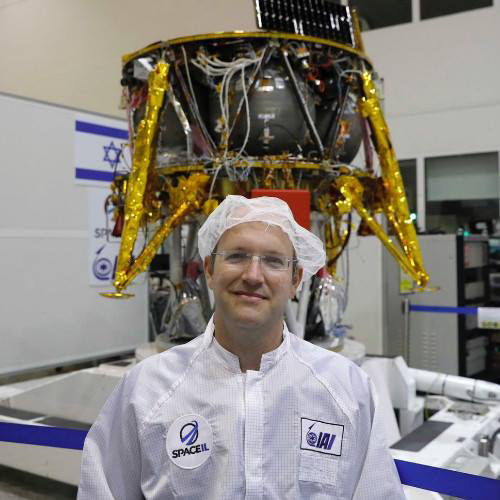
In this episode of the RealLifeSuperPowers podcast, we speak with Yariv Bash, co-founder and CEO of Flytrex, a leading consumer drone company and founder of Space IL – an Israeli non-profit that in December 2018 will launch a spaceship to the moon making Israel the 4th nation to land a spaceship on the moon.
Yariv is always in motion, he always has something he’s working on, he’s persistent and an endless optimist (which is probably his superpower). He’s taken on the most ambitious projects with a goal of influencing entire generations and making a dent in the world. He lives to solve problems and he believes he can take on almost anything , especially if it’s a challenge that was solved before.
With respect to landing a spaceship on the moon, I asked him, how did you gain that confidence? How did you know? I mean you must have had some doubts..
His answer teaches a lot of his relentless mindset “So, it’s a problem that has been solved on a bigger scale with more funds nonetheless, but still, the first time it was solved was back in the sixties…”
I interrupt “yeah, solved by countries” but he doesn’t get confused “you know, the difference between individuals and countries is always shrinking”
We learned that one of the keys to success is to believe to the verge of stupidity and despite other people’s skepticism BUT to always validate and have a plan b (and c, and d)
“I found myself surrounded by people who don’t think anything can stop them”. What a magnificent state of mind. We know we’re going to work on this attitude. We hope listening to him will help you too.
You can follow Yariv’s work on:
flytrex.com/ and
www.spaceil.com/
Zooming out, if you like listening to this podcast, make sure to subscribe so you don’t miss new conversations with peak performers, serving as a reminder we can all tap into the best versions of ourselves.
You’re also welcome to follow Ronen and Noa on Linkedin
And if we may ask for a favor – please leave us a review on your native podcast app.
Some further resources:

[This transcript was generated from YouTube’s auto-captions, not a verified human/AI-diarized transcript. Timestamps and wording may contain errors, and speaker labels below are Claude’s best-effort inference from context, not confirmed against audio. Please review before publishing.]
[Music]
Host: Hey, we’re here with Yariv Bash, co-founder and CEO of Flytrex — we’ll talk all about that — and founder of SpaceIL, a very cool Israeli nonprofit that’s actually probably going to land an Israeli spacecraft on the moon.
Yariv: It’s not “probably” — we’re going to land it.
Host: Absolutely, I wanted to hear you say that. So how are you? What are you up to these days, mostly?
Yariv: Not bad. Flytrex is an unmanned drone delivery company — we’re basically doing the drone deliveries everyone assumes Amazon is working on, so we’re going to supply that to everyone, not just Amazon. It’s a huge market, and we’re currently deployed in Iceland, and we’re now working with the FAA on a pilot in North Carolina.
Host: Amazing — how’s that going so far?
Yariv: Not bad. I expect that by the end of this year you’ll see drones flying over people’s heads delivering things in a small town in North Carolina.
Host: Really, by the end of this year?
Yariv: Yes — it’s very much back to the future. In some places in the world it’s already happening, and people are walking down the street seeing flying drones delivering things. They actually fly at roughly 200 to 300 feet, so you can barely see or hear them until they start descending toward the ground — that’s when you’ll see and probably hear them.
Host: So picture this — this is what North Carolina is going to look like. Hundreds, thousands of drones?
Yariv: It’s a small town, about 25,000 people, so we’re going to start with just a few drones flying around with packages about the size of a burger box — actually, the delivery box is 15 by 11 by 7 inches, like a big shoe box. You can fit food for a small family in it, up to about six and a half pounds, or three kilograms. We’re working on a larger version now, but currently you can carry six pounds up to three miles, or five kilometers, which covers most of the town.
Host: How does this work on a technical level? Is someone manning the drones?
Yariv: At the end of the day, we’re competing with a 16-year-old on a scooter, so it has to be cheaper than that. A Flytrex operator can operate a whole fleet of drones in real time — the system isn’t fully autonomous, it’s automatic. All the operator has to do is load a new package and replace the batteries if needed; we handle the rest — fleet management, logistics. The drone takes off, flies to the destination, the customer gets a notification and can watch it flying toward them in real time. Once the drone hovers above the backyard, all they have to do is press a button confirming they’re there, the drone lowers to about 40 to 50 feet, lowers the package on a wire to the ground — we don’t land near the customer — and then flies back to be loaded with a new package. Birds tend to avoid the drones because we fly at about 58 km/h, or around 30 mph, and below normal flight altitude, so it’s segregated from manned aircraft.
Host: That’s the future.
Yariv: We’re now deployed at 23 locations around the city — you can order sushi or go to one of those points and get it within 15 minutes instead of an hour and a half. It’s a mix of finding a really good partner and a regulator who’s willing to experiment and work with you to make it happen.
Host: So you found that regulator in Iceland?
Yariv: We got leads from all over the world and qualified them — we look for partners who are strong and have a real problem with last-mile, on-demand delivery, and then we look at the regulatory framework in that country. We have advisors who help with that, and once we saw we had a strong partner in Iceland, and that the regulatory framework there could let us fly beyond visual line of sight — which is one of the scariest things for regulators, flying drones above people in a city — we realized there was a lot of potential there.
Host: Is there any security risk with drones flying around?
Yariv: I’ve never seen a drone just fall out of the sky. When the battery gets low, it comes back and lands — we’re not producing the drones ourselves, we’re using DJI drones, which are very safe. You’ve probably seen a DJI drone — it’s a bit bigger, like a suitcase. DJI has sold millions of drones without a single casualty. Compare that to cars, and it’s so much safer — and by delivering with drones, I’m actually taking cars, scooters and trucks off the roads, so I’m saving lives that way too.
Host: How can people see this in action — is there video online?
Yariv: On Flytrex.com, on our Facebook page, on our YouTube channel, you can see videos we’ve made. We’re about to start a bigger deployment, and I expect once we start growing in North Carolina, you’ll start seeing actual customers uploading videos of themselves receiving packages.
Host: I have one concern — if a burger is flying a hundred meters over my head for a while, won’t it get cold?
Yariv: We deliver within four or five minutes, so it doesn’t have a chance to get cold — we fly in a straight line directly to you. It’s like getting a pizza promised in 30 minutes, except much faster. You could order sushi and have half a sushi platter arrive in 15 to 20 minutes instead of waiting.
Host: How did you end up coming up with this idea?
Yariv: I was working day-to-day at SpaceIL, and my flatmate at the time was into drones — he was playing around with them and asked if I wanted to join him. Our first product was a real-time GPS tracker for drones. For the first two years of Flytrex we didn’t raise any funding — we bootstrapped the whole thing, and ended up selling more than 20,000 units in 70 countries, doing almost a million dollars in revenue. It was a nice business, but then we realized the real killer application for drones was going to be on-demand delivery. Think about it — a few years from now, once next-generation devices are out, the real jump isn’t ordering something and getting it the next day, it’s being able to order and get it in 20 minutes for the same price — there’s really no point in a slower delivery anymore.
Host: But you had a GPS-drone business that was doing well?
Yariv: It was doing okay — but it’s a hardware business, so most of your revenue goes into producing the product, packaging it, shipping it, taking in returns and defects, people getting unhappy with the product. It’s very different from a SaaS business.
Host: So today, Flytrex is more like a software company?
Yariv: You could say that, through the drones themselves, but really we made a shift from dealing with hardware to dealing with platforms — to figuring out exactly where we can help companies solve their own on-demand delivery problems.
Host: That sounds simple, but it’s actually incredibly sophisticated — a huge challenge to break into, especially since Amazon has been talking about this for years.
Yariv: I’m not competing with Amazon — they’re going to educate the market and enable it, and eventually solve that problem for their own customers ordering from the Amazon platform, delivered from Amazon warehouses. But any other retailer is going to need a similar solution, since Amazon’s whole strategy is building the biggest store in the world — they’re not going to hand that advantage to other retailers.
Host: What led you to this in general?
Yariv: After two years in the drone industry, we didn’t fully see yet what the killer application would be, but we started thinking about what the largest market drones could tackle would be — by far, it’s delivery. We were already inside the industry, so we understood it from the inside, and we made the shift. We don’t call it a pivot, we call it an evolution, because our existing system was already capable of receiving real-time telemetry from many drones, so gaining control over the delivery side felt almost natural.
Host: What’s the biggest challenge now?
Yariv: A lot of people we talk to focus on the challenge of regulation and law enforcement — the sexy side is always the technology, but sometimes the biggest challenge is regulation. It’s basically the gatekeeper for a lot of startups — if you don’t get past that stage, it can kill a great company over small legal issues. That’s why, from day one, our main KPI has been flights — we’re not waiting for the US market to open, even though we’re now one of ten pilots approved by the FAA. That’s why we went to Iceland, and we also have a small operation in Costa Rica we haven’t shared much about. From day one, we wanted to be ready for when the North American and Western European markets open up — that’s the real market — but my KPI for the short and medium term is flights: how many flights have we actually performed.
Host: So it’s more than a proof of concept?
Yariv: Much more — it’s optimizing the whole process: the system, the cloud, the drones themselves, the operations, the interfaces with clients and restaurants. Everything has to be worked out, including the business model and pricing, so that once the real market opens, we’re in a much better position than everyone else — it’s like choosing your own strategic sandbox.
Host: After dealing with much bigger regulators while sending a spacecraft to the moon, is drone regulation basically a walk in the park?
Yariv: Not exactly — spacecraft launches are a known, established process. Drones are newer, so regulators are often looking around to see what other regulators are doing. But I don’t work against them, I work with them — it’s my responsibility, as much as theirs, to make sure both the sky and the people on the ground stay safe, so they can sleep at night. Sometimes that means doing more than what the regulator strictly requires, so that you feel safe as well.
Host: Did the SpaceIL experience help you develop skills for this, or is it completely different ground?
Yariv: Very different — with the spacecraft, the process is more fixed. With drones, it’s more of an ongoing discussion, a step-by-step process. In Iceland, we didn’t start by flying all over the city near the airport — we started with a single route between two points, with an operator on each side. As we progressed, we were allowed to deliver directly to people’s backyards, and expanded from there.
Host: What about bad weather?
Yariv: Great question — our current drones can’t fly in the rain, but the next generation we’re evaluating can carry more weight, fly further distances, and handle heavy rain. The nice thing is I don’t have to develop that myself — DJI develops it and we adopt it.
Host: Let’s talk about SpaceIL for a second — for people who don’t know, what is it?
Yariv: It’s a nonprofit with an education focus — our mission is sending an unmanned spacecraft to the moon, making Israel the fourth nation to land softly on the moon. But the real vision is about impacting a generation, about education. Our goal is that by the time we land on the moon, every kid in Israel can explain to their parents what a spacecraft is and what it’s doing. We didn’t invent this idea — during the 1960s space race, there was something people called the “Apollo effect,” where kids went into engineering and science in increasing numbers as a side effect of that era’s space excitement. That’s our goal too — we’ve met with hundreds of thousands of kids through a nationwide program, and ten years from now, I want kids to tell me they went into engineering because they got excited about space.
Host: How does a person wake up one morning and decide to send a spacecraft to the moon to inspire a generation?
Yariv: It didn’t happen in the morning — it happened one evening. Back then I was working for Israel’s Ministry of Defense as an engineering team leader, and I was also co-founder of a creativity camp for the defense and security services. Each year we’d pick a flagship project for the camp — in 2010, the President visited the camp, and afterward I asked myself what the next big technological project should be. My original idea was building a rocket that would reach the edge of space and release a small plastic spacecraft, film it, and call it “the first Israeli spacecraft.” The camp takes place on an Air Force base, so I figured it’d be easier to get permits through the military than through the civil aviation authority. I went to a friend’s house, and after a few glasses of whiskey I told him about the idea for next year’s project, and he told me I wasn’t thinking big enough — what about a CubeSat, a small satellite about 10 by 10 by 10 centimeters, weighing about a kilo, costing low six figures in dollars? I said that was too expensive for the camp, and he said, what about the Google Lunar XPrize — sending a spacecraft to the moon?
Host: You’d heard about the competition already?
Yariv: I knew it existed and thought it was a little crazy. Google had launched the Google Lunar XPrize competition back in 2008 — the goal was to send an unmanned spacecraft to the moon, land it, travel 500 meters, and send back images and video of the landing and journey. The first prize for whoever did that first was 20 million dollars. By then more than 30 teams had already registered, and when my friend told me about it, it was November 2010 — registration stayed open until the end of that year, but the competition itself ran for three more years after that. I told him he was crazy, but I walked home that night through Tel Aviv thinking about a name, and came up with “SpaceIL” — space and Israel. I registered the domain, posted on Facebook asking who wanted to go to the moon, and emailed a friend of mine who worked in the space division at Israel Aerospace Industries, telling him about my “crazy” idea. We met at a pub and started talking about going to the moon.
Host: How many years ago was that?
Yariv: End of 2010.
Host: Are you going to win the competition?
Yariv: After extending the deadline a few times, Google saw that nobody was making real progress, so they ended up terminating the competition — there’s no prize money anymore, and even if there were, it wouldn’t have come close to covering the actual costs.
Host: Did you know that going in?
Yariv: At the beginning we thought it would cost less than 10 million dollars.
Host: What’s so expensive about sending a spacecraft to the moon?
Yariv: Just fueling it costs low six figures — and that’s the easy part. The launch itself is the real expense — a full commercial launch costs at least 60 million dollars; with SpaceX, we buy a share of a launch rather than the whole rocket.
Host: You left a full-time job for this, thinking it would cost about 10 million dollars and you’d turn a profit?
Yariv: It’s a nonprofit, so there’s no equity — the founders don’t get anything from it directly. But there’s a strong pull to be part of something that inspires future scientists, and that was motivation enough.
Host: Still, you must have had some kind of budget in mind when you left your job. When did you realize this wasn’t going to cost a million dollars?
Yariv: It was step by step — I used to keep a chart showing how we expected the project’s cost and timeline to change, and we updated it every quarter as the spacecraft’s size and scope grew. It kept growing.
Host: Did you ever feel like this might not work out — like it was spinning out of control, with people looking to you and waiting on your promise?
Yariv: I didn’t really think about it that way — I just focused on: we have a design, we have a mission, this is the best timeline and budget I can give today, and we update it as we go. Early on, we approached serious people — the chairman of Israel’s space agency, the head of a research institute — and they all told us the same thing: this isn’t going to be the budget or the timeline. Google, for their part, wasn’t funding it directly — the XPrize itself never covered the actual costs. They just wanted a “moonshot,” and put it out to the world: whoever manages to land on the moon first, let us know.
Host: And you felt confident, comfortable raising money for something like this?
Yariv: I thought then, and still think now, that it’s something I can accomplish. It’s a problem that’s been solved before, on a bigger scale with more funding, but by countries, back in the 1960s. The distance between what individuals and countries can accomplish keeps shrinking — there are billionaires today running their own space programs — so it didn’t look impossible to me, even though it was clearly complex.
Yariv: I think that’s how we filter ideas in general — can we do this or not. Today you can research almost anything and get a real sense of whether something’s achievable.
Host: Was there ever a technological challenge you wanted to solve but didn’t think you actually could?
Yariv: Yes — fixing spinal cord injuries.
Host: This connects to something that happened to you — back in March 2017, you were skiing.
Yariv: I’d been skiing and snowboarding for about 15 years without ever breaking so much as a finger — just bad luck. I fell backward on a jump and broke my spine, cutting my spinal cord.
Host: I remember finding out — I saw it on a Facebook post and read it about ten times trying to figure out if you were joking, because you’d told this whole story about a ski trip and ended it with something like, “for the time being I have to say goodbye to my legs.” It didn’t make sense, because you’re the person who treats “impossible” as basically nothing — you just do whatever you set your mind to. And then I remember watching you and being amazed that you didn’t stop.
Yariv: When I fell and broke my back, I stayed conscious the whole time. I remember thinking, okay, my head is fine, I have no way of knowing anything else yet. I faded out later, in the helicopter on the way to the hospital. Right after it happened, I lay there and started running my hand down my body to see where I could still feel something — I could feel my right side, I wasn’t twisted, I seemed to be positioned okay. My left hand I couldn’t feel either, because I’d broken a lot of ribs, which affected some nerves. I remember thinking, all my friends are ahead of me on the run, they need to find me — so I raised my right hand and started shouting. Within a minute or two, two guys stopped next to me.
Host: Did you think, in that moment, that this might be it?
Yariv: No, I didn’t think about that. I just thought — okay, I’ve been found, I’m not alone, I’m going to get the best treatment possible. One of the friends I was skiing with is a pediatrician, and he was one of the first people to reach me — I told him I could feel my legs, and he asked if I could feel him touching my knee.
Host: You also had a wife and two young children back home.
Yariv: At the time, there was a lot of adrenaline, so I wasn’t dwelling on that — I was thinking, I’ve been found, I’m in good hands, I’ll get the best treatment I can, and there’s nothing more I can do right now except stay calm and see what happens.
Host: Did it happen instantly, or was there a window where things could have gone differently?
Yariv: No, it was instant — my spine, in a snap. I faded out in the helicopter, and basically woke up six days later in Israel — I’d been medically sedated for a couple of days in France, where I was operated on, then sedated again for a few more days while recovering there. When I woke up, I could use my right hand fine, my left was very weak.
Host: How did people find out what happened?
Yariv: So many people were messaging, asking if I was okay, if I was alive — rumors were flying. I decided the best way to answer everyone at once was a Facebook post. I was too weak to type it myself, so I dictated it to my wife.
Host: What was going through your mind in those first days? You’re such an ambitious, always-on-the-go person — did that get shaken?
Yariv: Not really — my mindset was, I need to learn to live with this, and maybe find a way to improve it down the road, but first, learn to live with it. I wanted to be strong, because I wanted my family to be strong too — I have work I love and a life I love, and I wanted to get back to it as fast as possible.
Host: How long did that take?
Yariv: About half a year — I was in the neurological rehabilitation department in Tel HaShomer for close to half a year. Amazing place, incredible people, really supportive — they push you and teach you everything, how to be independent again from scratch. I actually made some good friends on the medical team there.
Host: What I love about that phrase you used — “maybe I’ll solve it down the road” — is that it comes up again and again with you, whether you’re talking about SpaceIL or this. It seems like that’s fundamentally what you do: you solve problems. Have you always been that way?
Yariv: I’m the older of two brothers. I think when it comes to problem-solving, I try to focus on one challenge at a time — you have to really dive into a problem, and I don’t think it’s possible to solve two huge problems simultaneously, depending on their size. As a CEO you’re technically solving a lot of problems at once, but it’s all within a single mindset — right now, the mindset is “what do we need to do to keep the drones flying.” The spinal cord injury was a completely different track, but I didn’t stop working on Flytrex to focus only on that, except during the time I actually had to be in the hospital.
Host: Even in the hospital, you were still working?
Yariv: Full-time on Flytrex, and SpaceIL was in the background too — they don’t need me day-to-day, and my partner stepped in as CEO to cover things while I was out. After about two weeks I was back on my laptop, one-handed. Then I started joining team meetings, and going out from the rehab department for a few hours a day, because they want you to return to daily life as much as possible. At first we had to use a special van with a lift, which felt like overkill, and eventually I learned to hop into a regular car from my wheelchair.
Host: Do you feel like you’ve mastered that completely now?
Yariv: Not really, and it’s not something I’m chasing as a “master it” goal — I was pretty good at snowboarding too, maybe 95 to 98 percent of the time, but I still had my share of accidents. It’s similar with the wheelchair — I want to get to a level where it doesn’t limit me, though of course it still does in some ways, like not being able to climb stairs. But day to day, it doesn’t stop me from pushing forward on what I want to do — it just makes some things a bit harder.
Host: How soon after the hospital were you back at it?
Yariv: Within about three weeks I was already out and about — one day I had seven meetings in New York, hopping from one building to the next.
Host: Did you go back to the hospital after that?
Yariv: I was actually invited to give a lecture in Paris about two or three months after the injury, and my wife convinced me to leave the hospital for a few days for that trip, even though the hospital wasn’t thrilled about it.
Host: Were you always an entrepreneur, or did that come later? What was your first experience with it?
Yariv: I actually started out working for the government, for Israel’s Ministry of Defense — I was in the technology unit, which always encouraged people to push forward and come up with new ideas, so in a sense I was an “intrapreneur” inside a government job, even though that sounds like a contradiction. We had an amazing unit manager who gave people a lot of freedom to pursue their own projects on their own time, and that really shaped things for me.
Host: Most successful entrepreneurs point to some inspiring figure — a mentor, an old boss, a partner. Do you have someone like that?
Yariv: Not really one specific person — it was more about the environment I was in than any one individual. I was also in a special-forces unit in the military for a while, and that taught me a lot about what I’m capable of physically and mentally — walking dozens of kilometers overnight without sleep and still functioning, climbing, carrying people. And then working in that government technology unit, I was surrounded by people who genuinely didn’t believe anything could stop them — which shaped my mindset a lot.
Host: So — trying to figure out your superpower here. What do you think it is?
Yariv: Not dwelling on pessimism, and keeping a light spirit while trying to solve a problem. At the beginning of SpaceIL, nine out of ten people we met — philanthropists and space engineers alike — told us it couldn’t be done.
Host: Like the Steve Jobs line — “the people crazy enough to think they can change the world are the ones who do.”
Yariv: Exactly. I think it’s about surrounding yourself with people who are similarly, almost irrationally optimistic — people who are persistent because they believe there’s an end game, even when the details of that end game aren’t fully clear yet.
Host: It sounds like, from what you’ve said, you don’t always visualize the full end game in detail.
Yariv: I do have a vision — it’s a little vague, lots of drones flying, delivering things in real time — but the details evolve. I didn’t necessarily picture the exact drones we have today, but the broad vision hasn’t changed even as the details have. It’s the same with the spacecraft — it’s evolved so much since we started, and I’m sure it’ll keep evolving.
Host: So it’s not blind faith — it’s based on something more grounded?
Yariv: Right — it’s intuition combined with engineering, looking at what’s already been done and what things actually cost.
Host: There has to be a balance, though — a point where you recognize an idea is delusional.
Yariv: It happens. I’ve heard the joke that if you’ve been doing something for two years without making a salary from it, it’s not a profession, it’s a hobby.
Host: What role does optimism play in actually pulling something like this off, versus just intuition and engineering?
Yariv: Intuition and engineering help make it real; optimism helps you push it forward every single day. You have to be completely open to the fact that there’s an entrepreneurial edge to staying optimistic — there’s another saying I like: expect the best, prepare for the worst. On one hand you have to believe you’re going to make it; on the other, you have to cover your bases. A lot of what I do as CEO is reading legal documents — not fun, but necessary. Being optimistic and not letting anything stop you doesn’t mean ignoring how much hard work is actually required, or how much testing and iteration it takes — you don’t order just one of a device you’re testing, because you’re going to break the first one, unless it’s genuinely too expensive to do that, in which case you have to be extremely careful with it. Believe, but verify.
Host: Do you always have a fallback plan?
Yariv: Always — in my mind, if everything fails, I already have a plan B, and if that doesn’t work, a plan C. It’s less about doubting yourself and more about knowing there’s always some chance that any given approach won’t work out, and planning around that.
Host: Some people would say that’s not really an option to consider.
Yariv: I think when your goal is something like fully autonomous drone deliveries or landing an unmanned spacecraft on the moon, you have to be honest that even a very promising plan carries meaningful risk of failure, and plan accordingly — that’s not the same as expecting to fail.
Host: It’s interesting how different entrepreneurs frame this differently — some will say “there’s exactly one end game, and failure isn’t an option,” full stop.
Yariv: Right, and for some people that framing works. But realistically, nobody in the world is willing to fail completely and still get people to invest in them — you need some version of a real plan.
Host: What is your end game here, ultimately?
Yariv: Honestly, I think there will be a few “dents,” not just one — this doesn’t feel like a single finish line to me.
Host: When are we actually going to be on the moon?
Yariv: As of right now, February 13th, 2019, if the launch happens on schedule — it’s already been postponed from December to January, so there could be another delay of a month or so.
Host: And knowing you, landing on the moon will feel like a milestone, but you’ll immediately be looking for the next big thing to build.
Yariv: That’s right.
Host: Where does that hunger come from — why isn’t one big achievement enough?
Yariv: I love solving problems — big problems especially. If I make a real dent somewhere, it means the problem was big enough to matter. And once you’ve made one dent, it’s natural to look for the next one — otherwise it’s easy to slide back into “I’ll just be an engineer, do the normal thing, avoid the stress.” I was talented and had some success before any of this, and I still want to keep taking on bigger challenges, because I believe the dent is actually going to happen. Big aspirations, big businesses — that’s different from opening a franchise, which is great in its own way, but this is a different kind of challenge, especially in a field like space, where very few people and organizations have ever done what we’re trying to do. I think that’s genuinely impressive, and none of it happens without being fundamentally optimistic that it can.
Host: Thank you so much for your time — this was a real pleasure. We can’t wait to see the landing and to see where you go next. If there’s ever a way for me to go to the moon myself, sign me up.
Yariv: I’ll hang onto that. Give me a month or so to work on it.
Host: In the meantime — subscribers and listeners, don’t forget to follow SpaceIL.com and Flytrex on Facebook.
Yariv: Yes, please do that.
[Music]
We have the technology. Real Life Superpowers.
Dr. Zohar Bronfman – The Limits of Knowing Dr. Zohar Bronfman is the... Read more
Building a Company That Doesn’t Depend on You Naveh Ben Dror is the... Read more
Life Is a Game Lior Pozin built AutoDS into a company with more... Read more
What started as an idea between two Technion graduates became one of the... Read more
Going all in, whatever it takes In this episode, we speak with Lior... Read more
In this episode, we speak with Eli Goodman, co-founder and CEO of Datos,... Read more


