
Episode #99: Zohar Bronfman – Co-founder and CEO of Pecan AI
Dr. Zohar Bronfman – The Limits of Knowing Dr. Zohar Bronfman is the... Read more


Episode #99: Zohar Bronfman – Co-founder and CEO of Pecan AI
00.00/57:41
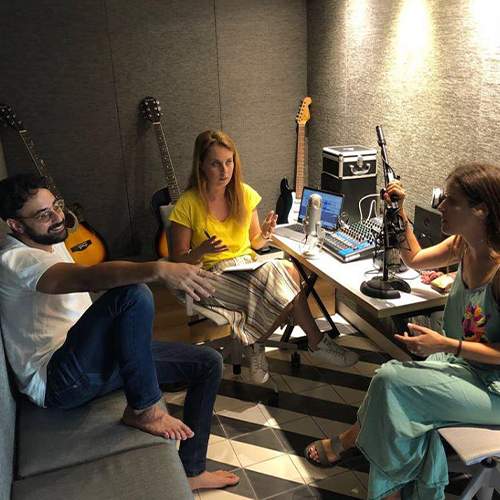
In this episode of the RealLifeSuperPowers podcast, we speak with Dari Shechter, VP of Creative & Design at MindSpace Inc, a global coworking community with locations in the US, England, Holland, Germany, Poland, Romania and Israel. Mindspace’s exponential growth is largely attributed to of the unique experience that Mindspace provides. Dari who had no previous experience, is the creative mind that designed and lead the artistic vision for the community and company.
The way we see it, her superpowers are her ability to think out of the box combined with extreme optimism that helps her maintain exploding energies. In this podcast she explains how she acknowledged her strengths and then utilized them. “In the beginning no one listened to me, when I felt like no one cared I started doing stuff without approval. I lucked out because I did a good job, sometimes taking chances is important”.
Checkout this episode to learn all about her journey.
Zooming out, if you like listening to this podcast, make sure to subscribe so you don’t miss new conversations with peak performers, serving as a reminder we can all tap into the best versions of ourselves.
You’re also welcome to follow Ronen and Noa on Linkedin
And if we may ask for a favor – please leave us a review on your native podcast app.
Some further resources:

[This transcript was generated from YouTube’s auto-captions, not a verified human/AI-diarized transcript. Timestamps and wording may contain errors, and speaker labels below are Claude’s best-effort inference from context, not confirmed against audio. Please review before publishing.]
[Music]
Host: We’re here with Dari Shechter, VP of Creative and Design at Mindspace.
Dari: It’s great — especially being here with you guys. Thank you for inviting me.
Host: Dari’s a really colorful person. She always has the coolest accessories on earth.
Dari: Thank you — I hide my feelings toward accessories.
Host: So — whoever doesn’t know about Mindspace, it’s one of the biggest real-estate trends of the last decade. Most people know WeWork, but Mindspace is actually pretty huge too — there are offices in Israel, Berlin, Poland, England and the US. What’s amazing is that co-working spaces now aren’t just about real estate as a business opportunity.
Dari: Right, it’s really impressive to see how it’s evolved. And thanks for having me.
Host: You’re so young — how did you end up in this position? Is this your dream job?
Dari: On the one hand, I can’t say any job is a dream job — you have to work hard for it. Today you’re catching me on a pretty rough day, so I could tell you it’s not, but honestly every job is like this. I definitely do what I like, which is fun, and if you’re asking how I got here — I just started doing, seriously, what I like, and implementing it within the place I worked. I didn’t start as VP of Creative and Design at Mindspace — I actually started as a community manager and sales manager. I was basically doing a bit of everything at the company, and I think in any startup you do whatever you need to do to make it happen. As part of doing everything, I had to touch the space and create something aligned with what I was trying to sell. Through giving my touch of design to the space, I realized I was actually good at it.
Host: They gave you a chance to give input on the look and feel of the place?
Dari: Exactly. At the beginning there was a lot of skepticism, because I came from the business world — I hadn’t studied design, nothing. It’s a bit of a culture thing from my home — we really appreciate art, we visit a lot of exhibitions. I told myself that my next job, if it involved something physical, something with a space, I’d have to give my two cents on it — and that was Mindspace. At the beginning I had to convince them hard to give me that chance, but I did, partly because I was also doing sales alongside the CEO, and it went really well. I remember the day of the first opening of the space — people didn’t understand what the hell co-working was. You’d explain: it’s a 2,000-square-meter space, divided into small rooms, everything is boutique — and people would look at me like it was weird. Typically Israelis want their own space, their own identity — why would they share a cup of coffee with 37 strangers, even if those strangers are CEOs of startups and businesses?
Host: Didn’t the smart business people realize the networking opportunity?
Dari: Of course — that was part of my pitch. But they had to see it, because it sounded like everyone crammed together making money. Now it’s the complete opposite — companies like Barclays and even Microsoft want to be in shared working spaces, because they understand they need that alongside their regular offices.
Host: What are the biggest brands that took offices with you?
Dari: The first Mindspace branch, in Israel, had Palantir — no need to explain who they are — and Coca-Cola took an office too. They jumped at the opportunity to tap into that innovative spirit, because the design is genuinely inspiring. If you haven’t stepped into a Mindspace, I highly recommend it — you walk in and get this vibe of something rough and creative, like there’s a flow in the air.
Host: But this wasn’t happening before you — this is something you built?
Dari: From the beginning I touched all the spaces, the creative part, the design part. The moment clients entered the space after we’d gone from idea to physical product was amazing — people would walk in and just say “what the hell,” taking selfies. This was even before selfies were really a thing — people were taking pictures with the phone-booth seating for the first few hours after walking in, inviting their friends to come see it. Then you become the cool person in the room, because everyone feels like this is their identity — “this is my space, this is what it says about me, I chose to be part of this community.”
Host: And this whole concept — you designed it — was basically bootstrapped, because this was a startup that couldn’t afford a professional designer?
Dari: Let me go back a bit and explain how it really started. I took part in a really cool entrepreneurship program — the Zell program at IDC. As part of the program, they take about 20 students to the US to meet the CEOs and VPs of big companies — I met the VP of Marketing at LinkedIn, I met Mark Zuckerberg — everyone in suits, pitching startup ideas. As part of that trip, we went to see WeWork. This was about six and a half years ago, and they only had two or three locations back then. When I walked into the space for the first time and was really exposed to this concept, I was shouting — “oh my god, I want to be part of this, I’m moving in, I’m living here” — and the community managers were like, “okay, relax, chill.” I was like that for two hours straight. We ended up in contact with Adam Neumann — this was early on — and at a meeting with entrepreneurs from Israel, he asked whether we thought it was a good idea to enter the Israeli market. Some people said no. I was the one shouting yes, saying I wanted to be the person who launched it. I stayed in touch with people from WeWork, but it seemed like they weren’t going to enter the market soon.
Host: What did you study, as part of the program?
Dari: Entrepreneurship — it’s kind of a degree program, but what you study within it almost doesn’t matter, you’re adding an extra year to your studies to learn entrepreneurship. It’s a very selective program, hard to get into — something like 20 students out of 10,000 applicants a year, like a boot camp for entrepreneurship, which is why they have the budget to fly us to the US. Toward the end of that process I was in contact with WeWork’s marketing team, and I realized it wasn’t going in the direction I wanted, so I decided to do it myself. At around 25, I spent six months researching the co-working market in Israel — we had basically nothing yet.
Host: That’s a real entrepreneurial spirit — finding yourself by building a business.
Dari: There’s a kind of energy you get out of that entrepreneurship program that makes you feel like you can do anything — it’s almost an illusion, but it was a good feeling at the time. During those six months of research, opportunities came up, and I met the person who’s the CEO of Mindspace today. He told me he was actually working on the same concept — we were literally at the same research stage, except he’d already found a space. He suggested I join forces with him, as his right hand, leading marketing and sales for the company.
Host: And that bothered you — joining something that was already his?
Dari: At the beginning I was pretty upset about it — I was fighting with him constantly, telling him I wanted to be a co-founder, not just an employee. I was a bit of a brat about it at first. Then I realized: I had nothing, I was 25, I hadn’t done anything with my life yet — maybe I’d been a waitress and a bartender. The illusions from the entrepreneurship program started fading, and I thought, okay, take this opportunity. So I did.
Host: And that’s how, about five years ago, you opened the space. How many branches do you have now, in 2018?
Dari: We started with one floor — I don’t remember the exact numbers anymore because it changes every week as new branches sign on. I think we’re at around 20-plus branches around the world now.
Host: How does that compare to WeWork’s growth in that period?
Dari: It’s usually around 100% year-over-year growth in this business — for us it’s been closer to 2,000%. It’s crazy. And WeWork was already out there, so there was real competition from the start. I actually remember Adam Neumann coming to our space to see what Mindspace was about — we only had one floor at the time, so who knows why he cared, but he came in, walked around, and we saw him on the camera system.
Host: Did that feel like a threat?
Dari: Obviously we saw him as competition, but I think that kind of competition has to happen for a concept like this to evolve — it strengthens you, in a way, because you’re pushing the same idea out into the world together. I remember when WeWork entered the Israeli market, about eight months after our grand opening, we were scared. But in my marketing classes during my first degree, the professor always said competition is good, it helps you get more clients — and we didn’t really understand that until it happened. Once WeWork entered, the number of leads we got actually went up, because if someone’s looking at WeWork, they check the other option too — you wouldn’t take the first apartment you see without comparing.
Host: There’s a whole theory about entering a “blue ocean” versus a “red ocean” already full of competition — Peter Thiel talks about something similar in Zero to One, about finding your niche and becoming a monopoly in it. But this makes more sense to me.
Dari: Definitely. And it’s funny, because today there are hundreds of co-working spaces in Israel — you can drive two miles and pass several. When we started, we were the first.
Host: You’re the art director here — walk me through it. I see a jar of eyeballs sitting in a Mindspace. What’s the vibe there?
Dari: That’s the vibe, yeah — you walk in and see an elevator with about six thousand mirrors, something like Disneyland, or Burning Man for inspiration. There’s something a little crazy going on, in a good way.
Host: But you have to adapt the brand for different markets, right? Culture’s different everywhere.
Dari: We don’t really change — we have our own DNA, our own language, and we go with it. We’re a team of creative people designing it one branch at a time, adapting locally but always keeping the same vibe and coolness. You always have to invent something new.
Host: Where did you get the courage for this? You put yourself at the level of designers who studied it formally and have far more traditional experience — that’s rare.
Dari: Thank you — that’s a great question. It’s been really challenging, because sometimes I get negative energy from designers who don’t like that I got into this role without a design degree. But I don’t believe there are real shortcuts like that — I think if you reverse-engineer it, the dots in your life lead you there. Because I was at a startup, I got the opportunity to do what I wanted — if I’d tried to get a design position at a more traditional, organized company, no one would have given me the chance; they’d be looking for someone with a specific degree. But it was a startup, so I could do whatever I wanted. I think most roles in tech, especially, you don’t study — you learn by doing. I did marketing courses in business school, but you don’t really learn marketing that way — you learn it from the environment. Because I was at a startup and had to wear many hats, I was in the right place at the right time, and I used that to push what I wanted. I’m very, very stubborn — it works for me sometimes, and sometimes it doesn’t. I kept pushing to be involved in the design — giving references, asking to be part of it — until eventually I was just allowed to run with it.
Host: What was the moment you felt you’d really won people over?
Dari: The jar of eyeballs, actually — you have to see it in person, it’s different depending on the branch. It’s a strange thing to love, but it works. In Holland we have a different, similarly strange installation — if you ask me it’s a little disgusting, but that’s the change in my own design language over the years. There was a point where I put together a presentation of my mood board, ideas, and references for a space and just started designing without really asking permission. I showed it to the project architect, he loved it, and from then on I was properly involved in the space design — even though I had zero formal experience. He looked at it from a styling approach at first, and then I took the opportunity further, into curating and creative direction.
Host: Do you feel like you’ve improved as a designer over time? There’s a well-known idea about the gap between what you envision and what you actually manage to create — does that resonate?
Dari: I can cry from that gap sometimes — those are the moments that really get to me. I think the gap has gotten smaller as I’ve improved. When we design a space on the other side of the world — we’re currently designing one in Washington, DC, and I haven’t been able to visit — we’re working entirely from pictures and illustrations, and it’s hard to close that gap. You plan something, then you get to the space and see that half of what you designed isn’t happening the way you imagined. Talking about the jar of eyeballs earlier reminded me of my early days — things I’d only do at the beginning of my career and would never do again. You can see the change in my approach across the different branches. I think only now am I starting to actually like what I do — it took years to get there. It’s a process: I learn from mistakes, I see something not work, I fix it, and I take that into the next project. I also work with a community of artists who bring the vibe into each space, and now that I know them, it’s easier — I just tell them what I want and they get it. I think that’s actually what distinguishes us from competitors on the design side — we don’t just buy art and hang it on a wall, we think with the artists about how each piece will make people feel and how it connects with the rest of the room.
Host: If you had to tell the story of the Mindspace community — how do you build something like that from scratch?
Dari: I started as a community manager with no experience in that either — the closest experience I had was being, in a sense, the community manager of my own friend group. I think it comes down to understanding people and how they can connect. In the early days of the Mindspace community, I struggled with that — about half the people who joined were open-minded and ready to connect, and the other half didn’t really understand the concept: why they were there, what a “community” even meant in this context. I realized that even though I was selling network space, it’s not really about networking — it’s about people and energy. If you meet someone with good energy, you can do anything together. So I started introducing people to each other because I felt they could genuinely connect — and some of them became friends, some even became business partners. As community manager I was very hands-on, almost like I was supervising it — checking in on whether people had had lunch together, what they were working on. One member basically told me to leave him alone — he didn’t want to be part of the community thing, he just wanted to rent his office, drink his coffee, and be left in peace.
Host: What did you do with him?
Dari: I found another equally unsocial person and put them in the same room. They ended up becoming best friends.
Host: That’s a great insight — most people would assume putting two antisocial people together wouldn’t work.
Dari: Right, like two kids at school nobody likes — but somehow it worked.
Host: What do you think your superpower is?
Dari: Honestly, I don’t take it easy enough on myself — I probably should be calmer. But I need that proactive energy, I can’t sit still. I think that restlessness helps me with suppliers, colleagues, my boss — I’ll push hard for something I believe in, and somehow it works out. I try to bring good energy to everything I do. It doesn’t always land — sometimes it’s too much for people — but when I get home, I can’t even explain how drained I am from putting that much energy into everything and everyone. I think if I give someone good energy, I get it back — it’s like a mirror, and it works. I’m very stubborn about getting what I want — it doesn’t always work in my personal relationships, but it works at my job.
Host: And your kryptonite?
Dari: The flip side of being an optimist is that when someone drops the ball or is negative toward me, I don’t always know how to react — I absorb energy from my surroundings, and if it’s bad energy, it stays with me. I don’t want to sound like I have it all figured out — I have bad days too, I go home and cry sometimes. Giving that much energy to the world takes a lot out of me. I’m sick a lot, honestly. I know I should meditate — everyone tells me that — but I’m too restless to sit still for it.
Host: For people who are unhappy in their jobs and want to pursue their passion but don’t know how to start — do you have any insight to share?
Dari: Honestly, I don’t know if I’m living my dream yet — I don’t think anyone really knows if they are. But you know when you’re somewhere you’re not supposed to be.
Host: It sounds like you’re aware of what you’ve achieved and where you are right now.
Dari: I think life happens in chapters — right now might be a confusing chapter, but it’ll pass, and you should try to enjoy it, because once you know exactly where you are, you’ll actually miss this time. I went through a period of being really confused. People who are miserable about being miserable just get more miserable — it’s a cycle. Even during those six months when I was researching Mindspace and didn’t have a job, didn’t know what my profession was, I kept telling myself: you’re good, you just don’t know what you’re good at yet. If you look for the good, it’ll come to you — but don’t push too hard. I think people should explore more instead of sticking to one job description forever — take a course, study something new, keep evolving even after you find work you like. Right now I love what I do, but I’ve also started studying permaculture, just because I love it — I don’t know exactly how I’ll use it, maybe I’ll bring it into how we design spaces, or maybe it’ll take me somewhere else entirely. Just follow your interests and have faith it’ll pay off, whatever that ends up looking like. I don’t want to sound like a cliché, but if you don’t know what you like, take a course, try things, and you’ll find your way. Maybe it’s too optimistic, but that’s what I believe.
Host: I think it’s great, and it’s clear you actually live it. What’s interesting about your story is that you explored — one of the luckiest points was flying overseas and encountering WeWork, which shows that the more you experience, the more ideas you get. And the second thing is that you actually did the design work yourself, even when the people around you didn’t respect that you had the talent for it, until you became a designer in your own right.
Dari: Thank you — that really means a lot.
[Music]
Dari: This has been really fun and interesting — thank you for having me.
[Music]
We have the technology. Real Life Superpowers.
Dr. Zohar Bronfman – The Limits of Knowing Dr. Zohar Bronfman is the... Read more
Building a Company That Doesn’t Depend on You Naveh Ben Dror is the... Read more
Life Is a Game Lior Pozin built AutoDS into a company with more... Read more
What started as an idea between two Technion graduates became one of the... Read more
Going all in, whatever it takes In this episode, we speak with Lior... Read more
In this episode, we speak with Eli Goodman, co-founder and CEO of Datos,... Read more


