
Episode #99: Zohar Bronfman – Co-founder and CEO of Pecan AI
Dr. Zohar Bronfman – The Limits of Knowing Dr. Zohar Bronfman is the... Read more


Episode #99: Zohar Bronfman – Co-founder and CEO of Pecan AI
00.00/57:41
We think it’s fair to say that in order to be successful and live a fulfilled life, you need to change and grow.
Which makes this episode a valuable listen to anyone who wants to do just that, and to make more impact on the people around them.
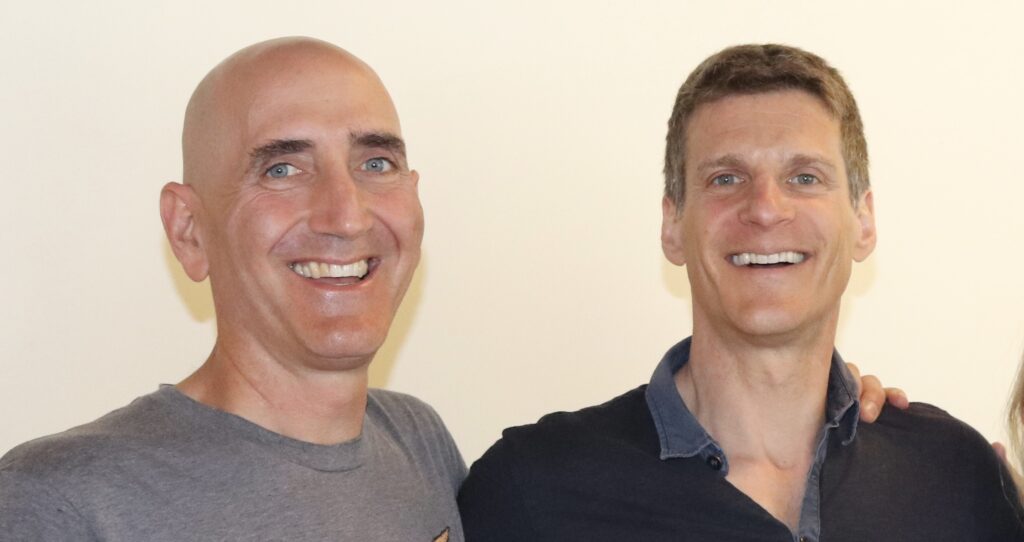
In this episode of the RealLifeSuperPowers podcast, we speak with Peter Bregman and Howie Jacobson, authors of YOU CAN CHANGE OTHER PEOPLE: The Four Steps to Help Your Colleagues, Employees—Even Family—Up Their Game.
Peter is the #1 executive coach in the world, bestselling author of 5 books, and host of Bregman Leadership Podcast – a top 10 business podcast with over 1.5 million downloads. He coaches C-level executives in many of the world’s premier organizations. His work appears frequently in the Harvard Business Review, BusinessWeek, Fast Company, Psychology Today, Forbes, CNN, and NPR.
He’s created and leads the #1 leadership development program in the world – the Bregman Leadership Intensive.
He’s given four TEDx talks, regularly delivers keynotes. The list goes on..
Howie is an executive coach to leaders ranging from startup founders to Fortune 100 executives. He’s Director of Coaching at Bregman Partners, and Head Coach at the Healthy Minds Initiative. He’s also the host of the Plant Yourself Podcast and author of 4 more books. His writings have also appeared in Fast Company and Harvard Business Review.
We discuss:
There’s so much to be learned from these accomplished gentlemen, check out the episode, we think it’s not an exaggeration to say it’ll probably inspire you to be better.
Zooming out, if you like listening to this podcast, make sure to subscribe so you don’t miss new conversations with peak performers, serving as a reminder we can all tap into the best versions of ourselves.
You’re also welcome to follow Ronen and Noa on Linkedin
And if we may ask for a favor – please leave us a review on your native podcast app.
Some further resources:

[This transcript was generated from YouTube’s auto-captions, not a verified human/AI-diarized transcript. Timestamps and wording may contain errors, and speaker labels below are Claude’s best-effort inference from context, not confirmed against audio. Please review before publishing.]
[Music]
Peter: Giving feedback is such a big thing in the world — you’ve got books about how to give feedback, how to be ruthlessly honest, to just tell people like it is because it’s for their own good. It’s actually not. It often backfires, because there’s a huge difference between telling someone what’s happening, what you like and what you don’t like, what their problems are — and actually helping them get better. The goal of feedback is to support development, but so often feedback doesn’t support development.
Host: Hey everyone. I think it’s fair to say that in order to be successful and live a fulfilled life, you need to change and grow — which makes today’s episode a valuable lesson to anybody who wants to do just that, and to make more impact on the people around them. In the episode we speak with Peter Bregman and Howie Jacobson, authors of “You Can Change Other People: The Four Steps to Help Your Colleagues, Employees, Even Family, Up Their Game.” Peter is the number one executive coach in the world, bestselling author of five books, and host of the Bregman Leadership Podcast, a top-10 business podcast with over 1.5 million downloads. He coaches C-level executives in many of the world’s premier organizations. His work appears frequently in the Harvard Business Review, BusinessWeek, Fast Company, Psychology Today, Forbes, CNN, and NPR. He’s created and leads the number-one leadership development program in the world, the Bregman Leadership Intensive. He’s given four TEDx talks and regularly delivers keynotes — the list goes on. Howie is an executive coach to leaders ranging from startup founders to Fortune 100 executives. He’s director of coaching at Bregman Partners and head coach at the Healthy Minds Initiative. He’s also the host of the Plant Yourself podcast and author of four more books. His writing has also appeared in Fast Company and Harvard Business Review. There’s so much to be learned from these accomplished gentlemen — check out the episode, I think it’s not an exaggeration to say it’ll probably inspire you to be better. Real Life—
[Music]
Host: So, Peter, Howie, welcome to Real Life Superpowers.
[Peter/Howie]: Thank you, so nice to be here.
Host: So your new book drops on the 22nd of September, right?
Peter: Yeah, the 22nd.
Host: How does it feel?
Peter: It feels great. In some ways this book has been — we’ve been writing it for a couple of years, but we’ve also been, in a sense, working on it for 30 years. So it’s really nice to see it in book form and go, wow, we were actually able to encapsulate what we wanted to in a couple hundred pages.
Host: Do you feel like there’s any stuff you would do differently in retrospect?
Peter: Not yet — after the podcast I might say, oh, I think I would approach that a little differently. But I’m really happy with what we came out with. I mean, a book — the minute you come out with it, it’s already old. We’ve already had discussions about a new way to frame something that we didn’t even think about a week ago. So you kind of have to let go — it’s your kid, it’s in the world, it’s no longer a reflection of you, I guess, because we’re always changing. I mean, it is at the end of the day a reflection of you, but I understand completely what you’re saying.
Host: And it’s not your first rodeo — you both have successful books you’ve already published. Did that help with writing this book?
Peter: Yeah, actually that’s a great question. It did. It’s interesting, because — Howie, why don’t you share the story of how this book came about, and then I’ll share something.
Howie: Peter has been doing coach trainings for a while, and I think the first one I made was in 2014, and I go to all of them that I can, because they’re so helpful to me. It’s like a gym — you can coach people all day long, but you’re not necessarily getting better at it without feedback and challenge and a community. So a couple of years ago Peter announced that this was going to be his last one. It was at Esalen, and I was there, sort of assisting and learning, as always.
Host: I’m confused — because normally coaching is one-on-one, and this is something that’s in a group?
Howie: It was training — teaching people how to coach.
Host: Oh, okay, sorry — training coaches.
Howie: So at the end I was like, dude, this is too good to stop doing — if you’re not going to do it anymore, this material has to be somewhere. And I accidentally talked myself into becoming a writing partner. I felt like this was too good, too well thought out, to let just languish in a file drawer somewhere.
Peter: And what I love about it, and what I love about the process, is — yes, this is like 30 years of coaching translated into a training program, and yet working with Howie, I would explain things and then he would start to drill in, question, discover, and uncover gaps — “wait, but what about this,” or “what kind of example would you use there” — and it forced us to think together about it. It forced us to get really crisp and really clear in a way that I could kind of get away without when I’m just having conversations with people and teaching — it gets a little messier. So it was really, really fun. I’ve contributed to lots of books and written my own books, but I’d never written with a co-author before — never written together with someone — and it was a really great experience. It’s amazing how much crisper my thinking became.
Host: How do you do that with another person — did you work harder?
Peter: I could tell you how he worked harder, and I could tell you how it worked a lot — which is that I don’t think as well when I’m sitting at a desk at a computer. And it was COVID — we wrote this during COVID, and I was in the Catskills, upstate New York, where I’m usually in New York City. So we’d start a conversation, and then I’d say, “hey Howie, do you mind if I go for a walk in the woods and we continue this conversation while I’m walking?” And he’d say, “I wish I could too, but you go” — he was very generous about that. So I’d take a hike up a mountain for a couple of hours and we’d talk through things, and then he’d put a bunch of stuff on paper, and then we’d fine-tune it and play with it. For me it was the most pleasurable book I’ve ever written, because I think Howie did so much of the heavy lifting — thank you, Howie — and I did a lot of walking.
Howie: Well, you also did a lot of the heavy lifting in the 28 years before we started writing.
Peter: Fair enough. So no man is an island.
Howie: Yeah, there’s something really beautiful about it, because it’s like the joint knowledge was able to synthesize what you already were doing into something very accurate and clear.
Peter: Yeah, it was a real pleasure to realize when we didn’t know something — because, you know, “I know this but I can’t exactly put it in words,” or we’d put it in words and there would be gaps. There were elements of what I was doing in coaching that frankly neither of us really understood fully until we asked, “well, is this the framework? Not exactly — what’s the DNA of it?” And I think we’ve got it now, because we’ve been explicitly using this new methodology, and it seems to work just as well or better than what we thought the old stuff was.
Host: Did you try it on yourselves?
Peter: Oh, all the time. I keep wanting Howie to coach me on stuff, and we tried it on each other outside of the book too. I also found it interesting — Howie is such a close friend and was very patient with me, but I found myself sometimes getting frustrated — he’d ask me a question and I’d be like, “that’s just what I do, why are you asking that?” “But where did that question come from, Peter?” “I don’t know, it was just the right question, I don’t know where it came from” — and he’d keep pushing me, and I’d be kind of annoyed, but I’m happy he stuck with it, because together we clarified things that were really helpful.
Howie: That’s amazing. And I think the difference between an answer being authoritative just “because it is, because it’s my authority,” versus a much deeper level where you’re actually able to explain it — I think it’s probably an expert’s problem that the longer you’re an expert, the more complex it sometimes becomes to convey what you do. But I do believe the best experts are the ones who are able to — as the quote goes, I think it’s Einstein, “if you’re not able to explain it to a six-year-old, you don’t really get it enough yourself.”
Peter: Right, I think that’s a hundred percent true. And it’s interesting — I know on your podcast you talk a lot with people about their journeys, and for me part of the journey was that I could sit and focus on my laptop and just write, but I’m in my own head — I’m still thinking of a reader, but I’m still in my own head. And I know my best thinking happens in collaboration, in conversation — Howie’s brilliant, and it’s in the questions he asks and the conversations we have and the testing. It’s new for me — I run my own company, and when I’m coaching I’m one-on-one, but these last couple of years I’ve been doing a lot more collaborative work. A good friend of mine and mentor, Marshall Goldsmith — he and I have been coaching someone together, the CEO of KIND Bar, the two of us coaching him together. And it’s amazing how much you learn from other people when you open up like that, how much you share, how much better the work becomes when you’re able to collaborate and think together, and how much closer the relationships become — the whole experience of life becomes better in that kind of collaboration. That’s been my experience.
Host: We interviewed someone who made this point and I’m curious if you agree — speed versus quality: when you collaborate you’re kind of A/B testing, and usually the quality is better, but it takes longer to synchronize between two people, as opposed to going forward quickly and getting maybe lower quality because you’re just one person without any feedback. How do you feel about that?
Peter: For me it went faster, actually, because I felt accountable to somebody else. There was a lot of pressure on me, but it was all pressure to produce a number of words, not quality of words. It would have been very tough to collaborate with someone who critiqued my writing right away, because the first draft was terrible.
Howie: Peter, I don’t know if you’ve gone back to our folders — every so often I’m looking for something and I go back to the first draft, or the proposal draft with those chapters, and it is terrible.
Peter: And if you’d told me that at the time, it would have been crushing. But we just kept saying, “okay, great, let’s keep moving forward, let’s keep working on this” — and at a certain point we were both able to step away and attack the body of work rather than attacking each other.
Howie: And I feel like the amount of trust you had in me to just stare at the blank page and start writing — knowing, as we’ve said, how bad a first draft always is — it could have been a problem, showing your first draft to someone who’s only ever seen your final copy. But it was very useful, and just beautiful — there was no competition, it was totally appreciative of each other’s gifts, which allowed, I hope, something good to come out of it.
Peter: Yeah. Two quick things — one is, when I wrote my thesis in college, I remember it was daunting, a hundred pages, that was huge for me. And I made a deal with myself: no matter what, by Monday morning I’d have written 20 pages that week. So I did that — I stayed up almost every Sunday night, an all-nighter, and made sure I had my 20 pages. The difference was, once I had my hundred pages, I just handed it in — it wasn’t such a great idea, it was fine, I did fine, but it wasn’t my best work. Here, we sat down and were creating the book, and we were about two weeks from deadline, and Howie and I looked at it and called our publisher, and I said, I’ve never done this before, but we’re not going to make the deadline, because the book is written but I don’t like it — it’s not good right now.
Host: What was the reaction?
Peter: Well, I’ve worked with him before so we have a certain amount of trust, and I said, look, we’ll give it to you, you decide if it’s good or not, but I’m telling you it’s not good. And he said okay — as long as he negotiated getting it in by a certain date, and as long as we were willing to review the copyedited pages in a week instead of two — as long as he could buy me some time up front, as long as I gave him back time on the back end — and I said fine. In the three or four weeks we had left, we literally cut the book in half — took out half the words — and gave it back, and our agent and publisher were like, wow, so happy we did this, you just made this a good book, just by cutting half the words out we made it crisp and clear and simple. There’s a famous Mark Twain quote: “I would have written a shorter letter, but I didn’t have enough time.”
Howie: Exactly — I love that quote, it’s totally true.
Host: And maybe the difference between your thesis and this is passion — I don’t know how passionate you were about your thesis, but I’ll bet you’re more passionate about this book. Are you even allowed to be passionate about a thesis? Isn’t there a law against that?
Howie: That’s a very good question — I was burnt out by the time I got to my thesis. I wrote it about the Holocaust, about the popular response to anti-Jewish legislation in Lyon during World War II — a very specific place in France, and how people responded to anti-Jewish legislation. I’d also written another 50-page paper on the Klaus Barbie trial, so at that point I was like, alright, I’m done, I just want to stop thinking about the Holocaust for a little while.
Host: Yes — an important topic, but not a very delightful one. Let’s talk about partnerships — how do you know it’s a good partnership, and how do you communicate across the differences, because you each have your own character, your own experience, your own entrepreneurship — we’re divas, basically — so how did that work, and how did you navigate the constraints of collaborating, and so quickly, through COVID, which is probably uncomfortable enough as it is?
Howie: It’s interesting, because we’ve collaborated for over 20 years, and the collaboration has gotten much better — I’ve become a much better collaborator, partly through rough patches we’ve had, where you’d bring me in for something and not really like the way I did it, or feel I was bringing a different kind of energy to it, or focused too much on what I was getting out of it rather than what I was giving. We’ve had some hard conversations, and what’s helped me is just getting that feedback — because nobody gives me negative feedback at work normally; people either don’t hire me again, or they like me and don’t want to stir up that hornet’s nest. So I almost never get it at work — at home I get plenty. But Peter was willing to have those hard conversations, in a way that comes from his whole thing being about helping people develop. So it was nice to be given honest feedback by someone genuinely interested in my development, and Peter was also upfront and willing to take responsibility for his own part. It wasn’t love at first sight as collaborators — it was, like any working relationship, something you get stronger at through the challenges.
Host: Do you feel like you were able to apply your own method to the communication between the two of you? For example, Peter, if you wanted Howie to change something, would you try to make him an ally the way you describe — we’d love to hear exactly how you tackled that, if that happened.
Peter: Yeah, two things. One, I love Howie, so it’s painful when we have challenges in the relationship — but I never for a moment doubted his good intentions. Sometimes it didn’t work, but I never doubted who he is as a human being — that was always rock solid. And to your question — it’s a really good question, and I want to tie it to the methodology, because giving feedback, which is such a big thing in the world — you’ve got books about how to give feedback, how to be ruthlessly honest, just tell people like it is because it’s for their own good — it’s actually not, it often backfires, because there’s a huge difference between telling someone what’s happening, what you like and don’t like, what their problems are, and actually helping them get better. The goal of feedback is to support development, but so often it doesn’t. Feedback is an unloading — I feel great after I’ve given it, and the other person feels terrible after receiving it, and then we don’t talk for a couple of weeks, it’s hard to see each other, and you start to spiral and get worse because now you feel like you’re under a microscope. Feedback in unskilled hands, without a process of development around it, is actually incredibly harmful — it hurts both the relationship and the performance. So the question is always: for the sake of what? I’m giving feedback for the sake of what — so they know the truth? Who cares. What matters is, can they get better, can they up their game, can they develop as a person, a colleague, a collaborator? And by the way, I wasn’t always skilled at this — I used to give people feedback and feel very courageous about it, feel good about myself — but did they get better? Not if I didn’t follow it with a process. So now it’s: I’m an ally, not a critic — feedback shows up as criticism 90% of the time. I’m an ally, I want what’s best for the other person and for our work together, so the question becomes, how do I help them get better, how do I help us get better — and that’s much more than feedback, that’s a reliable process that helps someone get from point A to point B. That’s what the book is about — the cathartic impact of feedback often doesn’t get you where you want to go, but you absolutely can help people change — you just have to do it differently.
Host: On that idea of feedback as “unloading” — I’m no expert, but from the other side it can feel like you’re unloading on them, even if it’s meant well, and if I can also sense that you want me to feel better afterward, that matters too.
Howie: It’s a mutual trust thing, isn’t it? The trust in the relationship is huge, because there was never a point where Peter gave me feedback where I wasn’t already aware I was screwing up in some way — it’s not like I was blissfully unaware I’d done a fantastic job. Maybe once it was extra hard, but typically I already know I’m struggling, so I’m already in a kind of fight-or-flight mode, already defensive — a lot of us carry that from childhood, from culture. I think anyone who’s a child of someone who went through the Holocaust carries an almost epigenetic wariness about where the world is unsafe. So it’s not just about building trust in the relationship — sometimes you have to work through a lot of existential fear and shame in the other person, not just get them to neutral, but actually create an environment where they feel safer than they naturally would. Being able to hear “here’s a thing you did that wasn’t so helpful, and here’s how we could work on it” while feeling held, allows me to take risks — putting words on a blank page is a risk — and having Peter model that, and learning it for myself, has made me a much better partner, parent, neighbor, and friend as well, which has been a great joy.
Host: So how did you two become what you became, and how did you meet?
Peter: I’ll tell you a couple of things. We met in the town where we’d both gone to college — not at the same time, we’d each graduated a while before. Howie was a teacher and I was running my coaching company, and we got into a conversation through a mutual friend — Howie was really interested and engaged, and I mentioned a couple of books, and an article I was working on. The next day he’d read both books and finished my article, and I thought, I’ve never seen anybody absorb material that quickly, translate it, understand how to use it, connect it. So I hired him the next day to be my head of marketing, and that started the relationship. But I think there’s something else — Howie and I are both deeply committed to our own development, we’ve both done a tremendous amount of work on ourselves, facing our limitations, sitting in process groups, really feeling things. The book I wrote before this one, “Leading with Emotional Courage,” is about the willingness to feel everything — which is at the heart of being able to do anything. If I’m willing to feel anger, shame, hurt — my own or his — then I can do anything; if I’m not willing to feel those things, I’ll never have the hard conversations. I think we’re both willing to stay in connection even when it’s hard, and that’s part of what the process in the book is trying to help with — as soon as I feel shame about something, I go into denial or defensiveness, because shame is so painful to feel that I’ll do almost anything to avoid it, including denying or not even seeing the thing being pointed out. Howie has tremendous courage, and I think I do too, in this commitment: whatever happens, I’m not going to lose the relationship with you, I’m going to stay in it and we’ll figure this out. I trust you enough as a person that even if you don’t like me at some point, or I don’t like something, we’re going to stay in relationship around it. I’ve seen people get married and divorced, married and divorced — no judgment, marriage is hard — but when I see it happen repeatedly around the same issues, I think they’re not staying in it long enough to actually work through those issues. And to be clear, we’re both still not divorced.
Howie: It’s okay.
Peter: No, I’m just saying — staying in the relationship when it gets hard, and working through it, is what allows you to grow.
Host: That makes so much sense. This is circling back to feedback — I remember a friend’s brother who relocated from Israel to Seattle to work at Microsoft, and it took him a long time to understand how feedback was given there, because when he handed in work, the feedback — and this will sound familiar — was “great job,” followed by a “but” and a list of notes. He’d hear “great job” and think, I’m rocking it — sure, a few comments, but they said it was great. I don’t think that’s rare, maybe exaggerated a bit by the cultural gap, but I think a lot of leaders don’t really know how to give feedback that helps their team actually make the change they need to make, whether small or big. I’d love for you to walk us through the process.
Peter: I’ll share the process — we call it the four steps. Feedback is an incredibly hierarchical dynamic — I tell you what you’re doing wrong, and maybe, if I think I’m good at it, I tell you how to fix it. Coaching is inherently a mutual dynamic. For example, part of my coaching process with CEOs and the C-suite is to go around and talk to everyone — the other leaders, people further down, the board — and say, here’s the feedback I’ve gathered. Instead of saying “and here’s how you fix it,” I say, “let’s think this through together — what do you see here, do you see it or not? I’m not better than you, I’ve got some skills, you’ve got some skills, let’s figure out how to move forward together.” That gives much more power to the person and takes the shame out of it. So, step one is to show up as an ally instead of a critic — because almost always the first reaction to feedback is “you’re criticizing me.” Something like “you’re brilliant, but you’re dressing sloppy and it’s turning people off from hearing your brilliance, so clean yourself up” is a criticism. The first move is to get clear with myself: what do I actually want for this person? I want them to succeed, I think they’re brilliant, I want them to be really good — so it’s coming from a good place. The second piece is imagining what might be going on for them — why are they dressing that way? I don’t know, we can explore it, but I want to be clear I’m not painting them all dark — maybe they’re so focused on their ideas they’re not paying attention to that piece, or they don’t think it matters, or something in their life taught them that superficial things were overvalued and what was inside got missed. All of that could be happening, but I still want to share what I’ve noticed. So I go to them and say, “I’ve noticed this — I’ve noticed you’re losing people sometimes, and not always for the right reasons, and I know your capability — are you willing to think this through with me?” That’s the formula: empathy, express confidence, and ask permission to think it through together. They might say no, in which case I have to accept that. So that’s step one — being an ally and being willing to work together. Howie, you want to take step two?
Howie: Step two is identifying what we call an energizing outcome. As coaches, managers, or leaders, we’re often rewarded for solving problems, so we love to find the problem and fix it. If the person says “sure, help me,” and we jump straight to “let’s talk about the problem,” that keeps us in a fight-or-flight, defensive mode — when we’re problem-focused we’re not being creative. Think of hunter-gatherers: they’re either foraging for berries and small animals, or avoiding predators —
Host: Survival mode.
Howie: Survival mode, exactly — and survival mode narrows our focus, it’s not a creative state. By focusing instead on the outcome someone wants, we have a framework for where we’re going, and we won’t get lost in distractions — it’s like a GPS, you set the destination, and if you drift off track it recalculates. It also creates a mutual sense of optimism — there’s an opportunity to go for, and when the brain senses opportunity it opens up, starts seeing new possibilities.
Host: Dopamine.
Howie: Right — now we’re on the hunt for something. There’s a big difference between chasing something and being chased by something.
Host: I love that. What’s the next step?
Howie: So with the person who’s dressing sloppy, it’s not just “clean up” — what’s the outcome they actually want? Maybe it’s “I want people to appreciate my ideas,” or “I want my audience engaged and influenced by what I’m telling them.” That’s much more interesting than “I don’t want to stink” versus “I want my audience engaged, with nothing getting in the way of them appreciating my ideas.” Now we look back at the original problem and ask, where’s the opportunity here to help people engage more? And a bunch of things open up — it’s not just “dress better,” it’s “focus on your audience” — which might affect how you dress, but also how you speak, the words you choose, the research you do on who you’re talking to. It touches everything, and it makes you better than you were before — not just the same person in a nicer suit, but someone completely attuned to their audience and how they’re being understood. The issue that might have started as “clean yourself up” becomes “I’m completely focused on how my message lands with people” — a much bigger goal. But they have to actually feel that their message isn’t landing as well as it could — because if nothing registers for them and they’re genuinely unaware… you mentioned it’s rare that someone doesn’t already sense there’s a problem, but I don’t know if that’s true here — does this person feel it at all? There’s some art to tapping into what’s getting in the way, when someone genuinely isn’t aware of it, and then bringing them on board.
Peter: Beautifully put — so what you’re describing is a blind spot. And as I said before, we’re not imposing anything on them. Say we ask permission to think it through and they say “no, I’m fine” — then you might say, “just notice if you’re losing people or not, start tuning into it” — but if I ask permission and you say no, I have to accept that “no.” And we can talk separately about what happens if I’m the boss, because there are different options there.
Host: Let’s get to the boss scenario in a second.
Peter: Sure. When you’re the boss, you can’t force someone to change — that doesn’t work. You can offer them the opportunity, but you can maintain your standards, because that’s your right as a boss. You can say, “it’s okay if you don’t want to work on this — what I do need is for our clients to buy into your ideas and want to work with you. Otherwise you’re not useful to me in this role. If you’re brilliant but nobody’s following what you say or wants to work with you, you can keep dressing however you like, but this may not be the right place for you, because the whole value of your brilliance depends on it being applicable. That’s your decision to make — but my standard for the impact you have on our clients isn’t changing.” And — though I might not say this part out loud — you might be more committed to not changing this than to working here, and that’s okay too; I think you’re brilliant and could do well somewhere else, but here I need your ideas to land with and influence people, and right now that’s not happening.
Host: I think it comes down to how convinced they are that there’s actually a bridge between the issue and the outcome — because they might see their own dress as just their personal style, and genuinely not believe it’s causing any problems with clients or undercutting their ideas. So there’s a communication gap to close, and I imagine sometimes you hit a dead end, but there has to be a bridge somewhere.
Peter: A hundred percent — and here’s another piece: they might actually be right. The clients might say “I don’t like how this guy dresses,” but what they really mean is “his thinking is unclear to us, we don’t get it” — and if he works on that part and changes nothing about his dress, it could still get to the outcome, and I’d be totally fine with that. That’s part of the beauty of this process — I’m fine saying, if the outcome we agree on is “his ideas land with and influence people,” and he wants to try other things before changing how he dresses, great, let’s try whatever he wants to try, it doesn’t have to be my way. Maybe him dressing a certain way even reads as “a crisp thinker” — that might end up working too.
Host: I’m going to take a leap here — I think the ideas are amazing, but I’ll admit something is nagging at me, subjectively, thinking about that hypothetical person who dresses sloppily. Here’s why: in your relationship with Howie, you talk about becoming an ally for feedback — that was step one — but Howie didn’t just show he was an ally in words, he showed value by consuming information quickly and then actually executing on it. He proved he was a real ally, which is a lot harder than just saying so. Same with the hunters-and-farmers framing — you’re demonstrating it’s an opportunity, not a problem, by actually acting on it rather than just talking about it. So my question is: if I talk about something too much, usually the other person already knows what to do — the outcome is just in the executing. And if I repeatedly have to explain that we’re allies, or that there’s a mutual goal, I’m usually not satisfied, because for the right person, executing on what you’ve said is actually pretty easy. Say the sloppy-dresser tries changing once, and says, “I didn’t feel good changing, and I still think people should listen to me regardless of how I dress — but maybe we can work on the ideas side” — and then you feel like you have a mutual goal, a partner, an ally. So how much time do you give that opportunity to be discussed, rather than waiting for a clean execution or just taking it on faith? Because there are definitely people in my life where it feels like I’m constantly on my best behavior while they’re just not changing — almost like a parent with a child, thinking, “when are you going to—”
Peter: Right — and partly, yes, those dynamics exist, and this process doesn’t work with everyone, it’s not magic. Partly it’s also an issue of things simply taking time. And I want to mention our fourth step, which we haven’t gotten to yet: a plan. The idea of a plan isn’t “here’s the thing that’s definitely going to work,” it’s “we’re both agreeing to try something, to experiment, to gain information, to learn.” But something about applying this process intentionally over the last couple of years has really changed my baseline approach to people — I’m delighted by people. I used to see someone very overweight in the supermarket with a cart full of soda and snack cakes and feel judgment. Now I look at them and think, I can imagine you crossing the finish line of a marathon — what a journey that would be. There’s a difference between being merely patient with someone while they keep struggling, and genuinely appreciating who they are, what they do, being delighted by them. Human beings are change machines — if we’re not changing, something’s gotten stuck, and I think one way to help unstick it isn’t by pushing a process on someone, but by being the kind of person they can flourish in the presence of.
Host: I love that — like that woman with the sodas — how does she come to believe that about you? How do you let someone believe that you actually believe in them, rather than just doing your job?
Howie: One piece is just knowing it’s possible. One of the things I’ve worked on for the last six years is helping people lose weight and get healthy — I’ve seen people go from 400 pounds to under 200, from being in pain and diseased to running hundred-mile races — so I know it’s possible. Partly it’s a leap of faith, partly it’s believing in human beings, believing in the sun even when it’s not shining. It’s a process we teach in the book, but at a deeper level it’s a practice, not something you get once and you’re done. Peter, we’ve talked about this a lot — it’s easy for either of us to slip into critic mode, blaming people for, say, not getting vaccinated or not wearing masks — but whenever we actually take the time to respect people, get curious about their experience, and empathize, we always leave those conversations feeling good.
Peter: I love that, every time you talk it makes me happy, there’s so much depth there. The one thing I’ll add is that people don’t resist change, they resist being changed. You change constantly, every day, on your own — but the moment I try to change you, you resist, because it feels like a loss of control, like “who are you to—.” That’s why the first step, being an ally, is so powerful — “I’ve noticed this thing, I know you’re capable, do you want to talk about it?” The key is that people change when they have ownership of it, when they feel independently capable, when they have emotional courage and resilience. If I really accept that the best I can do is point something out and make an offer, it becomes much easier to let go if they don’t take me up on it. So as the person wanting the change, I extend the offer, and if it’s not taken, I’ve done my part — I forgive myself for wanting them to be different, and stay in relationship with them as they are, as best I can.
Host: And you won’t quietly criticize them internally?
Peter: No — well, I say no, but sometimes I do, a little. But then I remind myself, my own mantra: it’s their choice. I’ll be available to help, but ultimately it’s up to them. I’ve actually stopped coaching some people — even though I get paid well to coach — because I realized I wanted the change more than they did, and that can’t work, I can’t want it more than they do. When you really want it, it’s worth paying for; otherwise it’s a waste of time and money. And also, growing up with a Jewish mother, there’s a bit of “go out without a sweater and catch a cold, see if I care—”
Howie: Exactly — and then she packs the sweater anyway, so that when you do need it, she can hand it to you.
Host: Yes — that’s basically a description of coaching. I think we could talk to you for hours, but we want to respect your time, so let’s wrap up by asking each of you what your superpower is. Howie, you go first.
Howie: [Laughter] One of mine is soundtrack — like in a movie, there’s always a good song playing underneath a scene. I always have a song playing in the back of my head, and often it’s exactly the right song to give me the energy for a situation, or help me understand it in a particular way. So I’d say soundtrack.
Host: That’s really creative, I love it — sorry, let me push a little — does that mean the superpower is really about self-motivating yourself, getting into the right emotional or empathetic state before you’re in front of the other person?
Howie: I’d never thought of it that way, but sure. Is it that the soundtrack puts me into the state of mind I need for that moment? Yeah, I think it’s really a manifestation of my intuition about the situation.
Host: I’d actually argue that means your superpower is empathy — because you’re shifting the soundtrack to understand the other person.
Howie: I don’t consciously choose it, it just arises — it’s divinely inspired, I guess.
Host: Good luck topping that one. I don’t know what to say now.
Peter: My superpower is choosing the songs Howie listens to — I hate to break it to you on the podcast, but I’m the actual source of the songs.
[Howie/unclear]: I hope there’s no [name heard indistinctly, possibly a DJ/producer reference] involved in that.
[Unclear exchange about “the speaker” and “the publisher” — likely a playful callback to the earlier publishing conversation; not confidently transcribable from the captions.]
Peter: I’d say my real superpower, honestly, is two things. One is totally outside of my control — my fortune, my good luck. Coming from the son of a Holocaust survivor, I feel like I was born in the right place at the right time, with the right mentors and the right friends — I’ve just been very fortunate. And beyond that, it’s learning — I just love learning.
Host: That sounds like optimism — solving problems, staying engaged, and there’s a “hamsa” quality to it, this sense of being in the right place with what you need and moving forward, playing the good songs.
Peter: Yeah, playing the good songs — the happy ones in your head, not sure what the other songs would even be. On “luck” though, I don’t really buy into luck as such — I believe in the saying that luck is opportunity meeting readiness.
Host: Yeah, I think outlook has a lot to do with it, but I do feel like I’ve been pretty lucky too — no jinx intended. Anyway, I totally get that. So the book drops, and this episode goes live, on October 1st, so people will already be able to buy it — where can they find it, and is there anywhere else online you’d like people to find you?
Peter: Go to BregmanPartners.com — B-R-E-G-M-A-N Partners, plural, dot com — you can find everything about the book there, along with lots of other resources on the site. And maybe check out Howie’s podcast too.
Howie: Yeah, the podcast’s up there as well.
Host: Definitely check out the podcast. Thank you so much for this, it’s been super insightful and fun — it’s been such a pleasure talking with you both.
[Peter/Howie]: Thank you so much.
Host: Send us the playlist.
Howie: You want to know what’s actually in my head right now?
Host: Yes, please, please.
Howie: [“I Hate You So Much Right Now” — artist name unclear in the captions.]
Host: Oh wow, that’s much nicer than what I guessed — I was thinking something like a Katy Perry song.
Howie: And I feel bad, because I never would have guessed that one — I pictured more of a mellow, “no more drama” kind of vibe.
Host: Well, I got it — I actually thought you’d say one of the hard-rock, heavy-drumming songs.
Howie: Guess that one didn’t make it into my head this time. By the way, here’s one more thing about luck — in Hebrew, the word is built from “makom,” meaning place, and “asa,” meaning doing — so if you’re in the right place, at the right time, and doing, you’ll have luck.
Host: I love that, I didn’t know that either. Did you make that up?
Howie: I made it up years ago — and honestly, someone probably said something like it before and I don’t remember who, so I can’t give proper credit, but it stuck with me, and I like it.
Host: Thank you so much — thanks, bye guys.
[Peter/Howie]: Bye.
[Music]
We have the technology. Real Life Superpowers.
[Music]
Dr. Zohar Bronfman – The Limits of Knowing Dr. Zohar Bronfman is the... Read more
Building a Company That Doesn’t Depend on You Naveh Ben Dror is the... Read more
Life Is a Game Lior Pozin built AutoDS into a company with more... Read more
What started as an idea between two Technion graduates became one of the... Read more
Going all in, whatever it takes In this episode, we speak with Lior... Read more
In this episode, we speak with Eli Goodman, co-founder and CEO of Datos,... Read more


