
Episode #99: Zohar Bronfman – Co-founder and CEO of Pecan AI
Dr. Zohar Bronfman – The Limits of Knowing Dr. Zohar Bronfman is the... Read more


Episode #99: Zohar Bronfman – Co-founder and CEO of Pecan AI
00.00/57:41
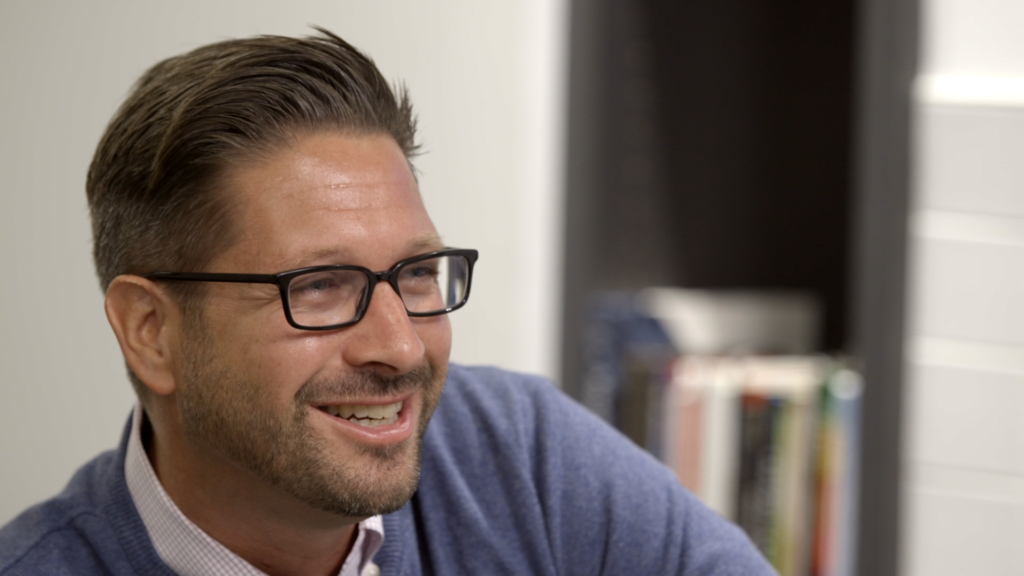
In this episode of the RealLifeSuperPowers podcast, we speak with Mark Roberge. Mark is a Senior Lecturer at Harvard Business School where he teaches sales, marketing, and entrepreneurship. He is also Managing Director at Stage 2 Capital, a venture capital firm backed and run by go-to-market executives, helping startups build world-class go-to-market capabilities. He is the author of the bestselling book The Sales Acceleration Formula: Using Data, Technology, and Inbound Selling to go from $0 to $100 Million.
Prior to these roles, Mark served as SVP of Global Sales and Services at HubSpot, scaling revenue from $0 to $100 million.
Mark was ranked #19 in Forbes’ Top 30 Social Sellers in the World. He is an MIT graduate and has been featured in the Wall Street Journal, Forbes Magazine, Inc. Magazine, Boston Globe, TechCrunch, Harvard Business Review, and other major publications for his entrepreneurial ventures.
Mark is very open to seizing opportunities. Throughout his career he didn’t cling to a predetermined path. He had an initial grand plan, but none of the big career achievements in his life (leading the sales in HubSpot, writing a book, joining the faculty at HBS, starting a VC firm) ended up a part of it. They all happened because when opportunities knocked he had the wisdom and openness to go along with them. No tunnel vision, no traditional textbook plan. His choices are probably not the first connotations that come to mind when envisioning a career path of a lecturer in Harvard, and it’s probably what makes him so unique and a source of actionable insights and inspiration.
Early on in his career Mark fell in love with the startup scene. He was passionate about it and was not deterred by the risk factor, realising stability at big companies wasn’t guaranteed either. In general, contrary to popular belief Mark doesn’t think it’s that risky to go to startup. “An individual startup is risky, but if you pick a hot industry, and you get the company wrong, you usually have significantly increased your market ability and even stability”.
Inline with the overall arch of his career, going into sales and joining HubSpot wasn’t a path he had planned in advance. It fell on his lap in a serendipitous way. It was at a stage where a startup he had founded wasn’t working as he had hoped. He had a mortgage, student loans, his wife was pregnant and he had a baby at home. He thought he might have to go work at a big company, which would have been soul crushing for him as a passionate entrepreneur. Brian and Darmesh, the HubSpot founders asked him to join, and he figured he could collect a steady paycheck for four months and get his feet under himself. “10 years later we’re ringing the bell on the NY stock exchange taking this thing public”.
Following his success in HubSpot he set forth on a life mission to help entrepreneurs generate revenue and dramatically decrease the failure rates of startups. That mission has become the compass for all of his career choices.
We discuss:
– Business schools: When is it a good idea to take that path?
– What to look for when hiring
– What he looks for in a company from an investor perspective (revenue isn’t as high up on the list as many would assume)
– Things to consider both during a sales process and when raising money
– Much more
If you’re at a crossroad in life, hesitating whether to take on one risk or another, this episode might just be the inspirational wind beneath the wings you’re in need of.
All of you business guys out there, no matter what your role is, we strongly recommend reading his book. Here’s a link: https://www.amazon.com/Sales-Acceleration-Formula-Technology-Inbound/dp/1119047072
We hope you enjoy your listen!
Zooming out, if you like listening to this podcast, make sure to subscribe so you don’t miss new conversations with peak performers, serving as a reminder we can all tap into the best versions of ourselves.
You’re also welcome to follow Ronen and Noa on Linkedin
And if we may ask for a favor – please leave us a review on your native podcast app.
Some further resources:

[This transcript was generated from YouTube’s auto-captions, not a verified human/AI-diarized transcript. Timestamps and wording may contain errors, and speaker labels below are Claude’s best-effort inference from context, not confirmed against audio. Please review before publishing.]
Host: In this episode we speak with Mark Roberge. Mark is a Senior Lecturer at Harvard Business School, where he teaches sales, marketing and entrepreneurship. He’s also Managing Director at Stage 2 Capital, a venture capital firm backed and run by go-to-market executives, helping startups build world-class go-to-market capabilities. He’s the author of the bestselling book The Sales Acceleration Formula: Using Data, Technology, and Inbound Selling to go from $0 to $100 Million. Prior to these roles, Mark served as SVP of Global Sales and Services at HubSpot, scaling revenue from 0 to 100 million. Mark was ranked number 19 in Forbes’ Top 30 Social Sellers [uncertain from the audio] in the world. He’s an MIT graduate and has been featured in The Wall Street Journal, Forbes Magazine, Inc. Magazine, the Boston Globe, TechCrunch, Harvard Business Review and other major publications, with entrepreneurial ventures.
[Music]
Host: Hey Mark, how’s it going? We’re really intrigued about the beginning of [unclear in the captions] the story. As a risk-taker, you decided to jump on board [HubSpot, uncertain from the audio] when there was actually nothing happening, which is a really big risk, and you were there at the beginning. So how did you make that decision, and what happened before that to make it a decision?
Mark: Yeah, I think the decision to take big risks was already ingrained in my career, and I can talk about that. The decision to go to HubSpot was a bit serendipitous, which I’ve seen as a pretty significant trend in the good things that happened in my career, and how serendipitous and unplanned they are, which just really changed my perspective on planning.
But you know, I started my career, came out of school as an engineer, went to Accenture, a big consulting firm, wrote code for two years. This is right at the end of the ’90s, where entrepreneurship was exploding in the US and everywhere around the world. A couple partners at Accenture left to start a mobile company, and I jumped with them and just never looked back. Loved the startup scene, loved the upside, loved the risk, loved the potential impact, loved the fast pace. It was just everything I was looking for in a career, and I decided at that point I was an entrepreneur, which comes with risk. You have a higher tolerance for it.
And to be honest with you, this was also right around the time of the dot-com bust as well, and many people who were working at Enron and Arthur Andersen and huge companies really got hit. You start to really wonder: are you really that safe at a big company? Is it really that risky to go to a startup? And I just don’t think it is. I talk to my students all the time about this. An individual startup is risky, but if you pick a hot industry and you get the company wrong, you usually have significantly increased your marketability, and even stability, if that’s what you’re choosing for. If you go into blockchain and you pick the wrong startup, and you’re there for three years running marketing or doing sales or engineering or product, and your company goes under but blockchain explodes, you’re a hot commodity. All the companies that are growing want to hire you, because no one has experience in this and you have so much insight. So anyway, it’s really changed my perspective on risk.
I ended up going to MIT after that to learn about entrepreneurship and solidify my place in the ecosystem. I started a social networking company myself, raised [amount unclear in the captions] million dollars, executed it for two years, and didn’t have success with that one. Dharmesh Shah was one of my investors; he’s the co-founder of HubSpot. When I was sort of exiting or struggling with my company, he and Brian Halligan, who had come on to co-found it at that point, recruited me to be full-time, because I was selling for them and they thought I was doing a good job. And at the time, you’re right, we were only three people. It was hugely risky. I had a baby, I had a pregnant wife, I had a new mortgage. It was crazy.
Host: How did you decide to do it still?
Mark: Well, it was honestly out of desperation. At that point I knew I was gonna get my next round of funding for my startup [unclear in the captions]. I had $100,000 of loans from business school, I had a wife that wasn’t working, and a baby with another one coming, and a mortgage. It’s pretty stressful. So I literally thought I was gonna have to go back to a big company, which would have been soul-crushing for me as a passionate entrepreneur. And Brian and [unclear in the captions] were just like, “We’re about to scale, we’re about to raise our Series A. You’re doing a great job selling for us. Why don’t you come sell and build the sales team?” And I was literally just thinking, this is awesome, I can collect a paycheck for four months and get my feet under me. And ten years later we’re ringing the bell on the New York Stock Exchange, taking [unclear in the captions] public.
So going into sales, going to HubSpot, was not anything I pursued. It was just what fell in my lap. And since then, to write a book, to join the faculty of Harvard Business School, to start a venture capital firm, none of those things were things that I pursued. They were things that landed in my lap, and they were some of the best things that I ever did in my career. So it’s kind of funny: have a plan, but be open-minded to the stuff that comes to you, because that can be really impactful stuff in your career.
Host: And how did you decide to start selling? Because you’re saying that you were doing that straight out of college in your own company, but still…
Mark: When I came out of undergrad I was coding. When I went to the first startup in New York, the mobile startup, I was on product. I did a little bit of [account, uncertain from the audio] management. When I started my own company I was doing everything. And then when I went to HubSpot, Dharmesh first engaged with me when it was just him. I was a consultant to him, just doing strategy and thinking. And then when he brought Brian in to co-found the business with him, Brian’s a sales guy, and he’s like, “Hey, we got you one day a week. You seem smart, just sell.” So that’s how I got into sales. He just wanted customers, so I’m like, great, I need the paycheck, I’ll sell.
Host: Weren’t you afraid of the stigma that definitely exists in high-end business schools? It’s looked at as a blue-collar job.
Mark: I was honestly torn. I knew in the entrepreneurial world I didn’t want to be a programmer. I had done it, I had enough of a foundation. I liked the revenue stuff more, but I was torn between marketing and selling during my business school journey. I loved marketing because it was more data-driven, and it seemed like the world was heading more toward a marketing-driven world. But I loved selling because I like the deals, I love the people interaction, and they made good money too, which as a provider was important to me. So I was a little torn, and when Brian pushed me in that direction, it was just like, let’s go. And it was cool, because I was selling advanced marketing solutions, so I was kind of walking both lines: developing myself as a marketer, but also developing my skills as a seller.
Ronen: It sounds like it was by mistake a match made in heaven, because you [unclear in the captions] in the product, but you were selling something that you actually believed in, because you needed it yourself, and he saw the added value of that.
Mark: Yeah, and Ronen, even more than that, sales was going through a huge transformation that was favorable to a former engineer. It was going from every sales team being an outside sales team, knocking on doors, selling million-dollar deals, not data-driven because no one used the CRM, with this magical, mystic reputation, to, for the first time, teams that are totally inside, dependent on the CRM, dependent on data, dependent on process and science. And here I come in as a fresh slate with no sales background but a very engineering mindset. Who could have predicted that, right? It was just such luck.
Host: But that’s a good question, I’m not sure yet, but I think you have really good decision-making skills. I’m wondering, so our audience could understand how you make those kinds of decisions: let’s say, like you said, you used the blockchain industry, right? You tell an entrepreneur to choose an industry by what factors?
Mark: Well, there’s a couple things in the decision-making. First off, you’re asking me to evaluate an industry, and that’s a tough one, because when I went into business school, [unclear in the captions] technology was a big hot thing and never really went anywhere. Mobile took a long time to kick in and eventually kicked in. I’m not sure I’ve got the best instincts there. When I evaluate companies, as an example, I put a lot of weight on customer value creation, so maybe there’s something there. I do think with a lot of investors, when I ask people what’s product-market fit, ninety-five percent of the time they talk about people buying your product, and I think that’s completely wrong. People buying your product is your message and value prop resonating. People seeing value from your product, that’s product-market fit. So maybe there’s something there in terms of what industries you should go at: early signs that people are starting to see value from it. That’s kind of what I look for when I [invest, uncertain from the audio].
But to be honest with you, I progressed in my career from a 22-year-old who had this ten-year plan, and nothing could distract me from that, to having, again, reflected on joining HubSpot, going into sales, writing a book, joining the faculty at HBS, starting a venture capital firm, none of which was planned. And now I just have a mission, because of the gifts that I’ve been given, to help entrepreneurs with revenue. That’s the gift that I’ve been given, and I want to dramatically decrease the failure rate of startups through revenue best practices. So when HBS is like, “Hey, we need to do a sales class, we read your book, can you build a sales class here?” I’m like, jeez, that’s an amazing platform for that goal. And when a guy at [Bessemer, uncertain from the audio], one of the top venture capital firms, is like, “Hey, we should start a venture capital firm that’s run and backed by VPs of sales, because it’s missing from the investing community,” that’s a huge idea.
And I’m very blessed that I’m hit with like five ideas a day: hey, join my company, hey, invest in this, hey, [unclear in the captions]. I wish I could say yes to everything, but I can’t. So I just have this extreme filter: I have a certain amount of time I can spend on work, my mission is to help entrepreneurs, and I have to dedicate that time across the platforms that will have the biggest impact. That’s the way I think about it.
Noa: And do you think that business school is a significant part of the journey, that people should go to business school? I know it’s tricky to ask you that since you’re sort of part of the system, but you look at it differently, and there are so many opinions. I have to share something: I leaned so much towards thinking that business school is the most impractical thing in the world, and you should just gain experience. And I understand that in the United States it’s something of a status symbol, and maybe also some sort of screening system. But I heard you lecture at a [HubSpot, uncertain from the audio] conference and you were so practical, and it sort of made me think that maybe these days business school has become practical and not sort of behind.
Mark: Yeah, it’s trying to. I think that was part of the reason why HBS wanted me to come over there. You would think I’d be super biased, like, yeah, go to business school, because it really changed my life. MIT was huge for me, and I’m on the faculty at Harvard Business School. But it’s not for everyone. Let’s take entrepreneurship aside. If you’re in management consulting and you love management consulting, I don’t think you really need to go to business school. Just stay there and become a partner. But if you’re on one trajectory and you want to really change, because you went down the wrong path for a couple of years, that’s a great venue.
Host: Okay, so that’s great if you want to do a career change.
Mark: I also probably wouldn’t go to business school if you’re going to the same tier. If you went to a tier-two school for undergrad and you really only get into a tier-two school for business school, I’d be hesitant. But if you can level up, if you went to a tier two for undergrad, you had a great experience, you did well in the first couple years in your work, and now you can go to a top-five school, that’s probably gonna have an enormous impact on your career and your marketability. So I’d consider that.
Now in entrepreneurship, if you were 22 and you started a business and you’re the CEO and you scaled this thing to 20 million bucks, you crushed it. I don’t know if I’d do business school. But not everyone did that. If you’re an entrepreneur and you did a company and it was a success but you were a frontline person, or you did one or two, it is a great way, especially in the US, to make a first impression. When you’re 28, there’s not a lot you could have done. And that was huge for me with MIT. Without MIT, I wouldn’t have gotten 90% of the investor meetings I did.
Host: [unclear in the captions] networking, is that true?
Mark: Absolutely. Well, first off, there’s a brand association with the big top schools. People are like, huh, it’s validated. Not everyone can get into those schools, so that’s probably a smart person, I should listen to what they’re saying. So that’s a big deal. The network is huge from an entrepreneur’s standpoint.
Now, the practical element: the schools are trying and they’re getting there. To be honest with you, business school applications are down. HBS, MIT, Chicago and Stanford are not affected right now, but other schools are, dramatically. And I think it’s because of the misalignment between what’s being taught and where students want to go. Largely, business schools were built around getting people ready for management consulting careers and banking careers, and especially banking, that stuff’s declining a bit, and there’s a huge rise in entrepreneurship, which requires practicality. So the speech you saw me give at HubSpot, my class is extremely practical. I teach people to sell, I teach people to hire reps. And the great thing about HBS is they sell 30 million [number uncertain from the audio] cases a year to other business schools, so like 80% of the curriculum taught at other business schools is inspired by and leverages what I build at HBS for sales. So that’s a huge impact, right? So hopefully I’m doing my part and my peers are doing their part to evolve the MBA to be continually relevant, including making it very practical for entrepreneurs.
Host: I also liked your point about new pathways. It’s like a reboot: [unclear in the captions], let me find a different way of thinking. For those people, I like that. That’s smart, for sure. And from that situation, [unclear in the captions], but from early on, did you feel that your attributes were the people-person sales attributes?
Mark: Yeah, I think if you look back at myself as a teenager or in my early 20s, what was pretty unique about me was I was into the real geeky stuff, like math and science and coding, but I was also very personable. That’s just unique. It exists, but it was one of my unique traits. As you looked across my peers, there were people who were super deep into the science, but they were introverts and they had challenges connecting and communicating with people. And there were outgoing people who had tons of street smarts but struggled with the deep science. And so that’s always something that I strive to do: appreciate my uniqueness and how I can express that through the things that I do. So yes, there were certainly patterns of that in the early part of my education.
Host: And when you hire someone, the things that you learned or the characteristics that you have, how does that affect how you hire a salesperson or someone in business development?
Mark: Not a ton. I think you could get into some scary situations where you’re basically hiring people like you, which is a huge trap in hiring that leads to underperformance and a lack of diversity and groupthink, significant groupthink, which can really kill businesses. When I hire, I look very deeply at the tasks that the person needs to do. It sounds so obvious, but it’s often overlooked by hiring managers at all levels.
A classic example, if we take sales: people really overweight experience in your industry and underweight the specific sales tasks that need to happen. They might just say, oh, we’re looking for someone with five years of experience in blockchain, to go back to that example, and that’s all they really look at. They could essentially hire the person from the resume, so why even do an interview? But at the end of the day, if I were interviewing that person, I would look at this blockchain company and be like, okay, they’re selling to banks, they’re million-dollar deals. It’s gonna require them to get their feet in the door, they need to do deep discovery and pain development, and then coerce a decision-making unit to buy the thing, and then get the thing through procurement. So I’m gonna be diving deep into their abilities and sales skills on how to do that, and if there’s a gap, I’m going to be looking heavily at their coachability, to learn how to do it within our context. And I would much rather take people from other industries besides blockchain who’ve done that and teach them the blockchain stuff than grab an underperforming blockchain rep just because they’ve been in the industry for five years. So that’s an example. I’m not trying to hire people like me. I’m trying to be extremely analytical about what raw talent, skills and behaviors are necessary for this role, and how I can creatively assess that efficiently within an interview process.
Host: So sort of like simulating how the job would be, imagining them in it.
Mark: Exactly. Well, I say, instead of “tell me about a time you did this,” screw that. Here’s my company, what are you gonna do? Let’s do a role play of you selling my product. “I don’t know what your product does.” Great, here’s 10 pages on my product, go read it, come back in a day, let’s do it. Sometimes when you just ask yourself how you’re gonna train this person when they join your company: why wait for training? Let’s just do it during the interview, right, and see how they do. So that’s from a hiring perspective.
Host: And today you’re also a VC, right? So is this the same simulation work when you’re thinking about investing, or is it from the impact point of view, where you’re saying, now my mission is to help entrepreneurs revenue-wise? Is that more the majority of the aspect, or is it the attributes, as when you hire people?
Mark: Well, yeah, it’s a tricky one, because okay, I am trying to help entrepreneurs. However, as a venture capitalist, I have a bunch of investors in me, a big part of which is the promise that I return a good return for them. So I’m not running a consulting business. I’m not looking for problems to fix. I’m looking for exceptional investments.
And I’ve never heard of or met a business, even the future Atlassians, Zoom, Dropbox, Twilio, they had a lot of problems as they scaled. There’s never ever been a business I know of where they thought of an idea, went out and talked to people, everyone loved it, they raised a ton of money, they started selling it, it flew off the shelves with no issues, they went public and it’s crushing it. Every business you talk to, there’s always huge issues. They almost ran out of money, everyone was churning. So if you’re out there looking for perfect businesses with no hair on them, it just doesn’t exist. You’re just trying to understand which gaps or risks you’re willing to take versus which you’re not.
So with our venture capital firm, we are backed and run by sales and marketing execs, so I’m not willing to take on product risk. I didn’t build it for that. So what I look at heavily is: do they truly have a strong foundation of product-market fit, and then what steps have they taken in building the go-to-market side, where are those gaps, and are we willing to take those on? So the first place I’m starting, and this is unique to me and the stage I invest at and the types of businesses [unclear in the captions], is I look heavily at customer retention, churn, customer value creation and product usage. That’s what I look at first. And if there are gaps there, it’s like they don’t have product-market fit, even if they’re tripling revenue.
Host: Isn’t that something that you can actually maybe tap into and sort of fix? [unclear in the captions]
Mark: Maybe, it depends. I have taken those on. If I look under the hood and basically there are certain pockets that are doing great and certain pockets that are not, then that’s an ICP, an ideal customer profile, issue. We’ve got to align the sales and the MQL definition around it, we’ve got to align the sales comp with it, and we can fix it. And that could be an amazing business, and that’s a great investment opportunity, because it looks like it’s underperforming but it really isn’t, through a quick fix. But if you just don’t have those, that’s kind of a restart on the product side, and my LPs and my backing are not in product management, so I don’t want to take that one on.
So that’s kind of a unique view that we have in the investor community. I do find that most investors over-index on top-line revenue growth, as do entrepreneurs. Ask an entrepreneur how their company is doing, the first thing they say is revenue. Investors’ first question: how’s your revenue growing? And we don’t talk that much about retention, customer value creation and product usage. Of course I love the businesses that are tripling revenue and have 110% revenue retention, amazing. But I’d much rather have 50% growth with 120% revenue retention than 300% growth and 50% revenue retention.
Host: [unclear in the captions] You’re probably getting so many companies that want you to invest, because you’re also an influencer. Let’s say I want money from your VC. How should I approach you? What would be the right approach, pitching to you?
Mark: It’s very similar to a sales process. When I go sell software to someone, the wrong thing to do, which unfortunately sellers do, is to have their ten PowerPoint slides of what their business does and how much money they’ve raised and what their sales strategy is, et cetera. Sorry, this is [unclear in the captions] a seller to customers: what the product does and other case studies. When you’re selling to a customer, the best way to sell is to understand what their goals and their challenges are and decide whether or not you’re a good fit. And if you are, pitch it, and if you’re not, walk away.
It’s the same thing with raising money. Just understand: if you’re a seed-funded business developing your product, I don’t need the 30-minute pitch. You’re not ready. That’s not held against you, it’s just that I [unclear in the captions] my investors at a certain stage. If you’re doing 20 million in revenue, it’s too late. You’re doing great, you’re a growth investment opportunity, but that’s not where my business model is. So the first thing is just: can you tell me about your fund and your investment thesis? “Yeah, sure. We invest when you’re between one and five million in revenue, we look for exceptional customer retention, and we look for people who are scaling through a sales team. If you fit those three things, let’s talk.”
Host: It seems like you have sort of two very different hats, because on the VC side you have to be pretty strict and make harsh decisions and be very judgmental, and then from a completely different angle, you’re very much about empowering people and helping organizations scale and teaching them how to do that, and you’re way more tolerant there. Is there some balancing boundary?
Mark: I find it very circular. Because I’m out there, I’m seeing tons of deals and I’m assessing deals, and we’ve made ten investments, so I get in deep with them and I know where the problems are and what works, and I see my friends doing it too. And then I circle that back into the classroom, where I let that drive theory that’s more practical, and I watch my students apply it. And I circle that back into my public speaking, where you saw me, Noa, to speak to folks generally, which then attracts deal flow and starts the process again. So even though it’s like, wow, this guy’s a public speaker, he’s a venture capitalist and an academic, it’s all the same. That’s just a job to me, a circular job, in the same way a CEO hires people, manages people, manages the Street, does the public speaking. It’s a circular, highly related job.
Host: Like mega inbound marketing for VCs.
Mark: Yeah, exactly. As HBS faculty, I get insider access to the best deal flow that’s coming out of Harvard, MIT, Stanford, Wharton. That’s pretty valuable to a venture capitalist. A lot of VCs are like, how can I get a faculty position at a top business school? So it’s all very circular.
Host: Did you close that circle? Did you at one point in time [unclear in the captions] educate someone, and then invest in that startup?
Mark: Not yet. Not yet [unclear in the captions]. We have policies against investing in our students, obviously, because then you’re giving grades and it’s weird. So I can invest after they graduate. I have done that. We haven’t done it through the fund yet, just because it hasn’t happened. I did invest in students from two years ago that did quite well, and a lot of the stuff they use… they dramatically redirected their strategy based on my own coaching of them, both through the classroom as well as as an investor. I think that they’ll do quite well. So it’s gotten pretty close to closing that gap, and I have brought tons of my own investment work into the classroom as cases.
Host: And what would you say your superpower is?
Mark: I would say pattern recognition across a huge spectrum of data points, and summarizing it in a way that’s tailored to the audience I’m speaking to.
Host: Can I try? Because I think that practicality and simplicity, like taking [unclear in the captions] decision-making really simple, to a go/no-go.
Mark: Yes. Synthesizing, sense-making. Yeah, I think that says a lot of it. But I think there’s a piece that’s tailored to my audience, because I’m preparing for an exec ed class on Friday, and I looked at the backgrounds of the 90 students, and I have to teach them sales strategy. And I had to teach sales strategy to my MBAs two weeks ago, but those are two very different pitches. My MBAs are 27-year-olds with four years of experience in various industries, and now I’m gonna go teach a bunch of 40- and 50-year-olds who are CEOs of large businesses. It’s very different. So it’s something like that: synthesizing and tailoring it to the audience.
Host: Right. And what would you say your kryptonite is? Saying no?
Mark: Yeah, it’s hard. And actually, believe it or not, [unclear in the captions] conflict avoidance. It’s a little rooted in my childhood, but it was a real struggle for me as a leader, because you can’t avoid conflict as a leader. You have to take it head-on, you have to give negative feedback. And I think I evolved to be good at managing conflict and giving negative feedback, but it took a lot of effort, [therapy, uncertain from the audio] and coaching for me to get there. And it’s still something I just don’t enjoy, but I know it’s necessary to perform. So that is a kryptonite.
Host: It’s also different in sales [unclear in the captions].
Mark: Yeah. As a seller, you’re good at getting people to say yes. [unclear in the captions] If you’re a CFO, you’d better be good at saying no, right? So it just depends what your role is.
Host: I feel that [unclear in the captions], I get you. And I have a question: what would be your happy end game right now? If you imagine yourself in ten years, where would you want to see yourself?
Mark: That kind of conflicts with my serendipitous lifestyle. But I think I’m psyched to have had the opportunity at HBS. Going into it, everyone’s like, is this dude for real, is he gonna perform? And I think now, looking back, I think they’re glad that I’m there, and it’s just really awesome to see so many of my students go off and do great things based on stuff that was in the classroom. That’s been really rewarding.
More recently we’ve started the venture capital firm, and the big mission there is: the failure rate of startups that raise a Series A round is 70%, and the failure rate for startups that raise a Series C round, much larger, further along, is also 70%. And so that says to me that while we’ve progressed in our entrepreneurial understanding, thanks to Lean Startup and agile and all that kind of stuff, in the early phases, we haven’t progressed in how to scale. And so that’s what I really want to impact, through Stage 2 Capital, my venture firm, as well as the related work at HBS and other places. I hope that I can make enough of a dent that the failure rate declines as businesses move further along, because we as entrepreneurs have understood more of the science and process of how to scale.
Host: Which I think your book also reflects very much, and I think it can also have that impact. And I really recommend anybody listening who has any touch with business to read that book.
Mark: Cool. All the proceeds go to a nonprofit, BUILD.org, which helps underprivileged kids through entrepreneurship, so thanks for that plug.
Host: We’ll definitely add a link. All right, so we want to be respectful of your time. We know you have to go, so thank you so much, and we wish you to actually achieve your end game.
Mark: Yeah, thank you. Thanks, folks, for [having me, uncertain from the audio]. Enjoyed the conversation. Take care.
[Music]
We have the technology. Real Life Superpowers.
[Music]
Dr. Zohar Bronfman – The Limits of Knowing Dr. Zohar Bronfman is the... Read more
Building a Company That Doesn’t Depend on You Naveh Ben Dror is the... Read more
Life Is a Game Lior Pozin built AutoDS into a company with more... Read more
What started as an idea between two Technion graduates became one of the... Read more
Going all in, whatever it takes In this episode, we speak with Lior... Read more
In this episode, we speak with Eli Goodman, co-founder and CEO of Datos,... Read more


