
Episode #98: Naveh Ben Dror – Co-founder and CEO of Spikerz
Building a Company That Doesn’t Depend on You Naveh Ben Dror is the... Read more


Episode #98: Naveh Ben Dror – Co-founder and CEO of Spikerz
00.00/42:08
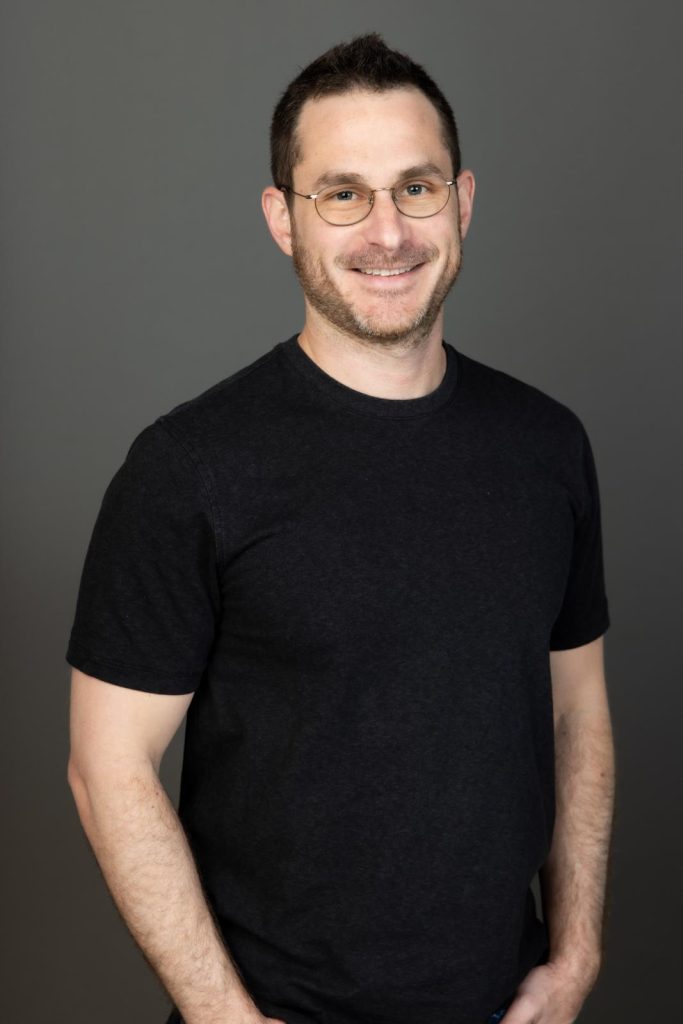
Dr. Zohar Bronfman – The Limits of Knowing
Dr. Zohar Bronfman is the co-founder and CEO of Pecan AI, a predictive AI company he started with his academic partner Noam Brezis.
Before becoming an entrepreneur, Zohar spent years studying the human mind, earning two PhDs spanning philosophy of mind and computational cognitive neuroscience.
Today, Pecan has raised more than $117 million and is working to make predictive AI accessible to businesses without requiring teams of data scientists.
But this conversation is as much about the limits of intelligence as it is about AI.
AI may make us faster. It probably won’t make us less busy.
Zohar spends his days chasing AI innovation while running a company and raising three children.
For someone building technology designed to dramatically accelerate work, he sees an interesting paradox.
“AI is just making me far busier.”
He doesn’t think this is particularly new.
Machines didn’t make us stop working. Computers didn’t. The internet didn’t.
Technology changes what we spend our time doing.
AI can digest information, summarize innovation, and dramatically reduce the execution required for certain tasks.
But Zohar believes the time it gives us back will probably be filled with something else.
Ideally, something more human.
Don’t outsource the cognitive workout
Zohar uses AI constantly.
But there’s one thing he deliberately doesn’t use it for.
Writing.
If he needs to write a strategy document, a memo or simply articulate his thoughts, he writes it himself.
Only when he’s finished does he run it by AI.
Why?
Because convenience has a cost.
He compares it to physical fitness.
“The moment we lose ourselves to convenience, I think it’s like not working out in the gym and only driving in the car.”
Stop using a cognitive capability and, like a muscle, it deteriorates.
He already sees it in himself with navigation. GPS has become so ubiquitous that he jokes the part of his brain responsible for navigating is “completely dead.”
The concern isn’t that AI will become capable of writing better than we can.
It’s what happens to us when we decide that means we no longer need to write.
What AI still can’t do
For all the excitement surrounding AI, Zohar thinks we don’t talk enough about its limitations.
Large language models learn from existing data.
Humans can create something that doesn’t exist in that data.
We can reformulate the problem itself.
We can borrow from entirely different disciplines.
We can create new frameworks for thinking.
“Humans are a problem-solving entity or a being.”
AI is also still limited in its understanding of causality and counterfactuals-the ability to model not just correlations, but what causes what, and what might have happened if something had been different.
A language model predicts.
But predicting the next token isn’t the same thing as understanding the world.
A life organized around one question
Zohar didn’t enter academia with a career plan.
He was fascinated by the human mind.
How do we make decisions?
How do we make judgments?
What is happening inside us when those things occur?
So he pursued two complementary paths.
Philosophy of mind, which he describes as asking some of the hardest questions we can ask.
And computational cognitive neuroscience, which attempts to model how the brain processes information.
When asked how clear his roadmap was at the time, his answer is almost the opposite of one.
“It was the least clear view you can imagine.”
Instead, he kept asking:
“Is it interesting and am I stretching my own cognitive boundaries?”
As long as the answer was yes, he kept going.
We are prediction machines
Eventually, something began to emerge from his research.
Prediction isn’t just something the brain occasionally does.
It’s fundamental to how we operate.
We predict what another person is thinking.
What they’re about to do.
What we’re seeing.
What we’re hearing.
What will happen next.
Then we compare those predictions with reality and update them.
“We’re just a non-stop predictive machine.”
Toward the end of his academic career, Zohar began to feel there was an untapped opportunity.
If prediction is such a fundamental component of human intelligence, why wasn’t AI being used more extensively to help businesses predict what happens next?
That question eventually became Pecan.
Ignorance protected him
Zohar went directly from academia into entrepreneurship.
No corporate career.
No experience running an organization.
No experience building a go-to-market machine.
So how did he have the courage to start a company?
Part of his answer is refreshingly unromantic.
“Sometimes you’re just too ignorant to understand how deep is the pool.”
And:
“I didn’t realize how challenging running a company is, and I think that ignorance protected me.”
He didn’t know enough to be scared of everything he didn’t know.
What helped fill those gaps was having an experienced seed investor he trusted-someone who could explain what he didn’t understand and connect him with people who did.
He doesn’t romanticize doing it alone.
“I don’t think you can really go through all of that yourself.”
“I feel like I am messing with nature.”
Zohar and his co-founder met while doing their PhDs.
They knew they wanted to build something together.
And they knew it would involve AI.
Then they built their first model capable of predicting whether a customer would buy something in the future.
It worked.
Zohar remembers turning to Noam and saying:
“I feel like I am messing with nature.”
There was something eerie about it.
They had built something non-human that could nevertheless perform an act we associate deeply with intelligence: anticipating human behavior.
It raised questions about free will.
About intervention.
About what it means for a machine to do something that feels, in some small way, human.
For someone who had spent years thinking philosophically about cognition, AI wasn’t simply technology.
“It has a really special magic to it.”
Philosophy taught him not to know
There’s an interesting contradiction in Zohar.
He has a deep desire to understand.
He describes himself as fundamentally scientific in his thinking-drawn to analytical, observable, rational explanations.
And yet he chose philosophy, a discipline where definitive answers are often impossible.
That tension turned out to be useful.
Philosophy taught him that understanding is incomplete.
And that recognizing those limits isn’t failure.
It’s intellectual humility.
“The greatest philosophers always alluded to the limitations even more than to the solutions.”
Zohar thinks that’s something the AI world could use more of.
It’s easy to declare that we’ve reached “artificial general intelligence.”
It’s much harder to acknowledge that we haven’t even agreed on what intelligence itself means.
Understanding the limitations, he argues, can sometimes tell us more than confidently declaring the answer.
Two kinds of mistakes
Zohar makes an important distinction between two kinds of entrepreneurial mistakes.
The first are mistakes you couldn’t reasonably have prevented.
Pecan once spent a year building a predictive use case the team believed could become a major part of the business.
They researched the market.
Interviewed customers and prospects.
Studied competitors.
Tested the technology and go-to-market assumptions.
And they were wrong.
The product didn’t work commercially.
They lost time, money and resources and ultimately had to shut the initiative down and let people go.
It was painful.
But Zohar can live with that kind of mistake.
They had made the best decision they could with the information available.
“We operate in a very high level of uncertainty. By definition, as startups, if we knew what was the right thing, it wouldn’t be a startup.”
The second kind bothers him much more.
The mistakes that are harder to forgive
These are the mistakes caused by overconfidence.
The moments when someone presents another perspective and you don’t really listen because you’ve already decided you’re right.
Zohar can identify strategic decisions where this happened.
In one case, Pecan delayed expanding geographically.
Looking back, he believes the company lost significant opportunity by waiting two years.
The important part is that he says he knew, even at the time, that he wasn’t genuinely open to the opposing argument.
“I knew when the discussion took place that I am not open to entertaining this option.”
That’s become his warning signal.
There is a difference between making a decision after hearing disagreement and refusing to seriously entertain disagreement because it’s easier to exercise authority.
Today, even when he feels strongly about something, he deliberately seeks out alternative views from people he respects.
Not to eliminate uncertainty.
To make sure confidence isn’t preventing him from seeing something important.
Eight years isn’t an overnight success
Pecan was founded in 2018.
Today, the company has more than 70 employees.
Zohar describes the current period as perhaps its best yet.
But getting there has been a roller coaster.
His advice is not to build around the exceptional startup stories where everything happens incredibly quickly.
“I wouldn’t recommend indexing on those cases.”
Instead:
“Build a long-lasting company that has something substantial to offer, something unique, differentiated, something that really creates value.”
Don’t strategize around the two-year exit.
Build something worth continuing to build.
What stays after this episode
Zohar has spent much of his adult life pursuing understanding.
Understanding the mind.
Understanding intelligence.
Understanding prediction.
Understanding the company he’s building.
But some of the most consequential lessons in his journey have come from recognizing where understanding ends.
Philosophy taught him to respect limitations.
Entrepreneurship taught him that even a rigorous process can produce the wrong answer.
Leadership is teaching him that the desire to understand everything can eventually become a desire to control everything.
And perhaps that’s the paradox at the center of this conversation.
The more sophisticated our tools for knowing become, the more important it may become to recognize what we don’t know.
Not as weakness.
As a condition for learning.
Building a Company That Doesn’t Depend on You Naveh Ben Dror is the... Read more
Life Is a Game Lior Pozin built AutoDS into a company with more... Read more
What started as an idea between two Technion graduates became one of the... Read more
Going all in, whatever it takes In this episode, we speak with Lior... Read more
In this episode, we speak with Eli Goodman, co-founder and CEO of Datos,... Read more
In this episode, we speak with James Spiro, a journalist and editor who... Read more


